Vogt Anne-Cathrine S, Roesti Elisa S, Mohsen Mona O, Leonchiks Ainars, Vogel Monique, Bachmann Martin F
Department of Rheumatology and Immunology (RI), University Hospital, 3010 Bern, Switzerland.
Department for BioMedical Research (DBMR), University of Bern, 3008 Bern, Switzerland.
Vaccines (Basel). 2021 Nov 12;9(11):1316. doi: 10.3390/vaccines9111316.
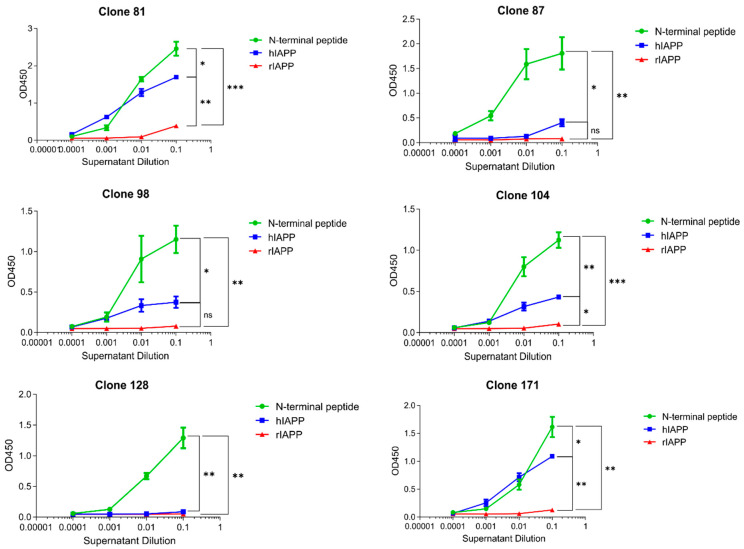
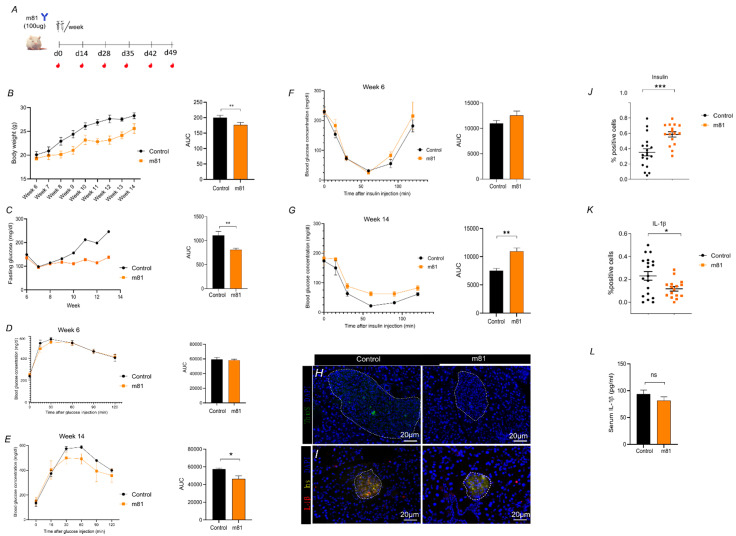
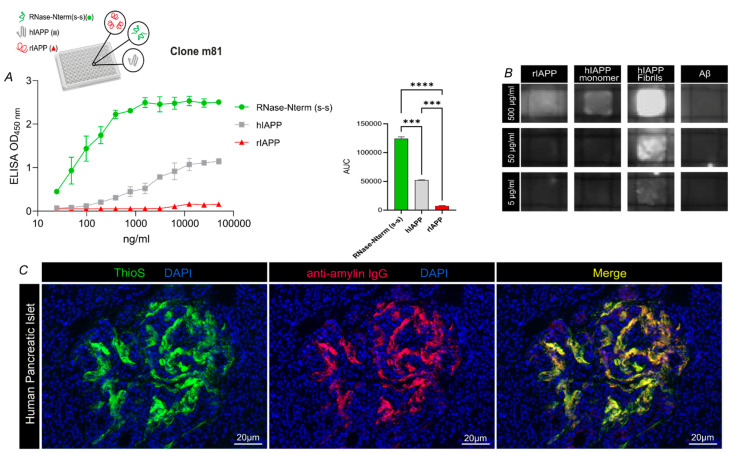
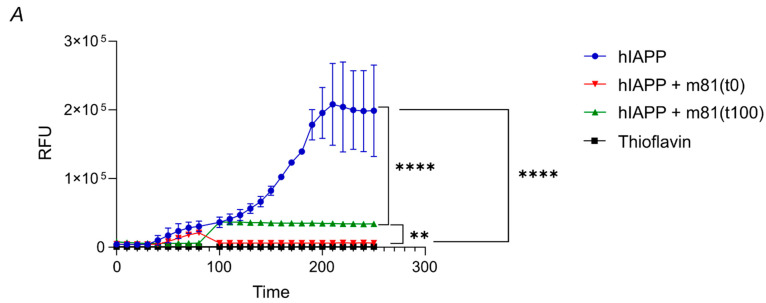
Type 2 Diabetes Mellitus (T2DM) is a chronic progressive disease, defined by insulin resistance and insufficient insulin secretion to maintain normoglycemia. Amyloidogenic aggregates are a hallmark of T2DM patients; they are cytotoxic for the insulin producing β-cells, and cause inflammasome-dependent secretion of IL-1β. To avoid the associated β-cell loss and inflammation in advanced stage T2DM, we developed a novel monoclonal therapy targeting the major component of aggregates, islet amyloid polypeptide (IAPP). The here described monoclonal antibody (mAb) m81, specific for oligomeric and fibrils, but not for soluble free IAPP, is able to prevent oligomer growth and aggregate formation in vitro, and blocks islet inflammation and disease progression in vivo. Collectively, our data show that blocking fibril formation and prevention of new amyloidogenic aggregates by monoclonal antibody therapy may be a potential therapy for T2DM.
2型糖尿病(T2DM)是一种慢性进行性疾病,其定义为胰岛素抵抗以及胰岛素分泌不足,无法维持正常血糖水平。淀粉样蛋白聚集体是T2DM患者的一个标志;它们对产生胰岛素的β细胞具有细胞毒性,并导致炎性小体依赖性的IL-1β分泌。为避免晚期T2DM中相关的β细胞损失和炎症,我们开发了一种针对聚集体主要成分胰岛淀粉样多肽(IAPP)的新型单克隆疗法。这里描述的对寡聚体和原纤维具有特异性,但对可溶性游离IAPP不具有特异性的单克隆抗体(mAb)m81,能够在体外阻止寡聚体生长和聚集体形成,并在体内阻断胰岛炎症和疾病进展。总体而言,我们的数据表明,通过单克隆抗体疗法阻断原纤维形成并预防新的淀粉样蛋白聚集体可能是T2DM的一种潜在治疗方法。