Tuberculosis Prevention and Control Key Laboratory, Beijing Key Laboratory of New Techniques of Tuberculosis Diagnosis and Treatment, Senior Department of Tuberculosis, The Eighth Medical Center of PLA General Hospital, PLA General Hospital, Beijing, China.
Immun Inflamm Dis. 2023 May;11(5):e854. doi: 10.1002/iid3.854.
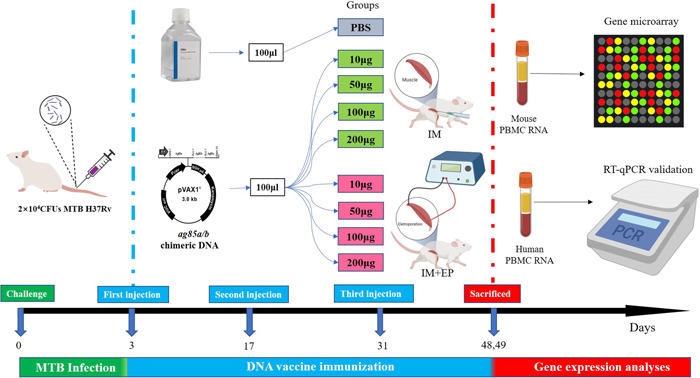
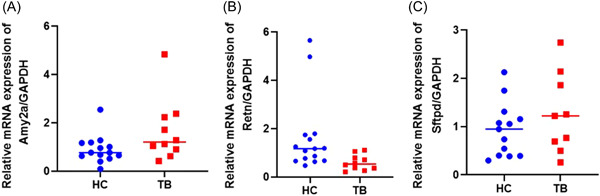
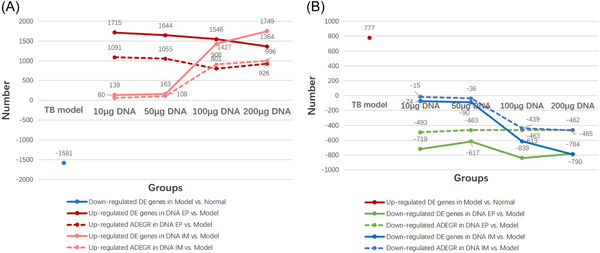
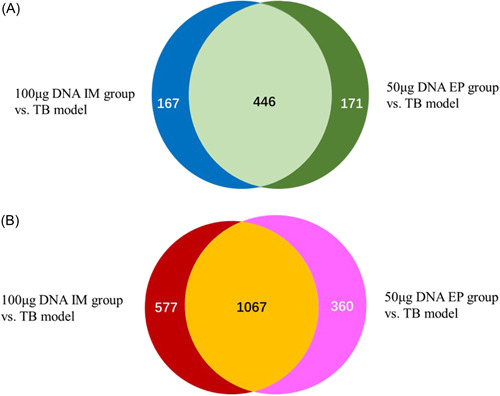
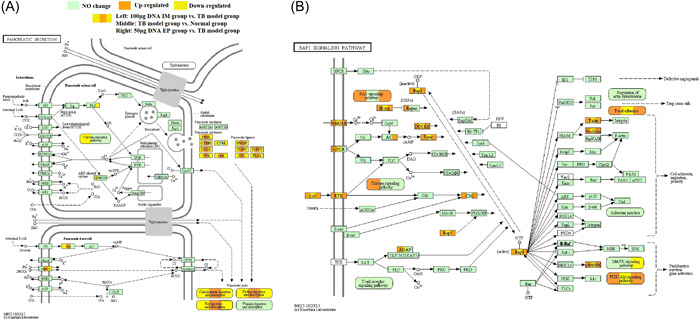
Our previous research developed a novel tuberculosis (TB) DNA vaccine ag85a/b that showed a significant therapeutic effect on the mouse tuberculosis model by intramuscular injection (IM) and electroporation (EP). However, the action mechanisms between these two vaccine immunization methods remain unclear. In a previous study, 96 Mycobacterium tuberculosis (MTB) H Rv-infected BALB/c mice were treated with phosphate-buffered saline, 10, 50, 100, and 200 μg ag85a/b DNA vaccine delivered by IM and EP three times at 2-week intervals, respectively. In this study, peripheral blood mononuclear cells (PBMCs) from three mice in each group were isolated to extract total RNA. The gene expression profiles were analyzed using gene microarray technology to obtain differentially expressed (DE) genes. Finally, DE genes were validated by real-time reverse transcription-quantitive polymerase chain reaction and the GEO database. After MTB infection, most of the upregulated DE genes were related to the digestion and absorption of nutrients or neuroendocrine (such as Iapp, Scg2, Chga, Amy2a5), and most of the downregulated DE genes were related to cellular structural and functional proteins, especially the structure and function proteins of the alveolar epithelial cell (such as Sftpc, Sftpd, Pdpn). Most of the abnormally upregulated or downregulated DE genes in the TB model group were recovered in the 100 and 200 μg ag85a/b DNA IM groups and four DNA EP groups. The pancreatic secretion pathway downregulated and the Rap1 signal pathway upregulated had particularly significant changes during the immunotherapy of the ag85a/b DNA vaccine on the mouse TB model. The action targets and mechanisms of IM and EP are highly consistent. Tuberculosis infection causes rapid catabolism and slow anabolism in mice. For the first time, we found that the effective dose of the ag85a/b DNA vaccine immunized whether by IM or EP could significantly up-regulate immune-related pathways and recover the metabolic disorder and the injury caused by MTB.
我们之前的研究开发了一种新型结核分枝杆菌(TB)DNA 疫苗 ag85a/b,通过肌肉内注射(IM)和电穿孔(EP)对小鼠结核模型显示出显著的治疗效果。然而,这两种疫苗免疫方法的作用机制尚不清楚。在之前的一项研究中,96 只感染结核分枝杆菌(MTB)H37Rv 的 BALB/c 小鼠分别用磷酸盐缓冲盐水、10、50、100 和 200μg ag85a/b DNA 疫苗通过 IM 和 EP 免疫三次,间隔 2 周。在这项研究中,从每组的 3 只小鼠中分离外周血单核细胞(PBMC),提取总 RNA。使用基因微阵列技术分析基因表达谱,以获得差异表达(DE)基因。最后,通过实时逆转录定量聚合酶链反应和 GEO 数据库验证 DE 基因。在 MTB 感染后,大多数上调的 DE 基因与营养物质的消化和吸收或神经内分泌有关(如 Iapp、Scg2、Chga、Amy2a5),大多数下调的 DE 基因与细胞结构和功能蛋白有关,特别是肺泡上皮细胞的结构和功能蛋白(如 Sftpc、Sftpd、Pdpn)。TB 模型组中大多数异常上调或下调的 DE 基因在 100 和 200μg ag85a/b DNA IM 组和四个 DNA EP 组中得到恢复。在 ag85a/b DNA 疫苗对小鼠 TB 模型的免疫治疗中,胰腺分泌途径下调,Rap1 信号通路上调,变化尤为显著。TB 感染导致小鼠快速分解代谢和缓慢合成代谢。我们首次发现,无论通过 IM 还是 EP 免疫,ag85a/b DNA 疫苗的有效剂量都能显著上调免疫相关途径,恢复 MTB 引起的代谢紊乱和损伤。