Julin Cathinka Halle, Robertson Anna Hayman, Hungnes Olav, Tunheim Gro, Bekkevold Terese, Laake Ida, Aune Idunn Forland, Killengreen Marit Fodnes, Strand Torunn Ramsem, Rykkvin Rikard, Dorenberg Dagny Haug, Stene-Johansen Kathrine, Berg Einar Sverre, Bodin Johanna Eva, Oftung Fredrik, Steens Anneke, Næss Lisbeth Meyer
Division of Infection Control, Norwegian Institute of Public Health, P.O. Box 222 Skøyen, 0213 Oslo, Norway.
Microorganisms. 2021 Nov 17;9(11):2371. doi: 10.3390/microorganisms9112371.
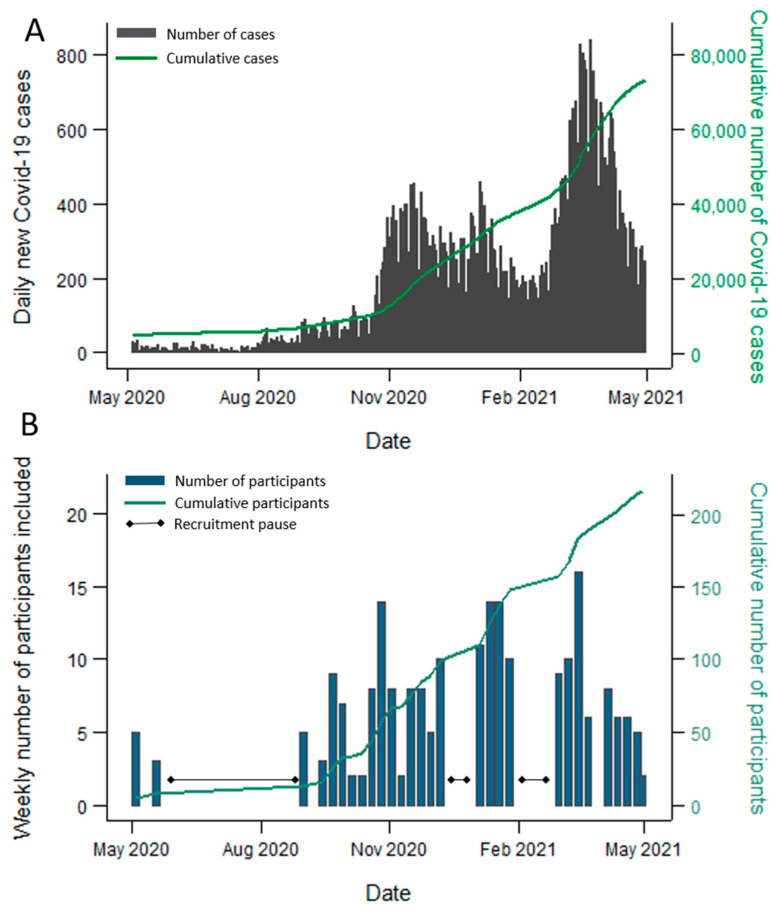
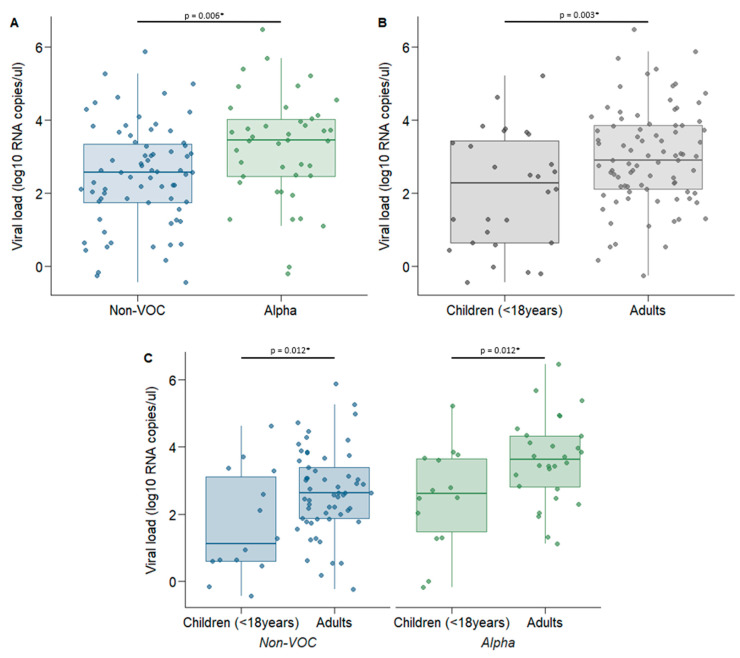
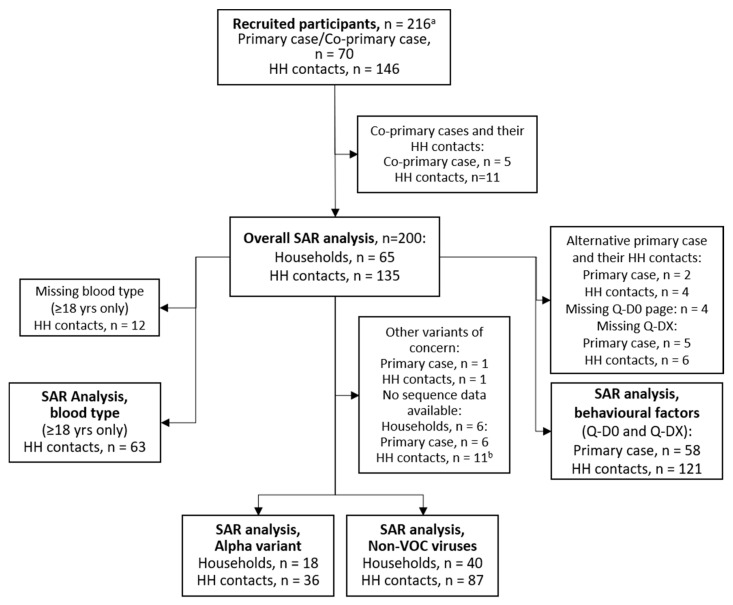
We studied the secondary attack rate (SAR), risk factors, and precautionary practices of household transmission in a prospective, longitudinal study. We further compared transmission between the Alpha (B.1.1.7) variant and non-Variant of Concern (non-VOC) viruses. From May 2020 throughout April 2021, we recruited 70 confirmed COVID-19 cases with 146 household contacts. Participants donated biological samples eight times over 6 weeks and answered questionnaires. SARS-CoV-2 infection was detected by real-time RT-PCR. Whole genome sequencing and droplet digital PCR were used to establish virus variant and viral load. SARS-CoV-2 transmission occurred in 60% of the households, and the overall SAR for household contacts was 50%. The SAR was significantly higher for the Alpha variant (78%) compared with non-VOC viruses (43%) and was associated with a higher viral load. SAR was higher in household contacts aged ≥40 years (69%) than in younger contacts (40-47%), and for contacts of primary cases with loss of taste/smell. Children had lower viral loads and were more often asymptomatic than adults. Sleeping separately from the primary case reduced the risk of transmission. In conclusion, we found substantial household transmission, particularly for the Alpha variant. Precautionary practices seem to reduce SAR, but preventing household transmission may become difficult with more contagious variants, depending on vaccine use and effectiveness.
我们在一项前瞻性纵向研究中,对家庭传播的二代发病率(SAR)、风险因素及预防措施进行了研究。我们还比较了阿尔法(B.1.1.7)变异株与非关注变异株(非VOC)病毒之间的传播情况。从2020年5月至2021年4月,我们招募了70例确诊的新冠病毒病病例及其146名家庭接触者。参与者在6周内八次捐献生物样本并回答问卷。通过实时逆转录聚合酶链反应检测严重急性呼吸综合征冠状病毒2(SARS-CoV-2)感染情况。采用全基因组测序和数字液滴聚合酶链反应确定病毒变异株及病毒载量。60%的家庭发生了SARS-CoV-2传播,家庭接触者的总体二代发病率为50%。与非VOC病毒(43%)相比,阿尔法变异株的二代发病率显著更高(78%),且与更高的病毒载量相关。年龄≥40岁的家庭接触者的二代发病率(69%)高于较年轻的接触者(40 - 47%),对于出现味觉/嗅觉丧失的首例病例的接触者也是如此。儿童的病毒载量较低,且比成人更常无症状。与首例病例分开睡可降低传播风险。总之,我们发现存在大量家庭传播,尤其是对于阿尔法变异株。预防措施似乎可降低二代发病率,但随着变异株传染性增强,根据疫苗使用情况及有效性,预防家庭传播可能会变得困难。