• 文献检索
  • 文档翻译
  • 深度研究
  • 学术资讯
  • Suppr Zotero 插件Zotero 插件
  • 邀请有礼
  • 套餐&价格
  • 历史记录
应用&插件
Suppr Zotero 插件Zotero 插件浏览器插件Mac 客户端Windows 客户端微信小程序
定价
高级版会员购买积分包购买API积分包
服务
文献检索文档翻译深度研究API 文档MCP 服务
关于我们
关于 Suppr公司介绍联系我们用户协议隐私条款
关注我们

Suppr 超能文献

核心技术专利:CN118964589B侵权必究
粤ICP备2023148730 号-1Suppr @ 2026

文献检索

告别复杂PubMed语法,用中文像聊天一样搜索,搜遍4000万医学文献。AI智能推荐,让科研检索更轻松。

立即免费搜索

文件翻译

保留排版,准确专业,支持PDF/Word/PPT等文件格式,支持 12+语言互译。

免费翻译文档

深度研究

AI帮你快速写综述,25分钟生成高质量综述,智能提取关键信息,辅助科研写作。

立即免费体验

从卡纳克的 KV40 新王国埃及遗址探讨去脑术中外鼻道和前颅底的重要性。

The importance of the nasopharynx and anterior skull base in excerebration techniques from KV40, a New Kingdom Egyptian site.

机构信息

Institute of Evolutionary Medicine (IEM), University of Zurich, Zurich.

Department of Ancient Civilisations, University of Basel, Basel, Switzerland.

出版信息

Anat Rec (Hoboken). 2022 Aug;305(8):1938-1946. doi: 10.1002/ar.24828. Epub 2021 Nov 27.

DOI:10.1002/ar.24828
PMID:34837472
原文链接:https://pmc.ncbi.nlm.nih.gov/articles/PMC9543951/
Abstract

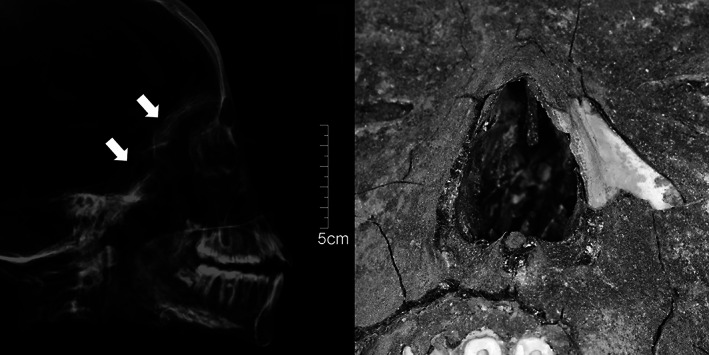
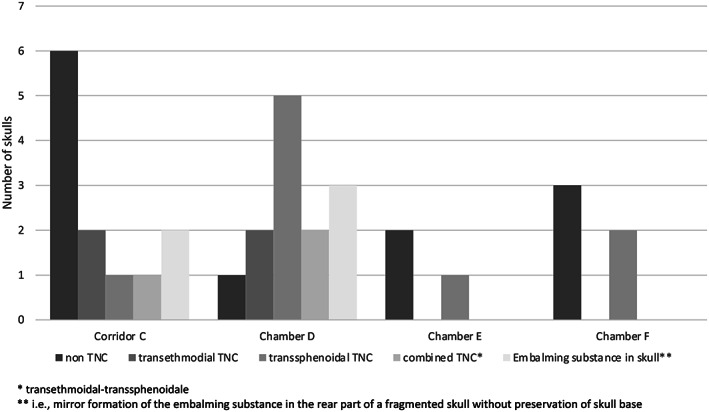
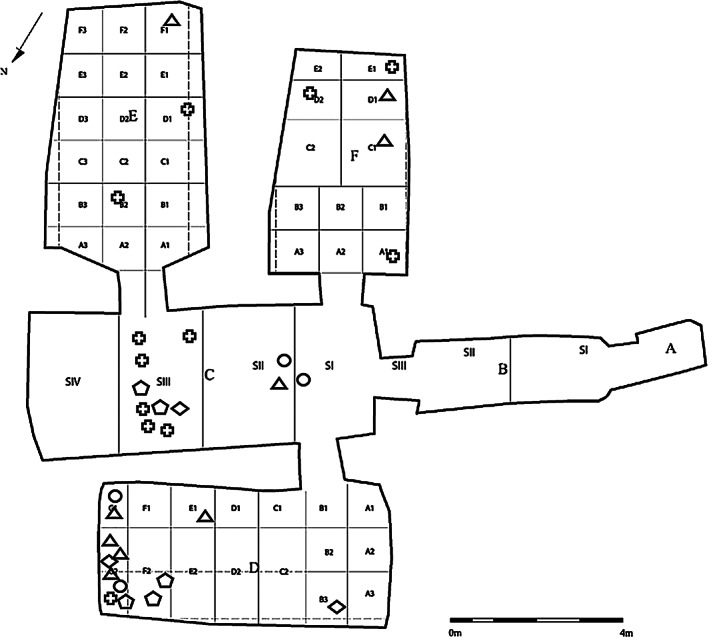
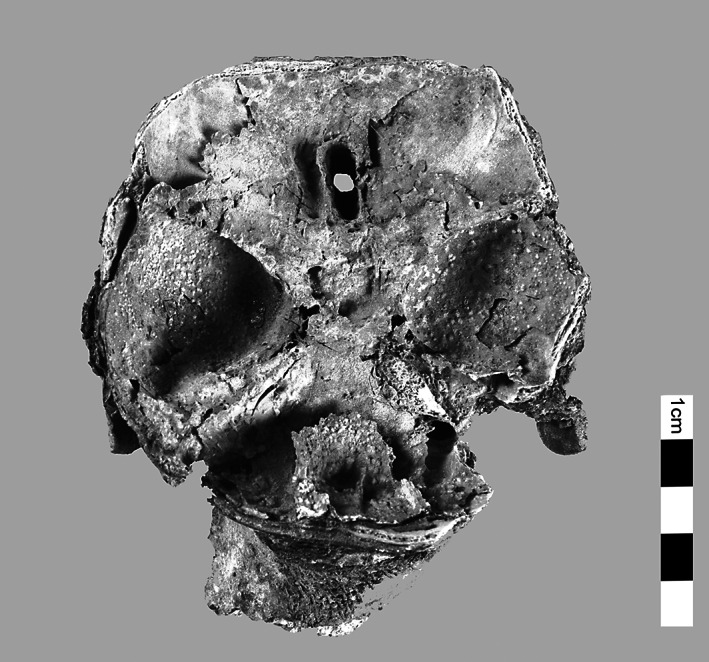
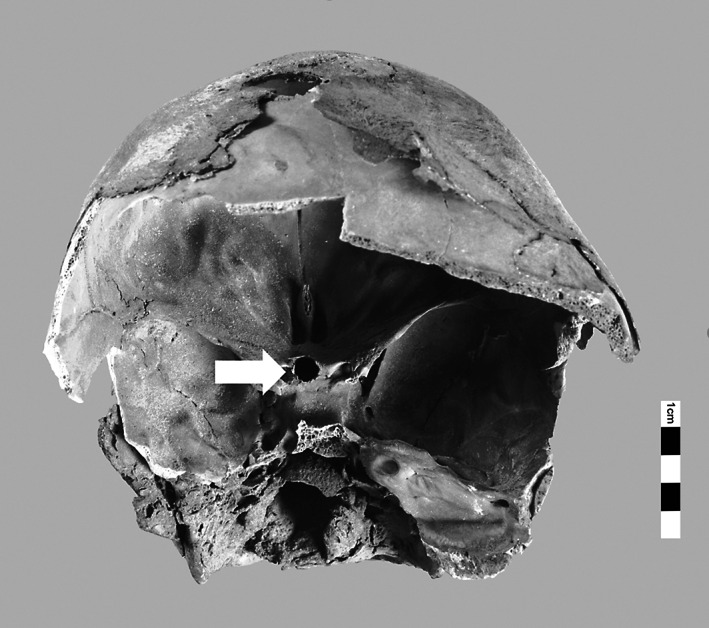
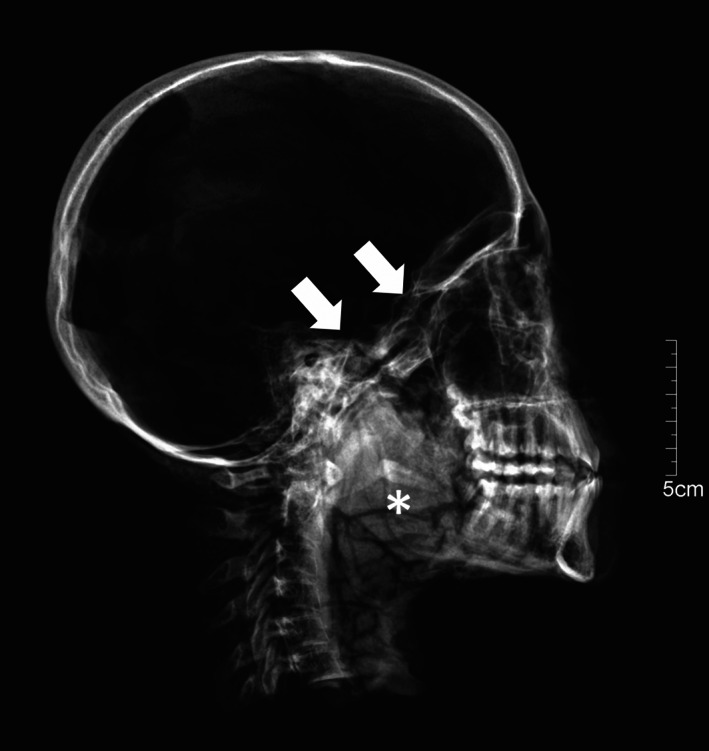
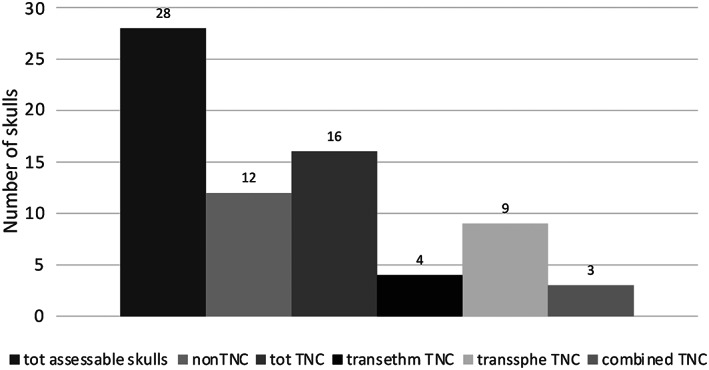
In ancient Egypt, a unique technique for removing the brain was invented as part of the mummification practice and refined over the centuries. This usually involved piercing the anterior skull base through a nasal passage to remove the brain remnants through that perforation. From 2010 to 2018, an interdisciplinary team of the Universities of Basel and Zurich investigated tomb no. 40 (KV40) in the Valley of the Kings, Luxor, Egypt. Archaeological findings indicate a first burial phase during the mid-18th Dynasty (ca. 1400-1350 BCE) and a second in the 22nd to 25th Dynasty (approx. 900-700 BCE). Repeated looting since ancient times severely damaged and commingled the human remains of the two burial phases. The detailed examination of the skulls showed evidence of different transnasal craniotomy practices. This study aims to provide a systematic presentation of the evidence for different excerebration techniques found in the mummy heads, skulls, and skull fragments from KV40, reflecting the long period of occupancy of this tomb by individuals of different social classes.

摘要

在古埃及,作为木乃伊制作实践的一部分,发明了一种独特的去除大脑的技术,并在几个世纪中不断完善。这通常涉及通过鼻道刺穿颅前底,通过那个穿孔将大脑残留物取出。2010 年至 2018 年,巴塞尔大学和苏黎世大学的一个跨学科团队对埃及卢克索国王谷的 40 号墓(KV40)进行了调查。考古发现表明,这是第十八王朝中期(约公元前 1400-1350 年)的第一次埋葬阶段,以及第二十二至二十五王朝(约公元前 900-700 年)的第二次埋葬阶段。自古以来的多次盗墓行为严重破坏和混淆了这两个埋葬阶段的人类遗骸。对颅骨的详细检查显示出不同经鼻颅切开术实践的证据。本研究旨在系统展示 KV40 的木乃伊头、颅骨和颅骨碎片中发现的不同去脑技术的证据,反映了该墓长期以来由不同社会阶层的个体占据。
https://cdn.ncbi.nlm.nih.gov/pmc/blobs/34f2/9543951/8f8820ac14e0/AR-305-1938-g001.jpg
https://cdn.ncbi.nlm.nih.gov/pmc/blobs/34f2/9543951/fcfe6f457cd8/AR-305-1938-g002.jpg
https://cdn.ncbi.nlm.nih.gov/pmc/blobs/34f2/9543951/c306579ccfb7/AR-305-1938-g004.jpg
https://cdn.ncbi.nlm.nih.gov/pmc/blobs/34f2/9543951/e1b8ef56a395/AR-305-1938-g003.jpg
https://cdn.ncbi.nlm.nih.gov/pmc/blobs/34f2/9543951/4795988f8d15/AR-305-1938-g007.jpg
https://cdn.ncbi.nlm.nih.gov/pmc/blobs/34f2/9543951/7c4cfaff5fcc/AR-305-1938-g006.jpg
https://cdn.ncbi.nlm.nih.gov/pmc/blobs/34f2/9543951/6c2e1b7b92f8/AR-305-1938-g005.jpg
https://cdn.ncbi.nlm.nih.gov/pmc/blobs/34f2/9543951/8f8820ac14e0/AR-305-1938-g001.jpg
https://cdn.ncbi.nlm.nih.gov/pmc/blobs/34f2/9543951/fcfe6f457cd8/AR-305-1938-g002.jpg
https://cdn.ncbi.nlm.nih.gov/pmc/blobs/34f2/9543951/c306579ccfb7/AR-305-1938-g004.jpg
https://cdn.ncbi.nlm.nih.gov/pmc/blobs/34f2/9543951/e1b8ef56a395/AR-305-1938-g003.jpg
https://cdn.ncbi.nlm.nih.gov/pmc/blobs/34f2/9543951/4795988f8d15/AR-305-1938-g007.jpg
https://cdn.ncbi.nlm.nih.gov/pmc/blobs/34f2/9543951/7c4cfaff5fcc/AR-305-1938-g006.jpg
https://cdn.ncbi.nlm.nih.gov/pmc/blobs/34f2/9543951/6c2e1b7b92f8/AR-305-1938-g005.jpg
https://cdn.ncbi.nlm.nih.gov/pmc/blobs/34f2/9543951/8f8820ac14e0/AR-305-1938-g001.jpg

相似文献

1
The importance of the nasopharynx and anterior skull base in excerebration techniques from KV40, a New Kingdom Egyptian site.从卡纳克的 KV40 新王国埃及遗址探讨去脑术中外鼻道和前颅底的重要性。
Anat Rec (Hoboken). 2022 Aug;305(8):1938-1946. doi: 10.1002/ar.24828. Epub 2021 Nov 27.
2
Findings in ancient Egyptian mummies from tomb KV64, Valley of the Kings, Luxor, with evidence of a rheumatic disease.从卢克索帝王谷 KV64 古墓出土的古埃及木乃伊中发现风湿性疾病的证据。
Scand J Rheumatol. 2023 Mar;52(2):150-160. doi: 10.1080/03009742.2021.2020464. Epub 2022 Mar 2.
3
Transnasal excerebration surgery in ancient Egypt.经鼻前颅底手术:古埃及的医学实践
J Neurosurg. 2012 Apr;116(4):743-8. doi: 10.3171/2011.12.JNS11417. Epub 2012 Jan 6.
4
Variability in brain treatment during mummification of royal Egyptians dated to the 18th-20th dynasties: MDCT findings correlated with the archaeologic literature.第十八至二十王朝的埃及皇家木乃伊化过程中大脑处理的变化:与考古文献相关的 MDCT 发现。
AJR Am J Roentgenol. 2013 Apr;200(4):W336-44. doi: 10.2214/AJR.12.9405.
5
New Ancient Egyptian Human Mummies from the Valley of the Kings, Luxor: Anthropological, Radiological, and Egyptological Investigations.来自卢克索帝王谷的新古埃及人类木乃伊:人类学、放射学和埃及学调查。
Biomed Res Int. 2015;2015:530362. doi: 10.1155/2015/530362. Epub 2015 Aug 6.
6
Morphologic-anthropological investigations in tomb K93.12 at Dra' Abu el-Naga (Western Thebes, Egypt).在埃及西部底比斯德拉阿布埃尔纳加的K93.12号墓进行的形态学-人类学调查。
Anthropol Anz. 2014;71(1-2):105-22. doi: 10.1127/0003-5548/2014/0401.
7
Metastatic carcinoma in human remains from TT110, Luxor, Egypt (ancient Thebes).来自埃及卢克索 TT110 的人类遗骸中的转移性癌(古底比斯)。
Homo. 2021 Dec 21;72(4):307-316. doi: 10.1127/homo/2021/1477.
8
A Possible Stroke Victim from Pharaonic Egypt.古埃及可能的中风患者。
World Neurosurg. 2022 Sep;165:e664-e667. doi: 10.1016/j.wneu.2022.06.123. Epub 2022 Jun 30.
9
Head and skull base features of nine Egyptian mummies: evaluation with high-resolution CT and reformation techniques.九具埃及木乃伊的头部和颅底特征:采用高分辨率CT及重建技术进行评估
AJR Am J Roentgenol. 2002 Jun;178(6):1367-76. doi: 10.2214/ajr.178.6.1781367.
10
A synthetic radiological study of brain treatment in ancient Egyptian mummies.古埃及木乃伊脑部治疗的综合放射学研究。
Homo. 2011 Aug;62(4):248-69. doi: 10.1016/j.jchb.2011.01.004. Epub 2011 Apr 8.

本文引用的文献

1
Skull base imaging, anatomy, pathology and protocols.颅底成像、解剖学、病理学及诊疗规范。
Pract Neurol. 2020 Feb;20(1):39-49. doi: 10.1136/practneurol-2019-002383. Epub 2019 Oct 24.
2
Application of portable digital radiography for dental investigations of ancient Egyptian mummies during archaeological excavations: Evaluation and discussion of the advantages and limitations of different approaches and projections.便携式数字射线照相术在考古发掘中用于古埃及木乃伊牙齿研究的应用:不同方法和投照的优势与局限性评估及讨论
Imaging Sci Dent. 2018 Sep;48(3):167-176. doi: 10.5624/isd.2018.48.3.167. Epub 2018 Sep 18.
3
First-time complete visualization of a preserved meningeal artery in the mummy of Nakht-ta-Netjeret (ca. 950 BC).
首次完整呈现纳克特-塔-内杰雷特(约公元前 950 年)木乃伊中的脑膜动脉。
Neurol Sci. 2019 Feb;40(2):409-411. doi: 10.1007/s10072-018-3565-1. Epub 2018 Sep 13.
4
"The opening of the mouth"--a new perspective for an ancient Egyptian mummification procedure.
Anat Rec (Hoboken). 2015 Jun;298(6):1208-16. doi: 10.1002/ar.23140.
5
Radiological evaluation of the evisceration tradition in ancient Egyptian mummies.古埃及木乃伊内脏摘除传统的放射学评估。
Homo. 2013 Feb;64(1):1-28. doi: 10.1016/j.jchb.2012.11.005. Epub 2013 Jan 3.
6
The journey of discovering skull base anatomy in ancient Egypt and the special influence of Alexandria.探索古埃及颅底解剖学的历程,以及亚历山大港的特殊影响。
Neurosurg Focus. 2012 Aug;33(2):E2. doi: 10.3171/2012.6.FOCUS12128.
7
Transnasal excerebration surgery in ancient Egypt.经鼻前颅底手术:古埃及的医学实践
J Neurosurg. 2012 Apr;116(4):743-8. doi: 10.3171/2011.12.JNS11417. Epub 2012 Jan 6.
8
A synthetic radiological study of brain treatment in ancient Egyptian mummies.古埃及木乃伊脑部治疗的综合放射学研究。
Homo. 2011 Aug;62(4):248-69. doi: 10.1016/j.jchb.2011.01.004. Epub 2011 Apr 8.
9
High-resolution imaging of an ancient Egyptian mummified head: new insights into the mummification process.古埃及木乃伊头部的高分辨率成像:对木乃伊制作过程的新见解。
AJNR Am J Neuroradiol. 2008 Apr;29(4):705-13. doi: 10.3174/ajnr.A0909. Epub 2008 Jan 31.
10
Head and skull base features of nine Egyptian mummies: evaluation with high-resolution CT and reformation techniques.九具埃及木乃伊的头部和颅底特征:采用高分辨率CT及重建技术进行评估
AJR Am J Roentgenol. 2002 Jun;178(6):1367-76. doi: 10.2214/ajr.178.6.1781367.