Department of Investigational Cancer Therapeutics (Phase I Program), University of Texas MD Anderson Cancer Center, Houston, USA.
Department of Thoracic/Head and Neck Medical Oncology, University of Texas MD Anderson Cancer Center, Houston, USA.
ESMO Open. 2021 Dec;6(6):100319. doi: 10.1016/j.esmoop.2021.100319. Epub 2021 Nov 24.
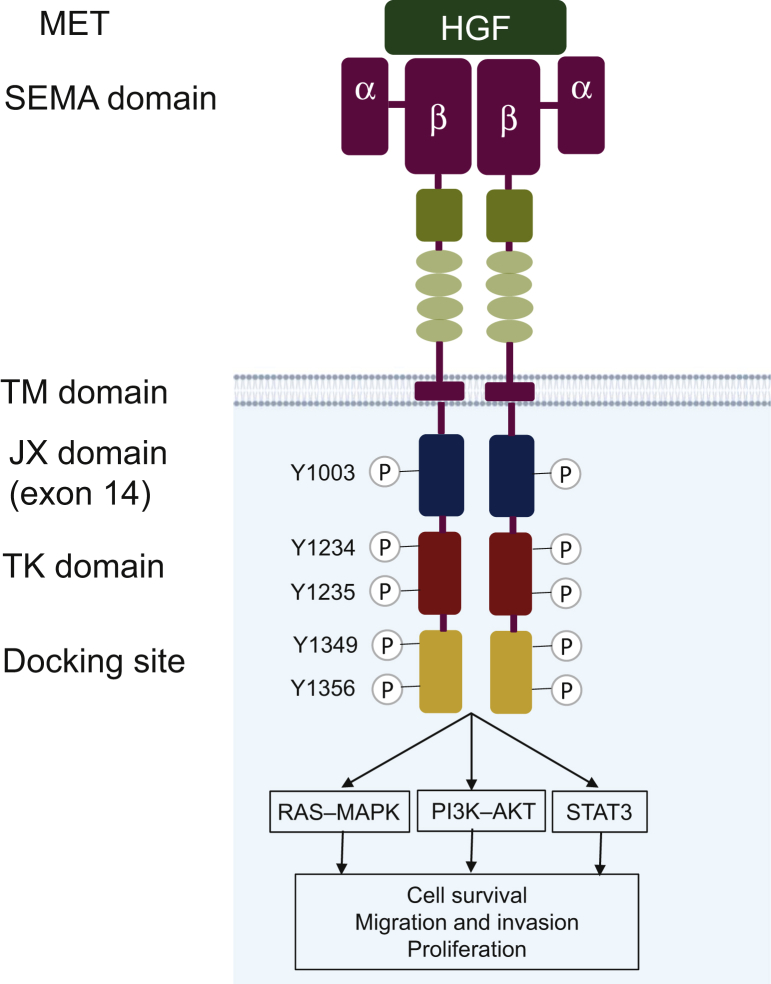
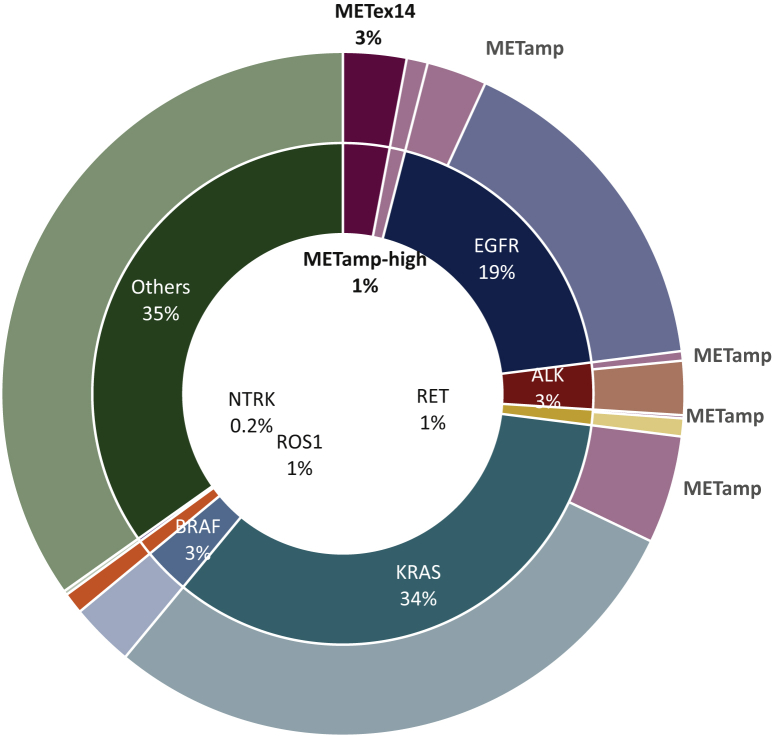
The rapidly changing treatment paradigm for patients with metastatic oncogene-driven lung cancer continues to evolve, and consequently our understanding of the landscape of resistance must also advance. MET amplification is an established and frequent driver of resistance in EGFR-mutant non-small-cell lung cancer (NSCLC). Recently, the combination of MET proto-oncogene (MET) and epidermal growth factor receptor (EGFR) tyrosine kinase inhibitors (TKIs) has shown promise in overcoming this molecularly defined resistance in clinical trials, and this combination strategy is being pursued in ongoing trials. Emerging data also demonstrate MET amplification as a resistance driver to TKI-treated ALK-, RET-, and ROS-1-fusion NSCLC, consistently at the range of 15%, while the resistance profiling data are maturing for other molecular targets. In this review, we discuss MET amplification as a driver of acquired resistance in well-defined molecular subsets of NSCLC, explore the biology behind this mechanism of resistance, and summarize the recently published clinical data, including the proposed combination strategies in the clinic achieving success in overcoming acquired MET amplification-dependent resistance.
对于携带致癌基因驱动的转移性肺癌患者,其治疗模式正在迅速改变,因此我们对耐药机制的理解也必须随之进步。MET 扩增是 EGFR 突变型非小细胞肺癌(NSCLC)中明确且常见的耐药驱动因素。最近,MET 原癌基因(MET)和表皮生长因子受体(EGFR)酪氨酸激酶抑制剂(TKI)联合应用在临床试验中显示出克服这种分子定义耐药的潜力,这一联合策略正在进行中的试验中探索。新出现的数据还表明,MET 扩增是ALK、RET 和 ROS-1 融合 NSCLC 患者对 TKI 治疗产生耐药的驱动因素,其耐药率在 15%左右,而其他分子靶点的耐药分析数据也在不断完善。在这篇综述中,我们讨论了 MET 扩增作为 NSCLC 明确分子亚群获得性耐药的驱动因素,探讨了这种耐药机制背后的生物学原理,并总结了最近发表的临床数据,包括在临床中成功克服获得性 MET 扩增依赖性耐药的联合治疗策略。