Soeiro Rachel E, Rocha Leila, Surita Fernanda G, Bahamondes Luis, Costa Maria L
Department of Obstetrics and Gynecology, Faculty of Medical Sciences, The University of Campinas, 101 Alexander Fleming St, Campinas, SP, Brazil.
Reprod Health. 2021 Nov 27;18(1):238. doi: 10.1186/s12978-021-01285-7.
Adolescent and young women (10-24 years old) are habitually a neglected group in humanitarian settings. Menstrual hygiene management (MHM) is an unmet aspect of sexual and reproductive health (SRH) and an additional challenge if lack of hygiene products, inadequate access to safe, clean, and private toilets identified as period poverty. Our objective was to provide an overview of the main MHM issues affecting Venezuelan migrant adolescents and young women in the north-western border of Venezuela-Brazil.
A cross-sectional study was conducted, early in 2021, with the use of a self-responded questionnaire, in Spanish, adapted from the Menstrual Practice Needs Scale (MPNS-36). All identified adolescents and young women aged between 12 and 24 years old were invited to participate (convenience sample-167 women). Women with complete questionnaires and who menstruate were included. Information on access to and quality of hygiene kits and toilets were retrieved, and a descriptive analysis performed, with an evaluation of frequencies for categorical variables (n, %) and mean (± SD-standard deviation) for continuous variables. In addition to the open-ended questions, we included one open question about their personal experience with menstruation.
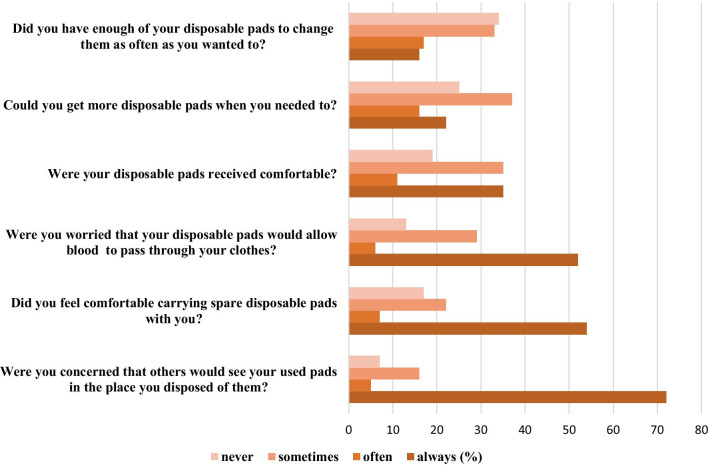
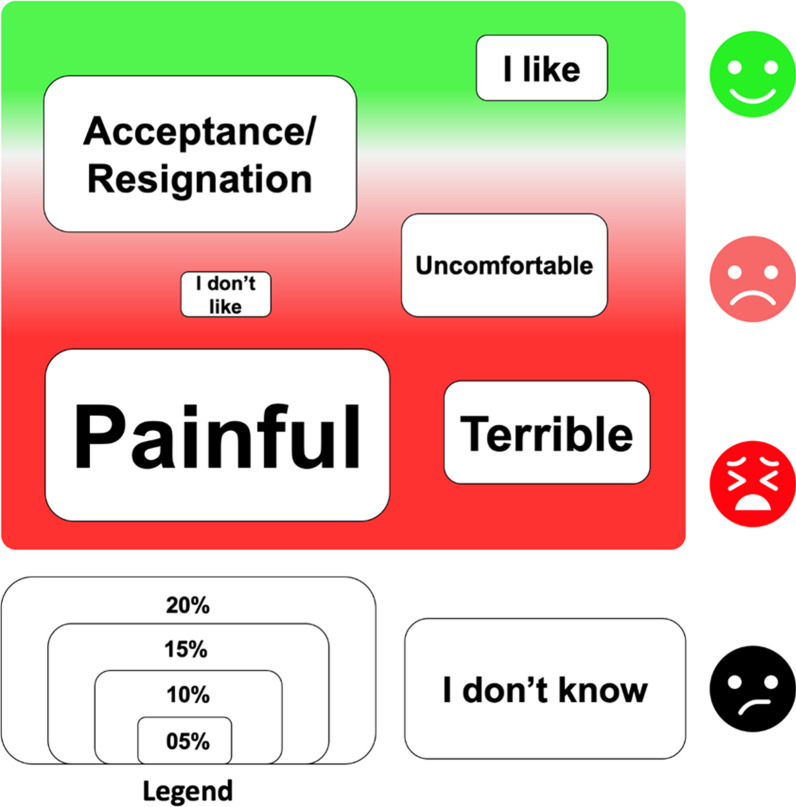
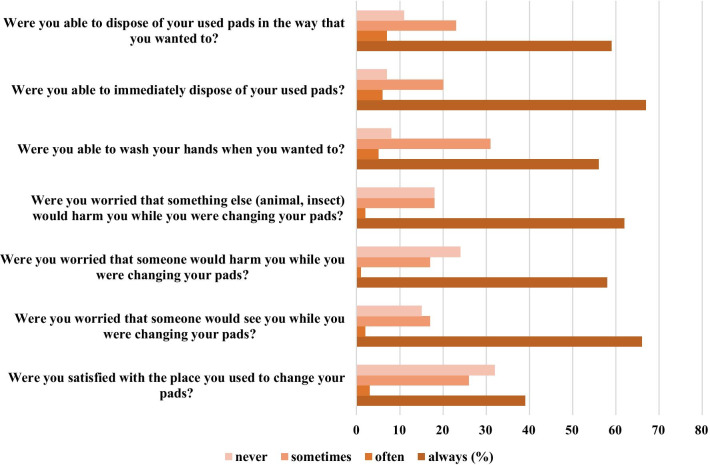
According to official reports, at the moment of the interviews, there were 1.603 Venezuelans living on the streets in Boa Vista. A total of 167 young women were invited, and 142 further included, mean age was 17.7 years, almost half of the participants who menstruate (46.4%) did not receive any hygiene kits, 61% were not able to wash their hands whenever they wanted, and the majority (75.9%) did not feel safe to use the toilets. Further, menstruation was often described with negative words.
Migrant Venezuelan adolescents and young women have their MHM needs overlooked, with evident period poverty, and require urgent attention. It is necessary to assure appropriate menstrual materials, education, and sanitation facilities, working in partnership among governmental and non-governmental organizations to guarantee menstrual dignity to these young women.
在人道主义环境中,青少年及年轻女性(10 - 24岁)一直是被忽视的群体。月经卫生管理(MHM)是性与生殖健康(SRH)中未得到满足的一个方面,若缺乏卫生用品、安全、清洁且私密的厕所使用不便,即所谓的“经期贫困”,则会带来额外挑战。我们的目标是概述影响委内瑞拉 - 巴西西北边境地区委内瑞拉移民青少年及年轻女性的主要月经卫生管理问题。
2021年初开展了一项横断面研究,使用从《月经实践需求量表》(MPNS - 36)改编而来的西班牙语自填问卷。邀请了所有年龄在12至24岁之间的已识别青少年及年轻女性参与(便利样本 - 167名女性)。纳入问卷完整且有月经的女性。收集了关于卫生用品套装和厕所的获取情况及质量的信息,并进行描述性分析,对分类变量的频率(n,%)和连续变量的均值(±标准差)进行评估。除了开放式问题外,我们还纳入了一个关于她们月经个人经历的开放性问题。
根据官方报告,在访谈时,博阿维斯塔有1603名委内瑞拉人露宿街头。共邀请了167名年轻女性,142名被进一步纳入研究,平均年龄为17.7岁,近一半有月经的参与者(46.4%)未收到任何卫生用品套装,61%的人无法随时洗手,大多数人(75.9%)使用厕所时感到不安全。此外,月经常被用负面词汇描述。
委内瑞拉移民青少年及年轻女性的月经卫生管理需求被忽视,存在明显的经期贫困,需要紧急关注。有必要确保提供适当的月经用品、教育和卫生设施,政府和非政府组织需合作,保障这些年轻女性的经期尊严。