BGI-Shenzhen, Shenzhen, China.
Section for Ecology and Evolution, Department of Biology, University of Copenhagen, Copenhagen, Denmark.
Mol Ecol Resour. 2022 May;22(4):1559-1581. doi: 10.1111/1755-0998.13561. Epub 2021 Dec 8.
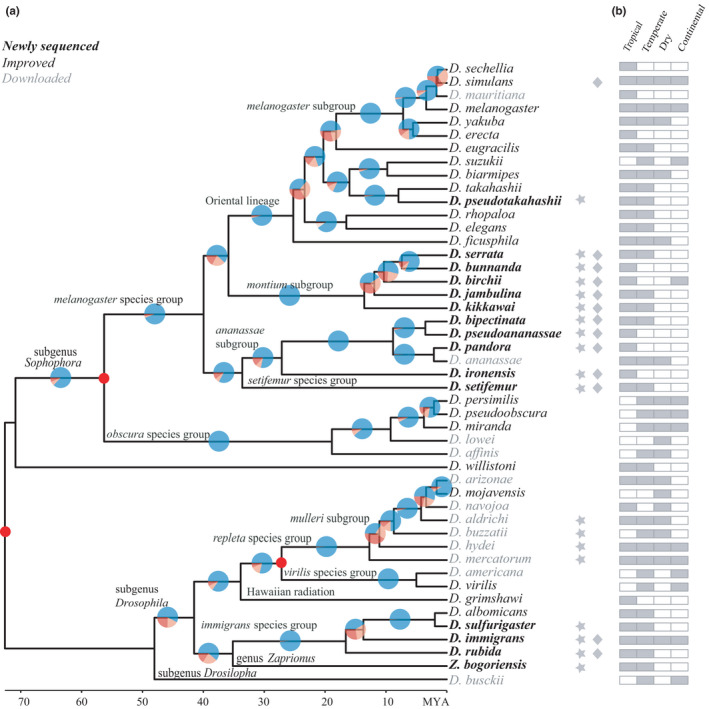
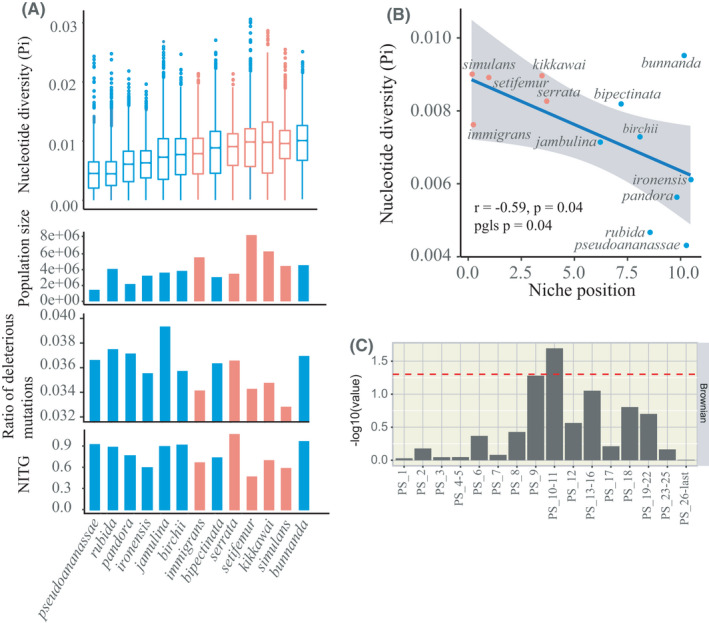
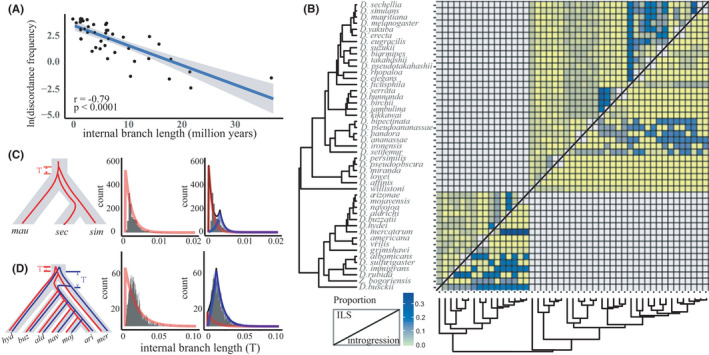
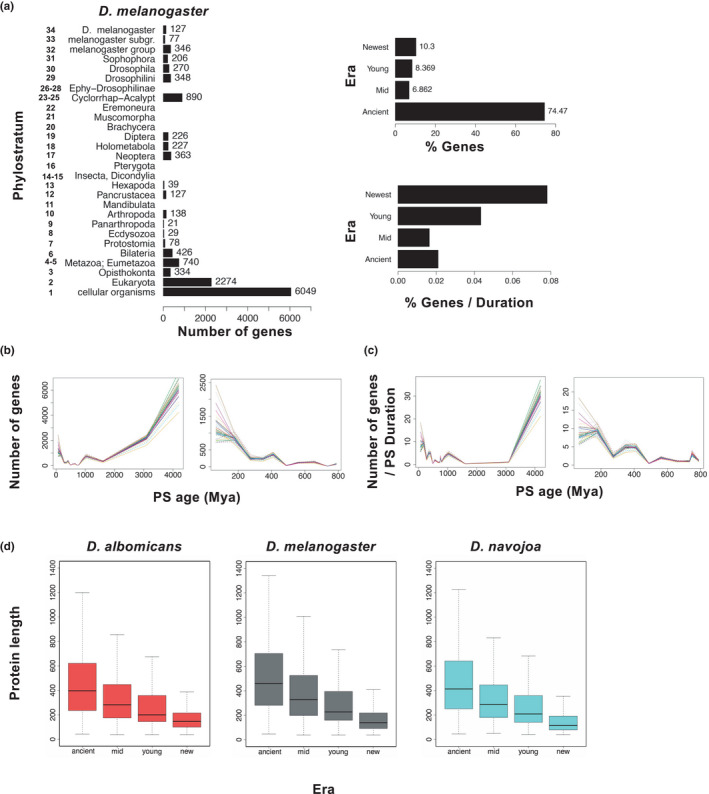
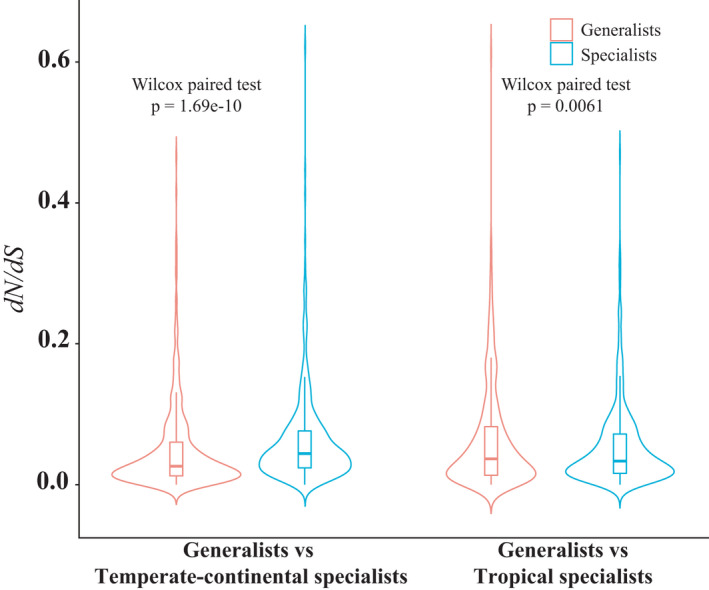
Many Drosophila species differ widely in their distributions and climate niches, making them excellent subjects for evolutionary genomic studies. Here, we have developed a database of high-quality assemblies for 46 Drosophila species and one closely related Zaprionus. Fifteen of the genomes were newly sequenced, and 20 were improved with additional sequencing. New or improved annotations were generated for all 47 species, assisted by new transcriptomes for 19. Phylogenomic analyses of these data resolved several previously ambiguous relationships, especially in the melanogaster species group. However, it also revealed significant phylogenetic incongruence among genes, mainly in the form of incomplete lineage sorting in the subgenus Sophophora but also including asymmetric introgression in the subgenus Drosophila. Using the phylogeny as a framework and taking into account these incongruences, we then screened the data for genome-wide signals of adaptation to different climatic niches. First, phylostratigraphy revealed relatively high rates of recent novel gene gain in three temperate pseudoobscura and five desert-adapted cactophilic mulleri subgroup species. Second, we found differing ratios of nonsynonymous to synonymous substitutions in several hundred orthologues between climate generalists and specialists, with trends for significantly higher ratios for those in tropical and lower ratios for those in temperate-continental specialists respectively than those in the climate generalists. Finally, resequencing natural populations of 13 species revealed tropics-restricted species generally had smaller population sizes, lower genome diversity and more deleterious mutations than the more widespread species. We conclude that adaptation to different climates in the genus Drosophila has been associated with large-scale and multifaceted genomic changes.
许多果蝇物种在分布和气候生态位上存在广泛差异,使它们成为进化基因组研究的优秀对象。在这里,我们为 46 种果蝇和 1 种亲缘关系密切的 Zaprionus 物种开发了一个高质量基因组组装数据库。其中 15 个基因组是新测序的,20 个基因组通过额外的测序得到了改进。所有 47 个物种的新或改进注释都是在新的 19 个转录组的辅助下生成的。对这些数据的系统发育基因组分析解决了几个以前不明确的关系,特别是在 melanogaster 物种群中。然而,它也揭示了基因之间存在显著的系统发育不一致,主要表现为 Sophophora 亚属中的不完全谱系分选,也包括在 Drosophila 亚属中的不对称基因渗入。利用系统发育作为框架,并考虑到这些不一致性,我们随后在数据中筛选了适应不同气候生态位的全基因组信号。首先,系统发育地层学揭示了三个温带 pseudoobscura 和五个适应沙漠的 cactophilic mulleri 亚组物种中最近新基因获得的相对较高速率。其次,我们发现了在气候广适性物种和专化性物种之间的几百个直系同源物中非同义替换与同义替换的比值存在差异,热带物种的比值明显较高,而温带大陆性专化性物种的比值较低,均高于气候广适性物种。最后,对 13 个物种的自然种群进行重测序揭示了热带限制物种的种群规模通常比分布更广泛的物种小,基因组多样性更低,有害突变更多。我们得出结论,果蝇属中对不同气候的适应与大规模和多方面的基因组变化有关。