Debnath Poly Rani, Islam Md Saiful, Karmakar Prodip Kumar, Sarker Rumpa, Zhai Zu Wei, Potenza Marc N
Department of Pharmacology & Therapeutics, Sher-E-Bangla Medical College, Barishal, 8200 Bangladesh.
Department of Public Health and Informatics, Jahangirnagar University, Savar, Dhaka, 1342 Bangladesh.
Int J Ment Health Addict. 2021 Nov 19:1-21. doi: 10.1007/s11469-021-00690-0.
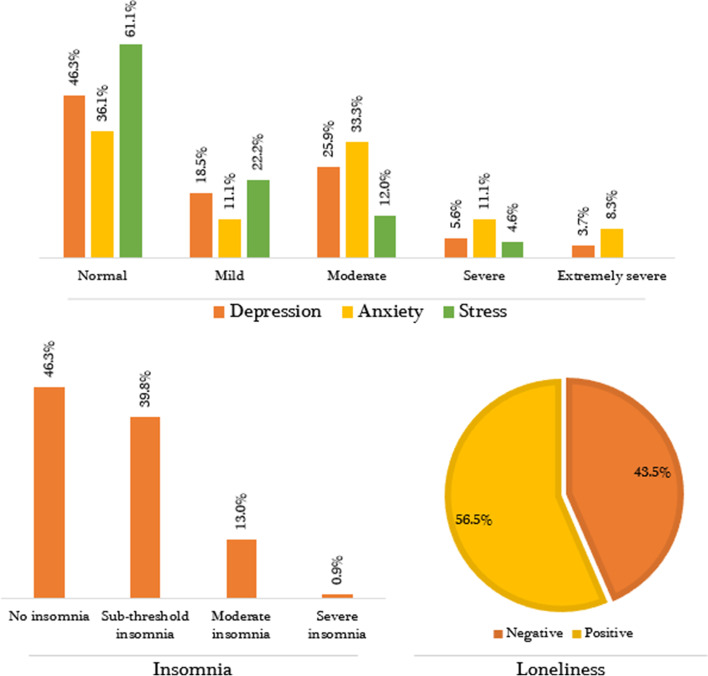
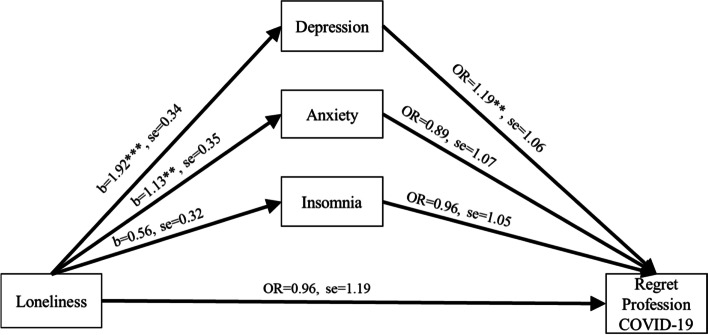
Precisely how intern doctors (or trainee physicians) have been impacted during the COVID-19 pandemic is currently poorly understood. The present study aimed to investigate the mental health consequences (i.e., depression, anxiety, and stress), insomnia, and loneliness among intern doctors in Bangladesh amidst the pandemic. A cross-sectional offline survey of 108 intern doctors (53.7 % female; mean age = 24.80 ± 1.08; age range = 23-29 years) in a large tertiary care hospital in Bangladesh was conducted. The participants were surveyed randomly from respective wards during their duties with an anonymous and self-reported questionnaire assessing socio-demographics, COVID-19-related consideration, mental health, insomnia, loneliness, and other measures. Hierarchical regression analyses were conducted to examine relationships. The prevalence estimates of mild to extremely severe depression, anxiety, and stress were 53.7 %, 63.9 %, and 38.9 %, respectively. Sub-threshold to severe insomnia was acknowledged by 53.7 % and loneliness by 43.5 %. Depression was associated with not receiving mental health counseling during the pandemic, anxiety, stress, and loneliness; anxiety was associated with depression and stress; stress was associated with depression, anxiety, and loneliness; insomnia was associated with being married; and loneliness was associated with poorer quality of life, depression, and stress. Depression, but not anxiety and insomnia, fully mediated the relationship between loneliness and regret regarding choice of profession because of the pandemic and its many unexpected experiences. The findings showed considerable mental health concerns, insomnia, and loneliness among intern doctors in Bangladesh during the COVID-19 pandemic. Future studies should further explore the role of mental health concerns in healthcare providers and perceptions of their profession during the pandemic, and examine interventions to help this vulnerable population.
目前,对于实习医生(或住院医师)在新冠疫情期间受到了怎样的影响,人们了解得还很少。本研究旨在调查孟加拉国实习医生在疫情期间的心理健康后果(即抑郁、焦虑和压力)、失眠和孤独感。在孟加拉国一家大型三级护理医院,对108名实习医生(53.7%为女性;平均年龄 = 24.80 ± 1.08;年龄范围 = 23 - 29岁)进行了横断面线下调查。在他们值班期间,从各个病房随机抽取参与者,使用一份匿名的自我报告问卷进行调查,该问卷评估社会人口统计学特征、与新冠疫情相关的考量、心理健康、失眠、孤独感及其他指标。进行分层回归分析以检验各因素之间的关系。轻度至极其严重的抑郁、焦虑和压力的患病率估计分别为53.7%、63.9%和38.9%。53.7%的人存在亚阈值至严重失眠,43.5%的人感到孤独。抑郁与在疫情期间未接受心理健康咨询、焦虑、压力和孤独感有关;焦虑与抑郁和压力有关;压力与抑郁、焦虑和孤独感有关;失眠与已婚有关;孤独感与较差的生活质量、抑郁和压力有关。抑郁,而非焦虑和失眠,完全介导了孤独感与因疫情及其诸多意外经历而对职业选择产生的遗憾之间的关系。研究结果表明,在新冠疫情期间,孟加拉国实习医生存在相当严重的心理健康问题、失眠和孤独感。未来的研究应进一步探讨心理健康问题在医护人员中的作用以及他们在疫情期间对自身职业的看法,并研究帮助这一弱势群体的干预措施。