Abhinav Agrawal, Priti Arun, Chandra Bala, Jatwinder Gaga
Department of Psychiatry, Government Medical College & Hospital, Sector 32, Chandigarh, 160047 India.
J Psychosoc Rehabil Ment Health. 2022;9(2):169-175. doi: 10.1007/s40737-021-00249-1. Epub 2021 Nov 22.
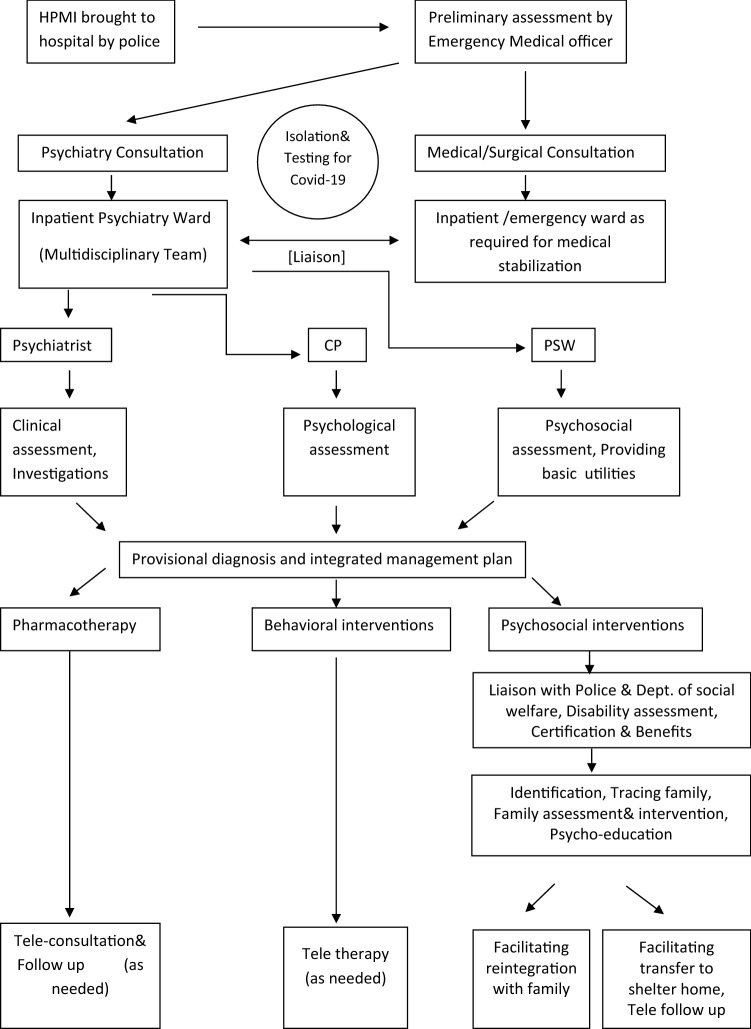
Homeless Persons with Mental Illness (HPMI) represent one of the most marginalized communities of the society. The psycho-social impact of the Coronavirus pandemic has been significant on the entire population but causes more suffering in the vulnerable population. During the initial phase of the pandemic in India, strict measures were taken to contain the infection that led to certain unique challenges for HPMI and in their reintegration with society. The series of cases highlight the multiple facets of problems faced and ways to counter them so as to effectively rehabilitate HPMI, with focus on the pandemic at hand. The involvement of a multidisciplinary team, utilization of technological advances and promoting effective liaison with various public sectors are suggested as the way forward.
患有精神疾病的无家可归者(HPMI)是社会中最边缘化的群体之一。冠状病毒大流行对整个人口产生了重大的心理社会影响,但给弱势群体带来了更多痛苦。在印度大流行的初始阶段,采取了严格措施来控制感染,这给患有精神疾病的无家可归者带来了某些独特挑战,也影响了他们重新融入社会。这一系列案例突出了所面临问题的多个方面以及应对这些问题的方法,以便有效地使患有精神疾病的无家可归者康复,重点是当前的大流行。建议多学科团队的参与、利用技术进步以及促进与各公共部门的有效联络作为前进的方向。