• 文献检索
  • 文档翻译
  • 深度研究
  • 学术资讯
  • Suppr Zotero 插件Zotero 插件
  • 邀请有礼
  • 套餐&价格
  • 历史记录
应用&插件
Suppr Zotero 插件Zotero 插件浏览器插件Mac 客户端Windows 客户端微信小程序
定价
高级版会员购买积分包购买API积分包
服务
文献检索文档翻译深度研究API 文档MCP 服务
关于我们
关于 Suppr公司介绍联系我们用户协议隐私条款
关注我们

Suppr 超能文献

核心技术专利:CN118964589B侵权必究
粤ICP备2023148730 号-1Suppr @ 2026

文献检索

告别复杂PubMed语法,用中文像聊天一样搜索,搜遍4000万医学文献。AI智能推荐,让科研检索更轻松。

立即免费搜索

文件翻译

保留排版,准确专业,支持PDF/Word/PPT等文件格式,支持 12+语言互译。

免费翻译文档

深度研究

AI帮你快速写综述,25分钟生成高质量综述,智能提取关键信息,辅助科研写作。

立即免费体验

2019年冠状病毒病疫情对印度的影响:政策与技术干预措施分析

Effects of the COVID-19 pandemic in India: An analysis of policy and technological interventions.

作者信息

Goel Isha, Sharma Seema, Kashiramka Smita

机构信息

Economics Indian Institute of Technology, New Delhi, India.

Indian Institute of Technology, New Delhi, India.

出版信息

Health Policy Technol. 2021 Mar;10(1):151-164. doi: 10.1016/j.hlpt.2020.12.001. Epub 2020 Dec 25.

DOI:10.1016/j.hlpt.2020.12.001
PMID:33520638
原文链接:https://pmc.ncbi.nlm.nih.gov/articles/PMC7837304/
Abstract

OBJECTIVES

Following a surge in cases of coronavirus disease 2019 (COVID-19) in June 2020, India became the third-worst affected country worldwide. This study aims to analyse the underlying epidemiological situation in India and explain possible impacts of policy and technological changes.

METHODS

Secondary data were utilized, including recently published literature from government sources, the COVID-19 India website and local media reports. These data were analysed, with a focus on the impact of policy and technological interventions.

RESULTS

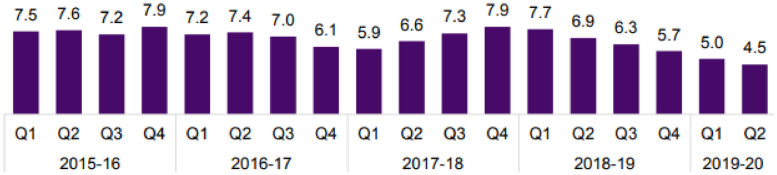
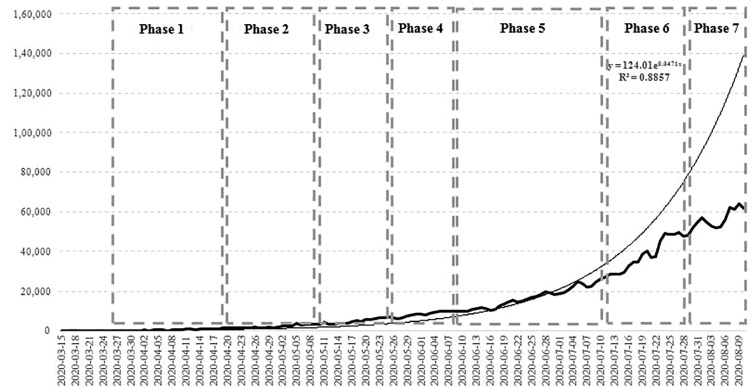
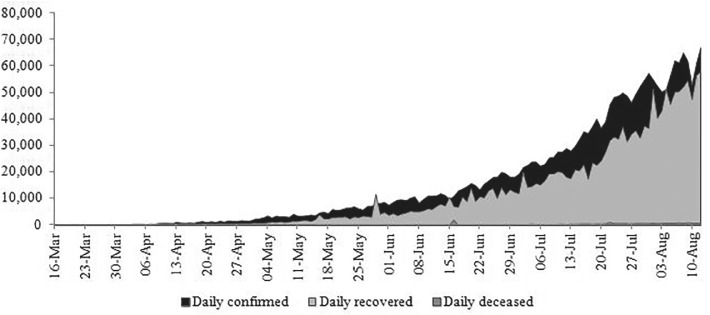
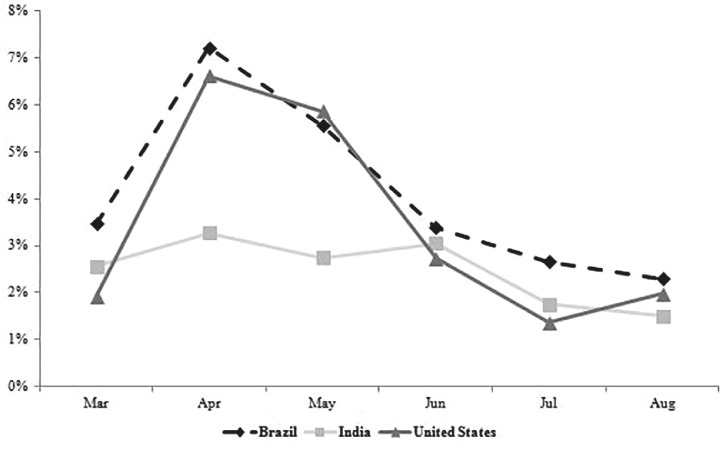
The spread of COVID-19 in India was initially characterized by fewer cases and lower case fatality rates compared with numbers in many developed countries, primarily due to a stringent lockdown and a demographic dividend. However, economic constraints forced a staggered lockdown exit strategy, resulting in a spike in COVID-19 cases. This factor, coupled with low spending on health as a percentage of gross domestic product (GDP), created mayhem because of inadequate numbers of hospital beds and ventilators and a lack of medical personnel, especially in the public health sector. Nevertheless, technological advances, supported by a strong research base, helped contain the damage resulting from the pandemic.

CONCLUSIONS

Following nationwide lockdown, the Indian economy was hit hard by unemployment and a steep decline in growth. The early implementation of lockdown initially decreased the doubling rate of cases and allowed time to upscale critical medical infrastructure. Measures such as asymptomatic testing, public-private partnerships, and technological advances will be essential until a vaccine can be developed and deployed in India.

PUBLIC INTEREST SUMMARY

The spread of COVID-19 in India was initially characterized by lower case numbers and fewer deaths compared with numbers in many developed countries. This was mainly due to a stringent lockdown and demographic factors. However, economic constraints forced a staggered lockdown exit strategy, resulting in a spike in COVID-19 cases in June 2020. Subsequently, India became the third-worst affected country worldwide. Low spending on health as a percentage of gross domestic product (GDP) meant there was a shortage of hospital beds and ventilators and a lack of medical personnel, especially in the public health sector. Nevertheless, technological advances, supported by a strong research base, helped contain the health and economic damage resulting from the pandemic. In the future, measures such as asymptomatic testing, public-private partnerships, and technological advances will be essential until a vaccine against COVID-19 can be developed and rolled-out in India.

摘要

目标

2020年6月,新型冠状病毒肺炎(COVID-19)病例激增后,印度成为全球受影响第三严重的国家。本研究旨在分析印度潜在的流行病学情况,并解释政策和技术变化可能产生的影响。

方法

利用二手数据,包括政府来源、COVID-19印度网站最近发表的文献以及当地媒体报道。对这些数据进行分析,重点关注政策和技术干预的影响。

结果

与许多发达国家相比,COVID-19在印度的传播最初表现为病例数较少和病死率较低,这主要归因于严格的封锁措施和人口红利。然而,经济限制迫使采取了逐步解封的策略,导致COVID-19病例激增。这一因素,再加上卫生支出占国内生产总值(GDP)的比例较低,由于医院床位和呼吸机数量不足以及医务人员短缺,特别是在公共卫生部门,造成了混乱局面。尽管如此,在强大研究基础的支持下,技术进步有助于控制疫情造成的损害。

结论

在全国范围内实施封锁后,印度经济受到失业和增长急剧下降的沉重打击。早期实施封锁最初降低了病例的倍增率,并为扩大关键医疗基础设施争取了时间。在印度研发和部署疫苗之前,无症状检测、公私合作以及技术进步等措施至关重要。

公共利益概述

与许多发达国家相比,COVID-19在印度的传播最初表现为病例数较少和死亡人数较少。这主要是由于严格的封锁措施和人口因素。然而,经济限制迫使采取了逐步解封的策略,导致2020年6月COVID-19病例激增。随后,印度成为全球受影响第三严重的国家。卫生支出占国内生产总值(GDP)的比例较低意味着医院床位和呼吸机短缺,医务人员不足,特别是在公共卫生部门。尽管如此,在强大研究基础的支持下,技术进步有助于控制疫情造成的健康和经济损害。未来,在印度研发和推出COVID-19疫苗之前,无症状检测、公私合作以及技术进步等措施至关重要。
https://cdn.ncbi.nlm.nih.gov/pmc/blobs/811e/7837304/e48adbe3ee9f/gr11_lrg.jpg
https://cdn.ncbi.nlm.nih.gov/pmc/blobs/811e/7837304/a7a2e6cdccdc/gr1_lrg.jpg
https://cdn.ncbi.nlm.nih.gov/pmc/blobs/811e/7837304/7ad457a310c4/gr2_lrg.jpg
https://cdn.ncbi.nlm.nih.gov/pmc/blobs/811e/7837304/2aee8527f75a/gr3_lrg.jpg
https://cdn.ncbi.nlm.nih.gov/pmc/blobs/811e/7837304/ffcef492c2aa/gr4_lrg.jpg
https://cdn.ncbi.nlm.nih.gov/pmc/blobs/811e/7837304/e1d6f16b3338/gr5_lrg.jpg
https://cdn.ncbi.nlm.nih.gov/pmc/blobs/811e/7837304/3278576b8eb1/gr6_lrg.jpg
https://cdn.ncbi.nlm.nih.gov/pmc/blobs/811e/7837304/db2f80b1aec7/gr7_lrg.jpg
https://cdn.ncbi.nlm.nih.gov/pmc/blobs/811e/7837304/358e29e1b109/gr8_lrg.jpg
https://cdn.ncbi.nlm.nih.gov/pmc/blobs/811e/7837304/adb7307a18c0/gr9_lrg.jpg
https://cdn.ncbi.nlm.nih.gov/pmc/blobs/811e/7837304/e3c461895ab5/gr10_lrg.jpg
https://cdn.ncbi.nlm.nih.gov/pmc/blobs/811e/7837304/e48adbe3ee9f/gr11_lrg.jpg
https://cdn.ncbi.nlm.nih.gov/pmc/blobs/811e/7837304/a7a2e6cdccdc/gr1_lrg.jpg
https://cdn.ncbi.nlm.nih.gov/pmc/blobs/811e/7837304/7ad457a310c4/gr2_lrg.jpg
https://cdn.ncbi.nlm.nih.gov/pmc/blobs/811e/7837304/2aee8527f75a/gr3_lrg.jpg
https://cdn.ncbi.nlm.nih.gov/pmc/blobs/811e/7837304/ffcef492c2aa/gr4_lrg.jpg
https://cdn.ncbi.nlm.nih.gov/pmc/blobs/811e/7837304/e1d6f16b3338/gr5_lrg.jpg
https://cdn.ncbi.nlm.nih.gov/pmc/blobs/811e/7837304/3278576b8eb1/gr6_lrg.jpg
https://cdn.ncbi.nlm.nih.gov/pmc/blobs/811e/7837304/db2f80b1aec7/gr7_lrg.jpg
https://cdn.ncbi.nlm.nih.gov/pmc/blobs/811e/7837304/358e29e1b109/gr8_lrg.jpg
https://cdn.ncbi.nlm.nih.gov/pmc/blobs/811e/7837304/adb7307a18c0/gr9_lrg.jpg
https://cdn.ncbi.nlm.nih.gov/pmc/blobs/811e/7837304/e3c461895ab5/gr10_lrg.jpg
https://cdn.ncbi.nlm.nih.gov/pmc/blobs/811e/7837304/e48adbe3ee9f/gr11_lrg.jpg

相似文献

1
Effects of the COVID-19 pandemic in India: An analysis of policy and technological interventions.2019年冠状病毒病疫情对印度的影响:政策与技术干预措施分析
Health Policy Technol. 2021 Mar;10(1):151-164. doi: 10.1016/j.hlpt.2020.12.001. Epub 2020 Dec 25.
2
How a low income state of India managed the unemployment situation during COVID-19? Lessons for future pandemic management.印度一个低收入邦在新冠疫情期间是如何应对失业问题的?对未来疫情防控的启示。
J Public Health Res. 2023 Nov 27;12(4):22799036231208425. doi: 10.1177/22799036231208425. eCollection 2023 Oct.
3
First Wave of COVID-19 Pandemic in Italy: Data and Evidence.意大利的 COVID-19 大流行第一波:数据和证据。
Adv Exp Med Biol. 2021;1353:91-113. doi: 10.1007/978-3-030-85113-2_6.
4
Migrant in my own country: The long march of migrant workers in India during the COVID-19 pandemic 2020-Failure of postcolonial governments to decolonize Bihar and rebuild Indian civilization after 1947.我自己国家的“移民”:2020年新冠疫情期间印度农民工的漫长征程——后殖民政府在1947年后未能使比哈尔邦非殖民化并重建印度文明。
J Family Med Prim Care. 2020 Oct 30;9(10):5087-5091. doi: 10.4103/jfmpc.jfmpc_2045_20. eCollection 2020 Oct.
5
COVID-19 response in Colombia: Hits and misses.哥伦比亚的新冠疫情应对措施:成败得失
Health Policy Technol. 2022 Jun;11(2):100621. doi: 10.1016/j.hlpt.2022.100621. Epub 2022 Mar 22.
6
COVID-19 Pandemic in India: Present Scenario and a Steep Climb Ahead.印度的新冠疫情:现状与未来的艰难攀升
J Prim Care Community Health. 2020 Jan-Dec;11:2150132720939402. doi: 10.1177/2150132720939402.
7
The Great Lockdown in the Wake of COVID-19 and Its Implications: Lessons for Low and Middle-Income Countries.新冠疫情后的大封锁及其影响:对低收入和中等收入国家的启示
Int J Environ Res Public Health. 2022 Jan 5;19(1):610. doi: 10.3390/ijerph19010610.
8
Assessment of COVID-19 Pandemic in Nepal: A Lockdown Scenario Analysis.尼泊尔新冠肺炎疫情评估:封锁情景分析。
Front Public Health. 2021 Apr 8;9:599280. doi: 10.3389/fpubh.2021.599280. eCollection 2021.
9
Impact of COVID-19 Containment Measures on Unemployment: A Multi-country Analysis Using a Difference-in-Differences Framework.新冠疫情防控措施对失业率的影响:基于双重差分框架的多国分析。
Int J Health Policy Manag. 2023;12:7036. doi: 10.34172/ijhpm.2022.7036. Epub 2023 Jan 31.
10
Impact of lockdown on Covid-19 case fatality rate and viral mutations spread in 7 countries in Europe and North America.封锁对欧洲和北美 7 个国家的新冠病毒病死率和病毒突变传播的影响。
J Transl Med. 2020 Sep 2;18(1):338. doi: 10.1186/s12967-020-02501-x.

引用本文的文献

1
COVID-19 critical success factors in Indian healthcare industry-A DEMATEL approach.印度医疗行业中COVID-19的关键成功因素——一种决策试验与评价实验室方法
J Multi Criteria Decis Anal. 2022 Jan-Apr;29(1-2):135-149. doi: 10.1002/mcda.1763. Epub 2021 Aug 5.
2
COVID-19 pandemic versus six "A"s of health care services - accessibility, affordability, availability, appropriateness, adequacy, and adherence.新冠疫情与医疗服务的六个“A”——可及性、可负担性、可得性、适宜性、充分性和依从性。
J Family Med Prim Care. 2025 Apr;14(4):1320-1324. doi: 10.4103/jfmpc.jfmpc_1535_24. Epub 2025 Apr 25.
3
Exploring the Experiences of Managers and Practitioners in Infectious Disease Management Organizations During the COVID-19 Response: A Qualitative Study.
探索传染病管理组织的管理人员和从业者在应对新冠疫情期间的经历:一项定性研究。
J Korean Med Sci. 2025 Apr 28;40(16):e58. doi: 10.3346/jkms.2025.40.e58.
4
An Application of : A Spiritual, Cost-Effective, Indigenous Low-Intensity Psychological Intervention to Manage Common Mental Disorders: A Cross-Sectional Pilot Study in India.《一种精神导向、具有成本效益、本土的低强度心理干预在常见精神障碍管理中的应用:印度的一项横断面试点研究》
J Evid Based Integr Med. 2024 Jan-Dec;29:2515690X241284280. doi: 10.1177/2515690X241284280.
5
Project Vayoraksha: Implementation of novel mHealth technology for healthcare delivery during COVID-19 in geriatric population of Kerala.Vayoraksha 计划:在喀拉拉邦老年人群中实施 COVID-19 期间用于医疗保健提供的新型移动医疗技术。
Indian J Med Res. 2024;159(3 & 4):289-297. doi: 10.25259/IJMR_62_23.
6
Knowledge and utilization of Integrated Child Development Services among antenatal women during COVID-19 pandemic.新冠疫情期间孕妇对儿童综合发展服务的认知与利用情况
J Family Med Prim Care. 2024 Aug;13(8):3026-3030. doi: 10.4103/jfmpc.jfmpc_1803_23. Epub 2024 Jul 26.
7
Smart Cities Mission in the Face of COVID: Scope and Scale of 'Smart' COVID Responses in India.智慧城市应对新冠疫情的使命:印度“智慧”抗疫措施的范围与规模
Int J Environ Res Public Health. 2023 Nov 8;20(22):7036. doi: 10.3390/ijerph20227036.
8
Estimation of non-health gross domestic product (NHGDP) loss due to COVID-19 deaths in West Bengal, India.估算印度西孟加拉邦因 COVID-19 死亡导致的非健康国内生产总值(NHGDP)损失。
BMJ Open. 2023 Oct 31;13(10):e072559. doi: 10.1136/bmjopen-2023-072559.
9
Impact of COVID-19 pandemic and anti-pandemic measures on tuberculosis, viral hepatitis, HIV/AIDS and malaria-A systematic review.2019冠状病毒病疫情及抗疫措施对结核病、病毒性肝炎、艾滋病病毒/艾滋病和疟疾的影响——一项系统评价
PLOS Glob Public Health. 2023 May 1;3(5):e0001018. doi: 10.1371/journal.pgph.0001018. eCollection 2023.
10
An assessment of the strategy and status of COVID-19 vaccination in India.印度 COVID-19 疫苗接种策略和现状评估。
Immunol Res. 2023 Aug;71(4):565-577. doi: 10.1007/s12026-023-09373-5. Epub 2023 Apr 11.