Bryce Colby J C
School of Psychology, Faculty of Health, Deakin University, Geelong, VIC, Australia.
Glob Pediatr Health. 2021 Nov 22;8:2333794X211057707. doi: 10.1177/2333794X211057707. eCollection 2021.
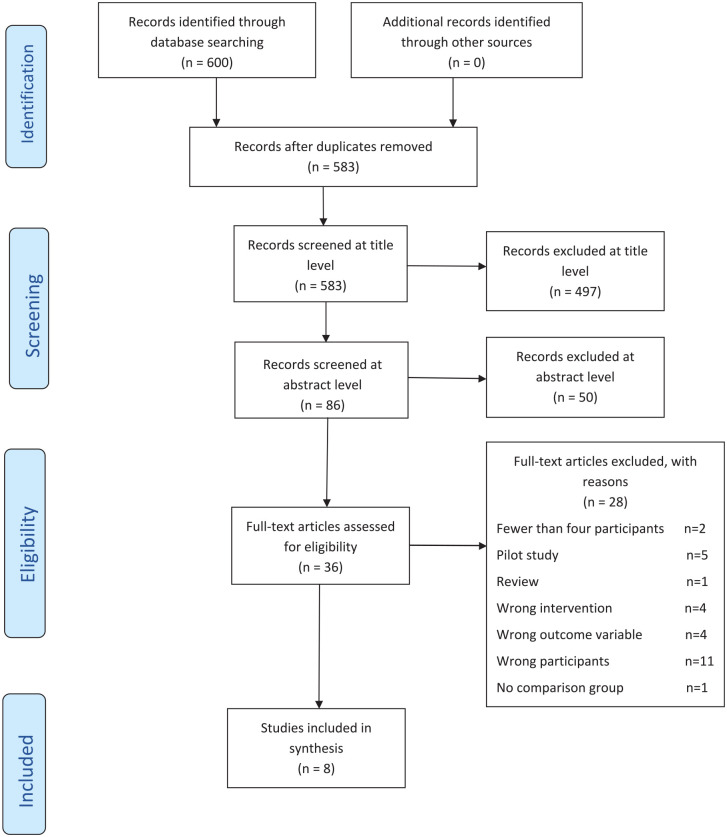
A mere 33% of all children meet the recommended minimum physical activity guidelines for adequate health maintenance. Available literature however suggests children are more likely to be active when they are competent with their own motor ability. This review aimed to evaluate how several regimented motor skills training courses and interventions improve motor skill competence among children compared with age matched control peers. Electronic databases were searched and included Medline Complete and Psych INFO (both hosted by EBSCO Host). The search syntax examined titles and abstracts. The study aimed to create novelty by examining participants with and without developmental delays simultaneously from studies around the globe. Included interventions were aimed at the most crucial developmental years for children (between 3 and 11 years). Results were found in favor of the motor skill intervention groups (from pre-to post-test). Included interventions involved weekly motor skills exposure of 60 to 120 minutes for periods of between 2 and 6 months. Over 50% of included interventions involved alterations to current school curriculums. The included studies were of moderate to high quality. The findings suggest that for those with and without developmental delays, several interventions can be effectively applied in once weekly 60-minute sessions (over eight or more weeks) to improve children's motor skill abilities. Applying appropriate difficulty to interventions seems equally influential. Implications are discussed.
仅有33%的儿童达到了维持健康所需的推荐最低体育活动指南要求。然而,现有文献表明,当儿童具备自身运动能力时,他们更有可能积极参与活动。本综述旨在评估与年龄匹配的对照同龄人相比,几种有组织的运动技能培训课程和干预措施如何提高儿童的运动技能能力。检索了电子数据库,包括Medline Complete和Psych INFO(均由EBSCO Host主办)。搜索语法检查了标题和摘要。该研究旨在通过同时研究全球范围内有和没有发育迟缓的参与者来创造新意。纳入的干预措施针对儿童最关键的发育阶段(3至11岁)。结果发现运动技能干预组(从测试前到测试后)更有优势。纳入的干预措施包括每周进行60至120分钟的运动技能训练,为期2至6个月。超过50%的纳入干预措施涉及对当前学校课程的调整。纳入的研究质量中等至高。研究结果表明,对于有和没有发育迟缓的儿童,几种干预措施可以有效地应用于每周一次的60分钟课程(持续八周或更长时间),以提高儿童的运动技能能力。在干预措施中应用适当的难度似乎同样有影响力。文中讨论了相关影响。