Department of Botany, Government College University, Faisalabad, Pakistan.
University of Agriculture, Faisalabad, Pakistan.
PLoS One. 2021 Nov 29;16(11):e0254906. doi: 10.1371/journal.pone.0254906. eCollection 2021.
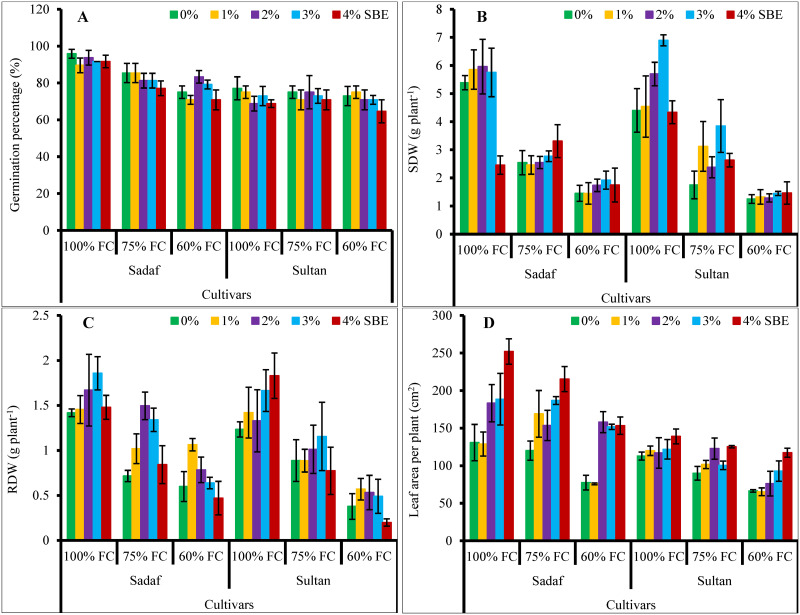
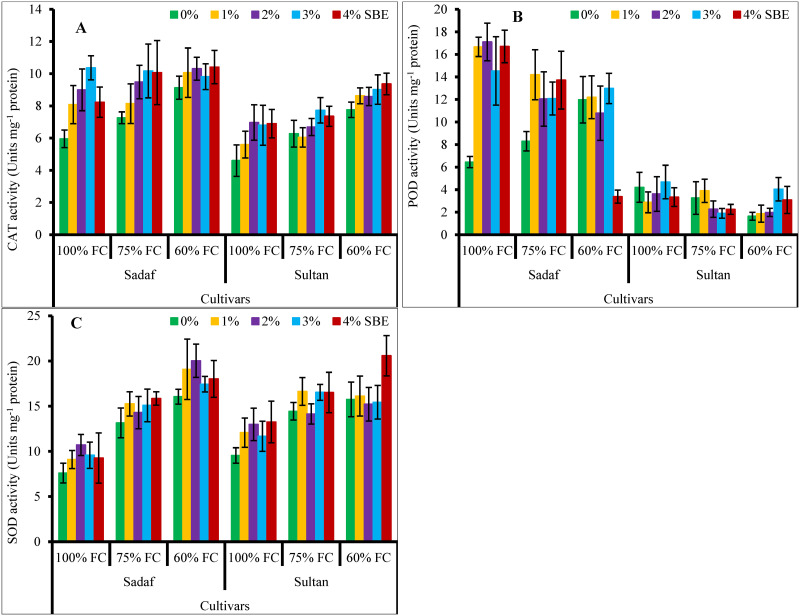
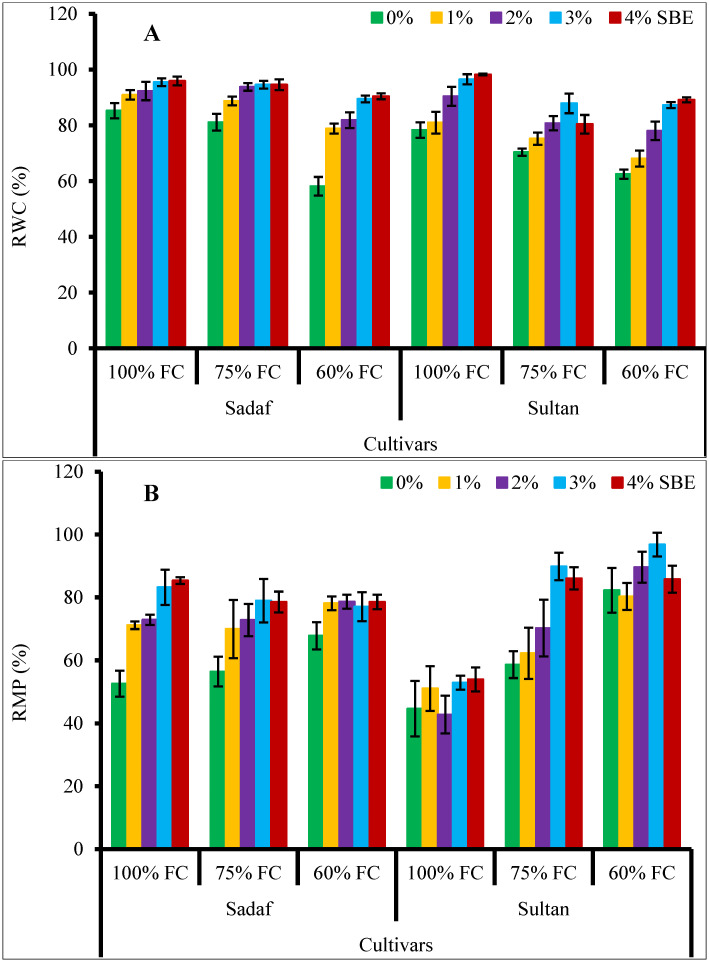
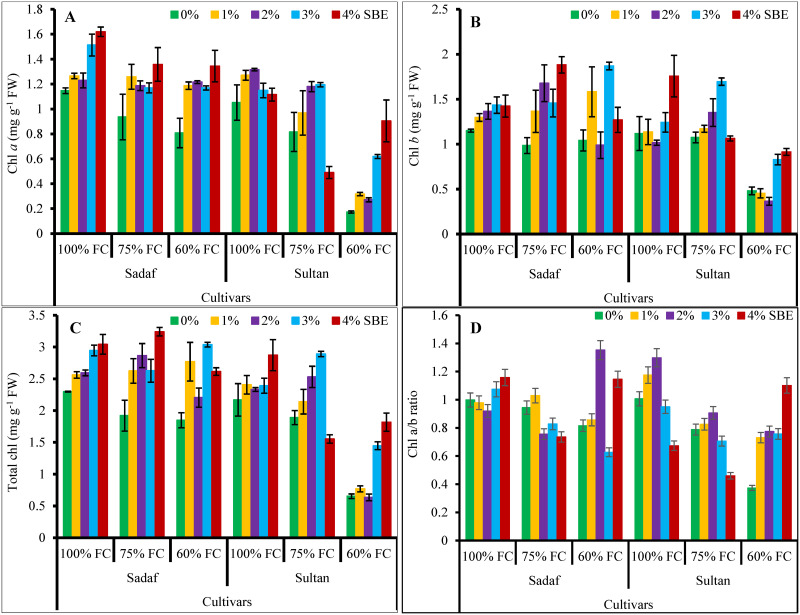
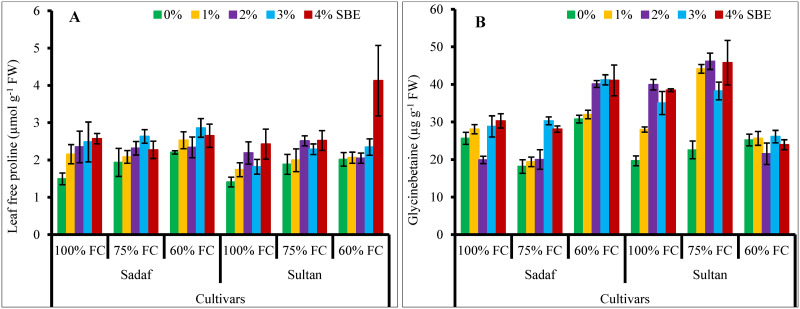
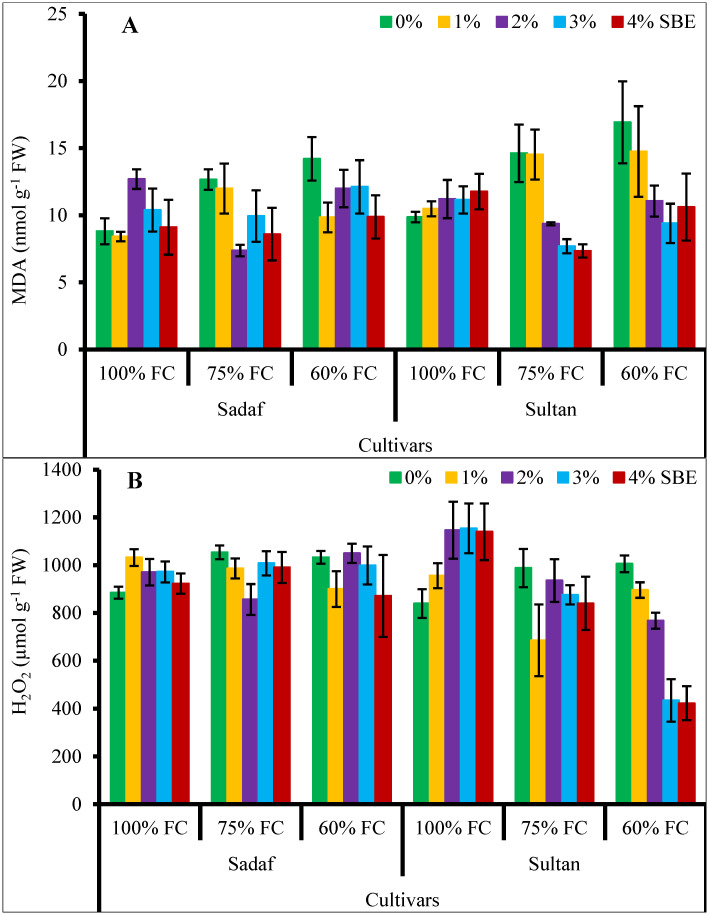
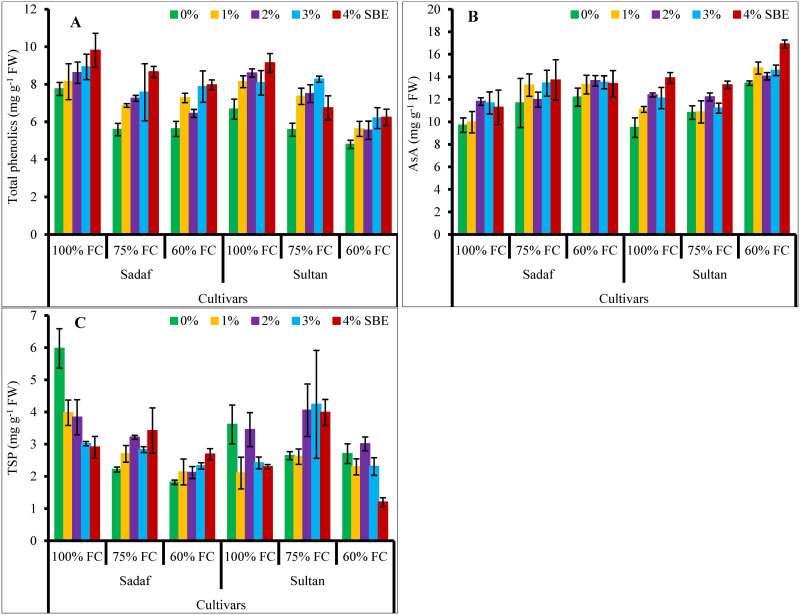
Now-a-days, plant-based extracts, as a cheap source of growth activators, are being widely used to treat plants grown under extreme climatic conditions. So, a trial was conducted to assess the response of two maize (Zea mays L.) varieties, Sadaf (drought tolerant) and Sultan (drought sensitive) to foliar-applied sugar beet extract (SBE) under varying water-deficit conditions. Different SBE (control, 1%, 2%, 3% & 4%) levels were used in this study, and plants were exposed to water-deficit [(75% and 60% of field capacity (FC)] and control (100% FC) conditions. It was observed that root and shoot dry weights (growth), total soluble proteins, RWC-relative water contents, total phenolics, chlorophyll pigments and leaf area per plant decreased under different water stress regimes. While, proline, malondialdehyde (MDA), RMP-relative membrane permeability, H2O2-hydrogen peroxide and the activities of antioxidant enzymes [CAT-catalase, POD-peroxidase and SOD-superoxide dismutase] were found to be improved in water stress affected maize plants. Exogenous application of varying levels of SBE ameliorated the negative effects of water-deficit stress by enhancing the growth attributes, photosynthetic pigments, RWC, proline, glycinebetaine (GB), activities of POD and CAT enzymes and levels of total phenolics, whereas it reduced the lipid peroxidation in both maize varieties under varying water stress levels. It was noted that 3% and 4% levels of SBE were more effective than the other levels used in enhancing the growth as well as other characteristics of the maize varieties. Overall, the sugar beet extract proved to be beneficial for improving growth and metabolism of maize plants exposed to water stress.
如今,植物提取物作为一种廉价的生长活性剂来源,被广泛用于处理在极端气候条件下生长的植物。因此,进行了一项试验,以评估叶面喷施甜菜提取液(SBE)对两种玉米(Zea mays L.)品种 Sadaf(耐旱)和 Sultan(耐旱)在不同水分亏缺条件下的反应。本研究使用了不同的 SBE(对照、1%、2%、3%和 4%)水平,将植物暴露于水分亏缺[(田间持水量的 75%和 60%)和对照(100%FC)条件下。结果表明,根和茎的干重(生长)、总可溶性蛋白、RWC-相对水分含量、总酚、叶绿素色素和每株叶面积在不同水分胁迫下均下降。然而,脯氨酸、丙二醛(MDA)、RMP-相对膜通透性、H2O2-过氧化氢和抗氧化酶[CAT-过氧化氢酶、POD-过氧化物酶和 SOD-超氧化物歧化酶]的活性在受水分胁迫影响的玉米植株中得到改善。不同水平的 SBE 外源施用通过增强生长特性、光合色素、RWC、脯氨酸、甘氨酸甜菜碱(GB)、POD 和 CAT 酶的活性以及总酚的水平,减轻了水分亏缺胁迫对玉米品种的负面影响,而在不同水分胁迫水平下,均降低了脂质过氧化作用。值得注意的是,3%和 4%水平的 SBE 比其他水平更有效地增强了玉米品种的生长和其他特性。总的来说,甜菜提取物被证明有利于改善暴露于水分胁迫下的玉米植株的生长和代谢。