Polito Letizia, Bortolotti Massimo, Battelli Maria Giulia, Bolognesi Andrea
Department of Experimental, Diagnostic and Specialty Medicine-DIMES, Alma Mater Studiorum, University of Bologna, Via San Giacomo 14, 40126, Bologna, Italy.
Redox Biol. 2021 Nov 24;48:102195. doi: 10.1016/j.redox.2021.102195.
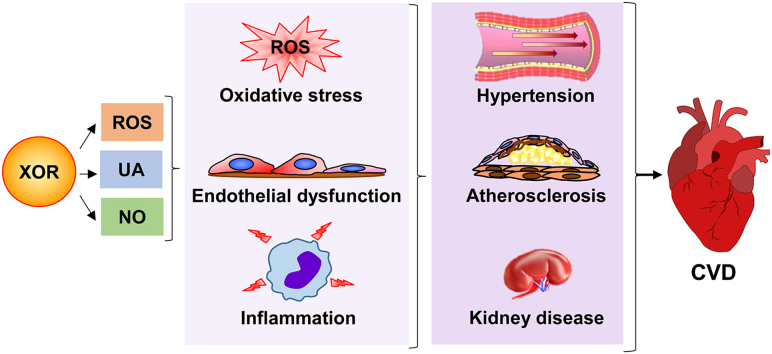
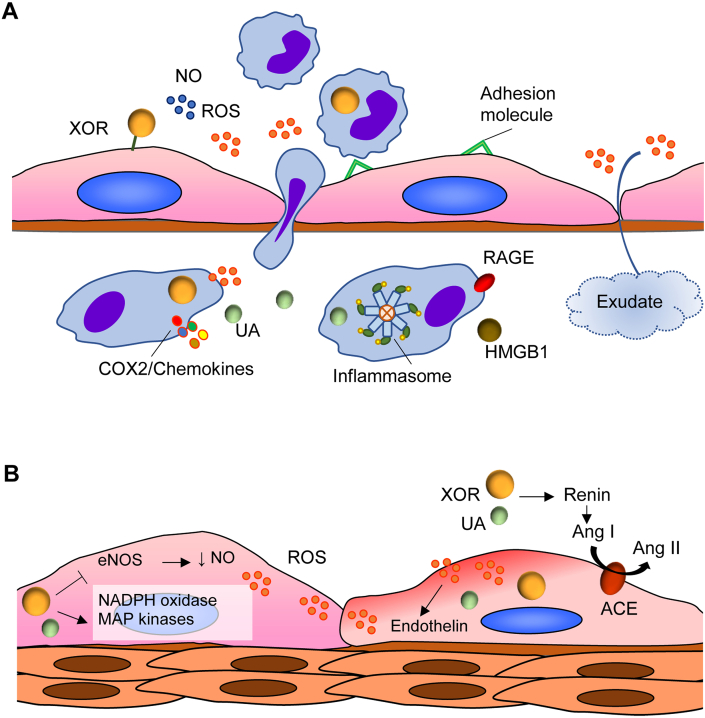
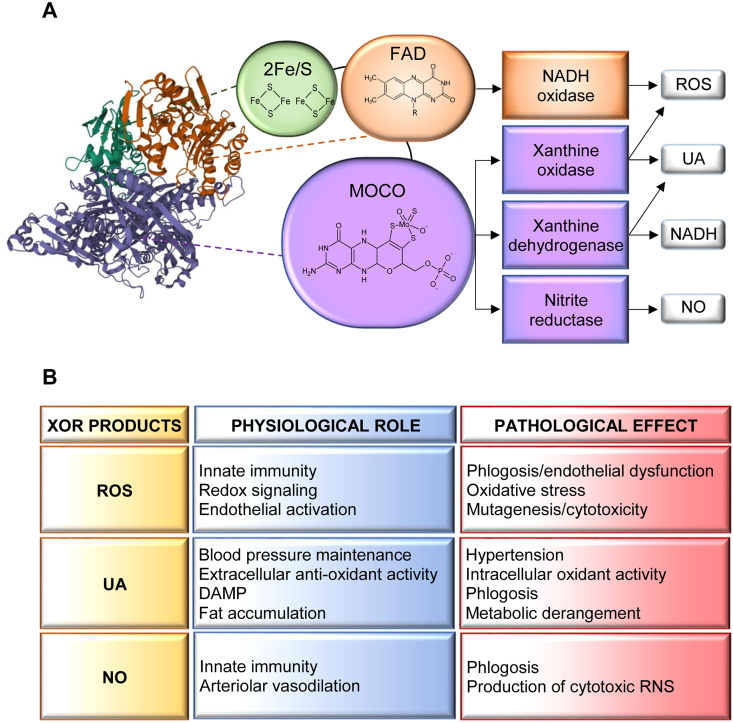
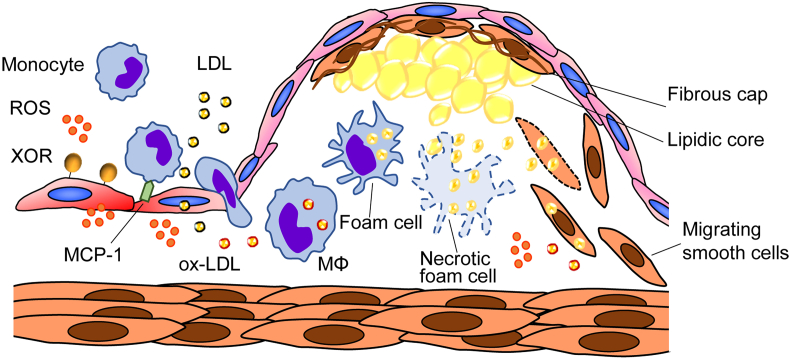
Cardiovascular diseases (CVD) are the leading cause of global mortality and their pathogenesis lies mainly in the atherosclerotic process. There are close connections linking oxidative stress and inflammation to endothelial dysfunction, atherosclerosis and, consequently, to CVD. This review focuses on the role of xanthine oxidoreductase (XOR) and its products on the development of chronic inflammation and oxidative stress, responsible for atheromatous plaque formation. Evidence is reported that an excessive level of XOR products favors inflammatory response and plaque development, thereby promoting major cardiovascular risk factors. Also, the relationship between hyperuricemia and hypertension as well as between XOR activity and CVD is confirmed. In spite of the increasing number of clinical studies investigating the output of cardiovascular patients treated with urate-lowering therapies (including uricosuric drugs, XOR inhibitors and recombinant uricase) the results are still uncertain. The inhibition of XOR activity appears more promising than just the control of uricemia level in preventing cardiovascular events, possibly because it also reduces the intracellular accumulation of urate, as well as the production of reactive oxygen species. However, XOR inhibition also reduces the availability of the multifaced mediator nitric oxide and, at present, can be recommended only in hyperuricemic patients.
心血管疾病(CVD)是全球死亡的主要原因,其发病机制主要在于动脉粥样硬化过程。氧化应激和炎症与内皮功能障碍、动脉粥样硬化以及因此导致的心血管疾病之间存在密切联系。本综述重点关注黄嘌呤氧化还原酶(XOR)及其产物在慢性炎症和氧化应激发展中的作用,而慢性炎症和氧化应激是动脉粥样硬化斑块形成的原因。有证据表明,XOR产物水平过高会促进炎症反应和斑块发展,从而增加主要心血管危险因素。此外,高尿酸血症与高血压之间以及XOR活性与心血管疾病之间的关系也得到了证实。尽管越来越多的临床研究对接受降尿酸治疗(包括促尿酸排泄药物、XOR抑制剂和重组尿酸酶)的心血管疾病患者的疗效进行了调查,但结果仍不确定。在预防心血管事件方面,抑制XOR活性似乎比单纯控制血尿酸水平更有前景,这可能是因为它还能减少尿酸在细胞内的积累以及活性氧的产生。然而,XOR抑制也会降低多面介质一氧化氮的可用性,目前仅推荐用于高尿酸血症患者。