Mayers Janina, Hofman Brianna, Sobiech Indie, Kwesiga Maria P
Department of Biomedical Sciences, Grand Valley State University, Allendale, MI, United States.
Department of Cell and Molecular Biology, Grand Valley State University, Allendale, MI, United States.
Front Bioeng Biotechnol. 2024 Sep 23;12:1457553. doi: 10.3389/fbioe.2024.1457553. eCollection 2024.
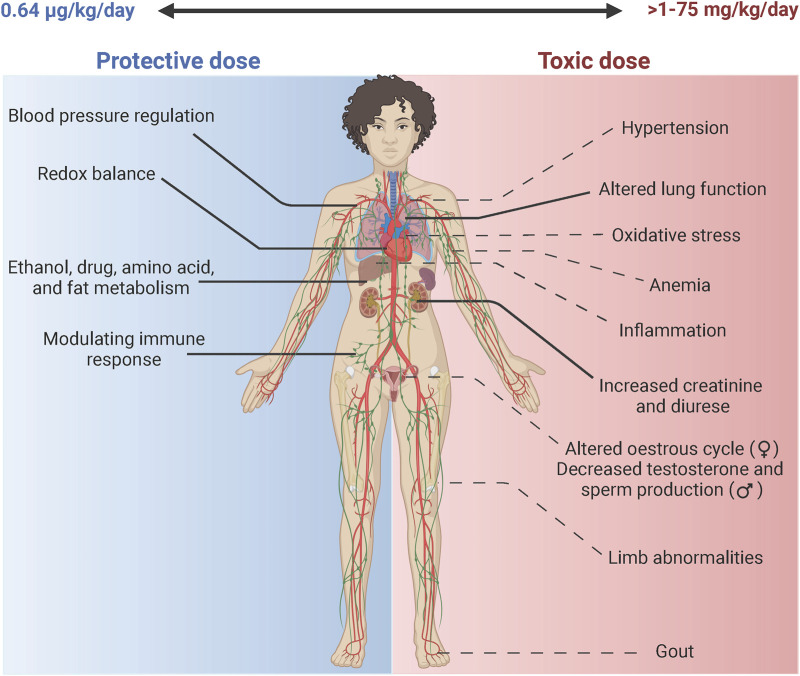
Atherosclerotic cardiovascular disease (ACD) is the leading cause of death worldwide. The gold standard of treatment is the implantation of a permanent stent implant that is often associated with complications such as thrombus formation, vascular neointimal response, and stent fracture, which altogether decrease the long-term safety and efficacy of the stent. Biodegradable metallic materials have become an attractive alternative because of the ability to facilitate a more physiological healing response while the metal degrades. Recently, Molybdenum (Mo) has been considered as a potential candidate due to its excellent mechanical and medical imaging properties. Moreover, the biomedical research studies performed to date have shown minimal adverse effects and . However, there are still concerns of toxicity at high doses, and the impact of the biochemical mechanisms of Mo on material performance especially in pathophysiological environments are yet to be explored. Mo is an essential co factor for enzymes such as xanthine oxidoreductase (XOR) that plays a critical role in vascular homeostasis and ACD progression. Herein, this review will focus on the biochemistry of Mo, its physiological and pathological effects with an emphasis on cardiovascular disease as well as the recent studies on Mo for cardiovascular applications and its advantages over other biodegradable metals. The limitations of Mo research studies will also be discussed and concluded with an outlook to move this revolutionary metallic biomaterial from the bench to the bedside.
动脉粥样硬化性心血管疾病(ACD)是全球主要的死亡原因。治疗的金标准是植入永久性支架,而这通常会引发诸如血栓形成、血管内膜增生反应和支架断裂等并发症,这些并发症共同降低了支架的长期安全性和有效性。可生物降解金属材料因其在金属降解时能够促进更符合生理的愈合反应而成为一种有吸引力的替代材料。最近,钼(Mo)因其出色的机械性能和医学成像特性而被视为一种潜在的候选材料。此外,迄今为止进行的生物医学研究显示其不良反应极小。然而,高剂量时仍存在毒性问题,而且钼的生化机制对材料性能的影响,尤其是在病理生理环境中的影响,仍有待探索。钼是黄嘌呤氧化还原酶(XOR)等酶的必需辅助因子,这些酶在血管稳态和动脉粥样硬化性心血管疾病进展中起关键作用。在此,本综述将聚焦于钼的生物化学、其生理和病理效应,重点是心血管疾病,以及钼在心血管应用方面的最新研究及其相对于其他可生物降解金属的优势。还将讨论钼研究的局限性,并展望如何将这种革命性的金属生物材料从实验室推向临床应用。