Division of Chromatin Networks, German Cancer Research Center (DKFZ) and Bioquant, Heidelberg, Germany.
Single Cell Open Lab, German Cancer Research Center (DKFZ) and Bioquant, Heidelberg, Germany.
Nat Commun. 2021 Nov 29;12(1):6960. doi: 10.1038/s41467-021-26951-z.
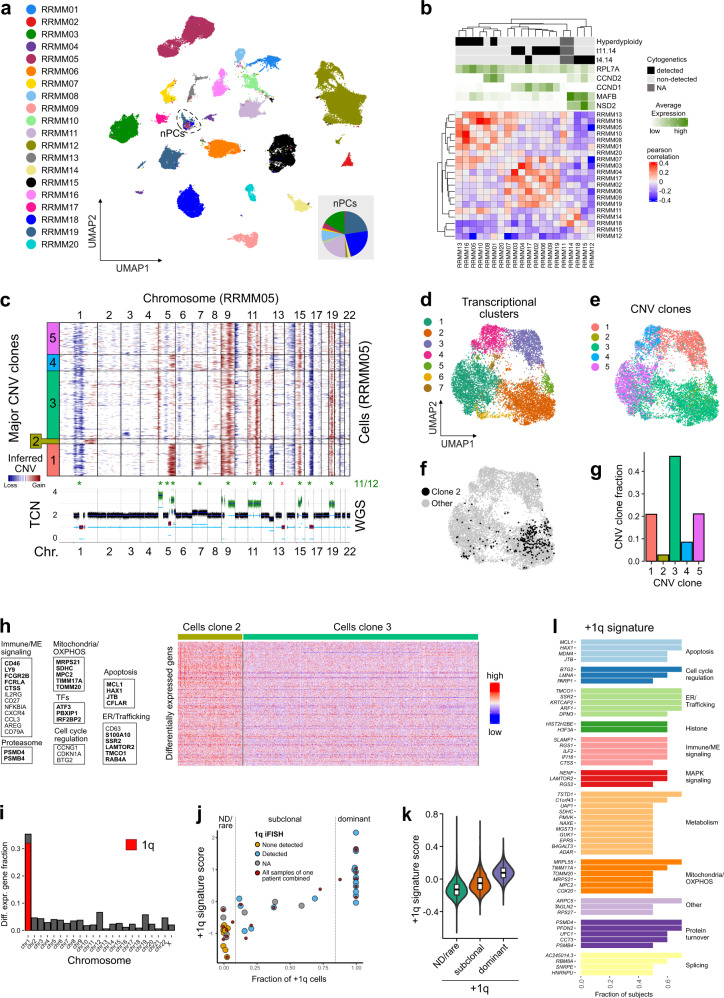
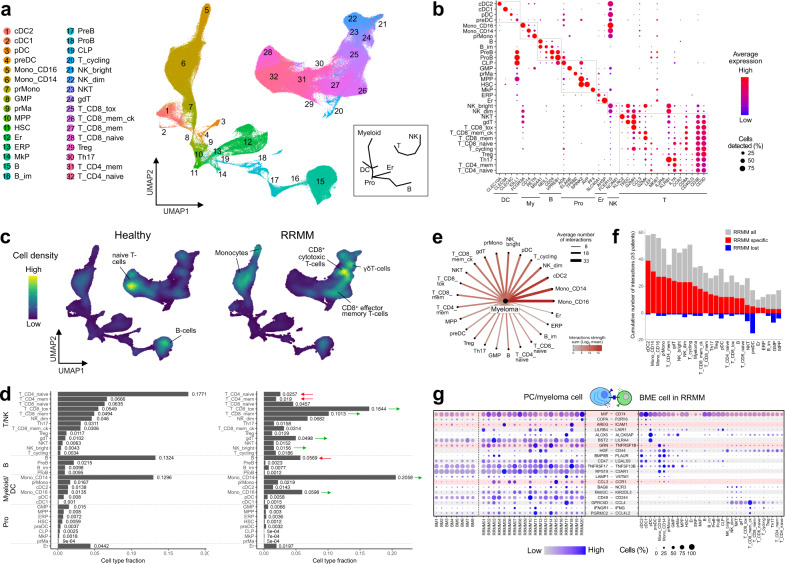
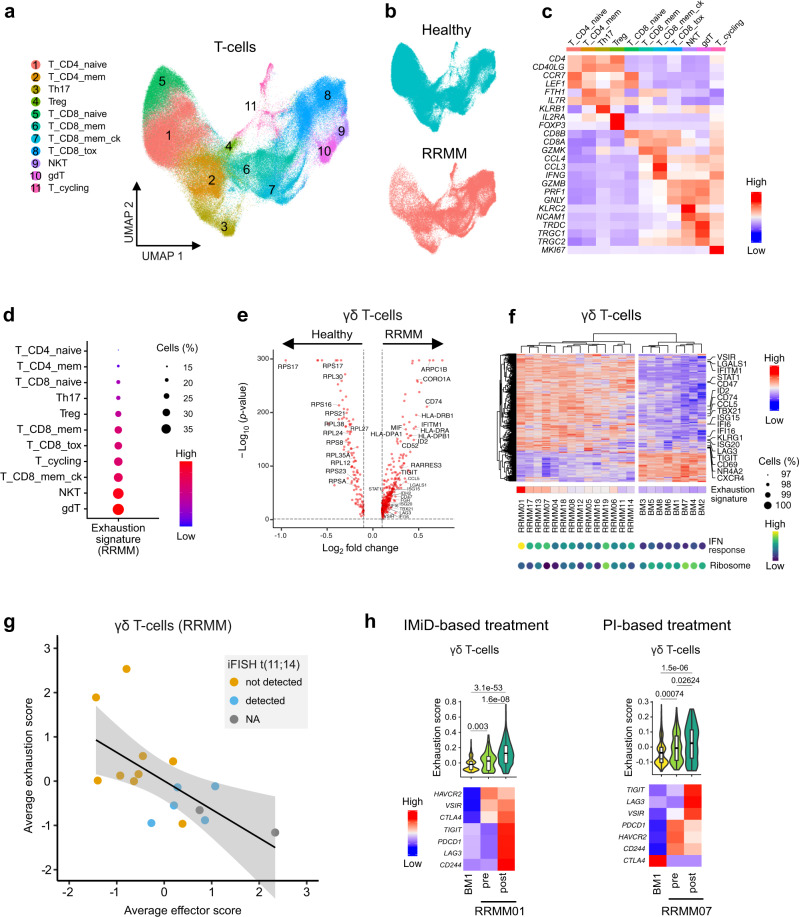
Virtually all patients with multiple myeloma become unresponsive to treatment over time. Relapsed/refractory multiple myeloma (RRMM) is accompanied by the clonal evolution of myeloma cells with heterogeneous genomic aberrations and profound changes of the bone marrow microenvironment (BME). However, the molecular mechanisms that drive drug resistance remain elusive. Here, we analyze the heterogeneous tumor cell population and its complex interaction network with the BME of 20 RRMM patients by single cell RNA-sequencing before/after treatment. Subclones with chromosome 1q-gain express a specific transcriptomic signature and frequently expand during treatment. Furthermore, RRMM cells shape an immune suppressive BME by upregulation of inflammatory cytokines and close interaction with the myeloid compartment. It is characterized by the accumulation of PD1 γδ T-cells and tumor-associated macrophages as well as the depletion of hematopoietic progenitors. Thus, our study resolves transcriptional features of subclones in RRMM and mechanisms of microenvironmental reprogramming with implications for clinical decision-making.
几乎所有多发性骨髓瘤患者的病情都会随着时间的推移而对治疗无反应。复发/难治性多发性骨髓瘤(RRMM)伴随着骨髓瘤细胞的克隆进化,具有异质性的基因组异常和骨髓微环境(BME)的深刻变化。然而,导致耐药性的分子机制仍不清楚。在这里,我们通过单细胞 RNA 测序分析了 20 名 RRMM 患者治疗前后的异质性肿瘤细胞群体及其与 BME 的复杂相互作用网络。在治疗过程中,具有 1q 增益染色体的亚克隆表达特定的转录组特征,并频繁扩增。此外,RRMM 细胞通过上调炎症细胞因子并与髓样细胞密切相互作用来塑造免疫抑制的 BME。其特征是 PD1 γδ T 细胞和肿瘤相关巨噬细胞的积累以及造血祖细胞的耗竭。因此,我们的研究解决了 RRMM 中亚克隆的转录特征以及微环境重编程的机制,这对临床决策具有重要意义。