Department of Biotechnology and Biophysics, Julius-Maximilians-University Würzburg, Am Hubland, 97074, Würzburg, Germany.
Proteros Biostructures, Bunsenstr. 7a, 82152, Martinsried, Germany.
Nat Commun. 2021 Nov 29;12(1):6964. doi: 10.1038/s41467-021-27286-5.
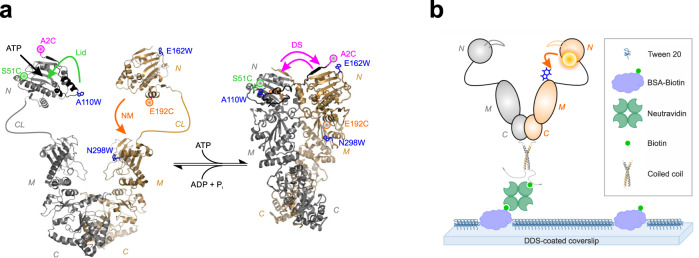
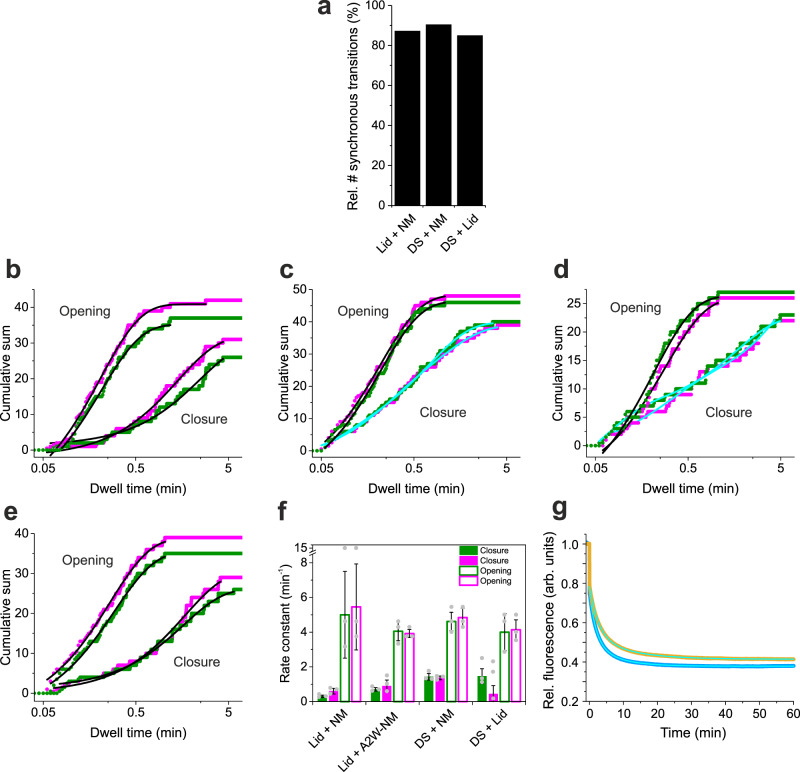
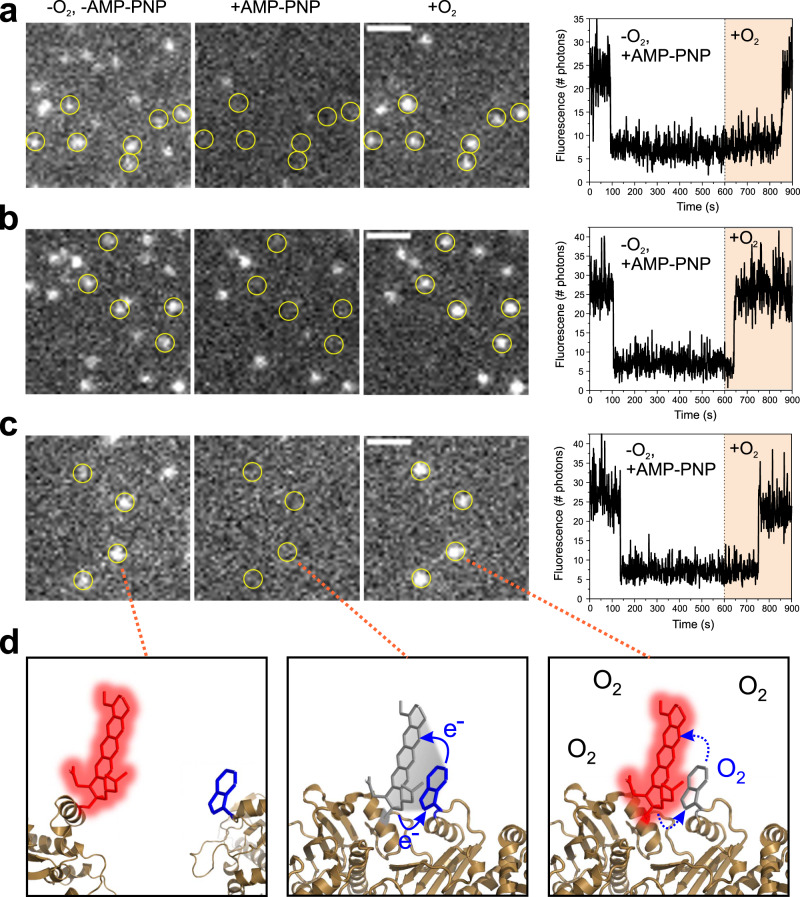
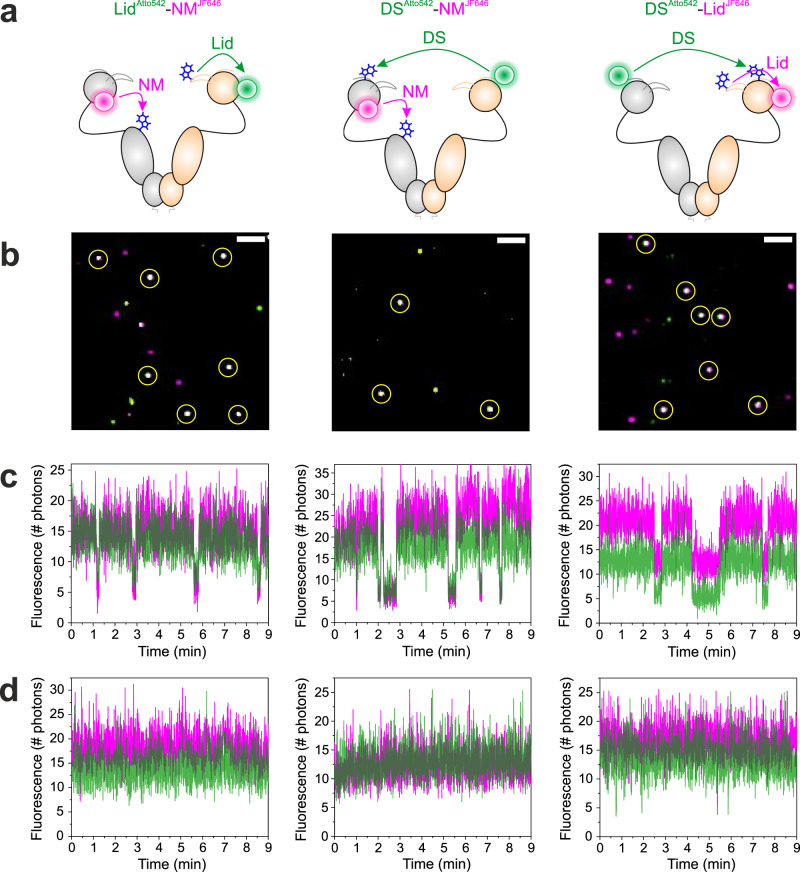
Many proteins are molecular machines, whose function is dependent on multiple conformational changes that are initiated and tightly controlled through biochemical stimuli. Their mechanistic understanding calls for spectroscopy that can probe simultaneously such structural coordinates. Here we present two-colour fluorescence microscopy in combination with photoinduced electron transfer (PET) probes as a method that simultaneously detects two structural coordinates in single protein molecules, one colour per coordinate. This contrasts with the commonly applied resonance energy transfer (FRET) technique that requires two colours per coordinate. We demonstrate the technique by directly and simultaneously observing three critical structural changes within the Hsp90 molecular chaperone machinery. Our results reveal synchronicity of conformational motions at remote sites during ATPase-driven closure of the Hsp90 molecular clamp, providing evidence for a cooperativity mechanism in the chaperone's catalytic cycle. Single-molecule PET fluorescence microscopy opens up avenues in the multi-dimensional exploration of protein dynamics and allosteric mechanisms.
许多蛋白质是分子机器,其功能依赖于多个构象变化,这些构象变化通过生化刺激启动并受到严格控制。为了深入了解其机制,需要能够同时探测到这些结构坐标的光谱技术。在这里,我们提出了双色荧光显微镜与光诱导电子转移(PET)探针相结合的方法,该方法可以同时检测单个蛋白质分子中的两个结构坐标,每个坐标一种颜色。这与通常应用的需要每个坐标两种颜色的共振能量转移(FRET)技术形成对比。我们通过直接并同时观察 Hsp90 分子伴侣机械中的三个关键结构变化来证明该技术。我们的结果揭示了在 ATP 酶驱动的 Hsp90 分子夹关闭过程中远程位点构象运动的同步性,为伴侣酶催化循环中的协同机制提供了证据。单分子 PET 荧光显微镜为蛋白质动力学和变构机制的多维探索开辟了道路。