Miroshnikov Alexey, Flint Mikhail, Asadulin Enver, Aliev Ramiz, Shiryaev Andrei, Kudikov Arsenii, Khvostikov Vladimir
Institute of Geology of Ore Deposits, Petrography, Mineralogy, and Geochemistry RAS, Moscow, 119017, Russia.
Shirshov Institute of Oceanology RAS, Moscow, 117997, Russia.
Sci Rep. 2021 Nov 29;11(1):23103. doi: 10.1038/s41598-021-02601-8.
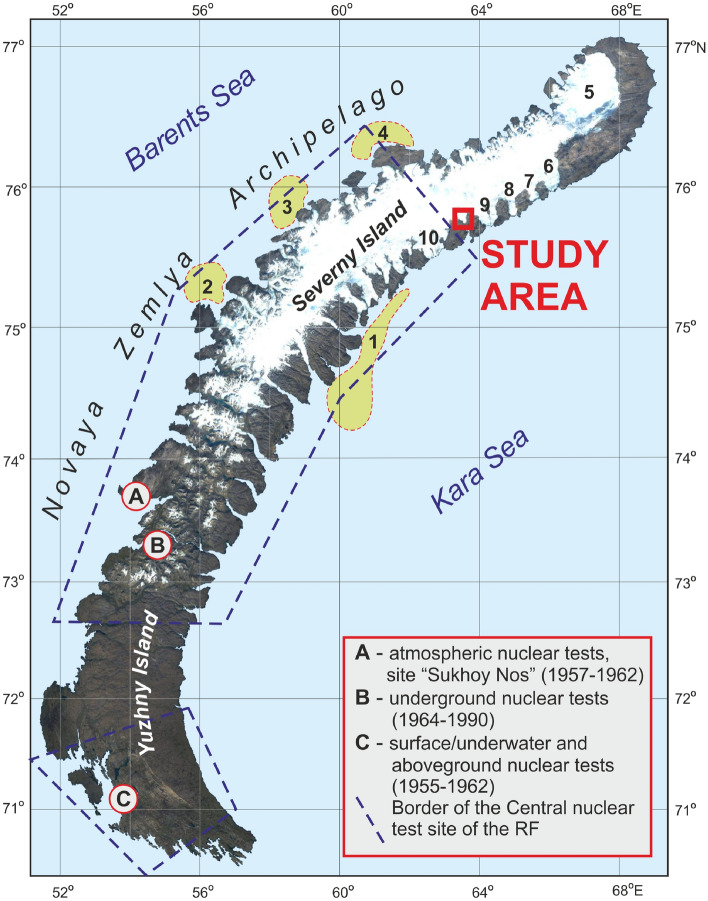
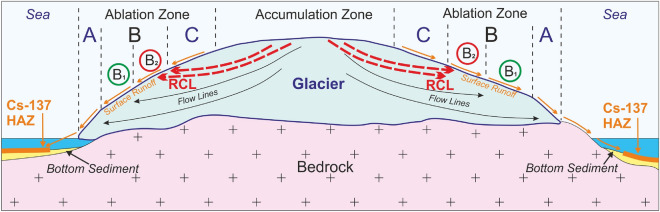
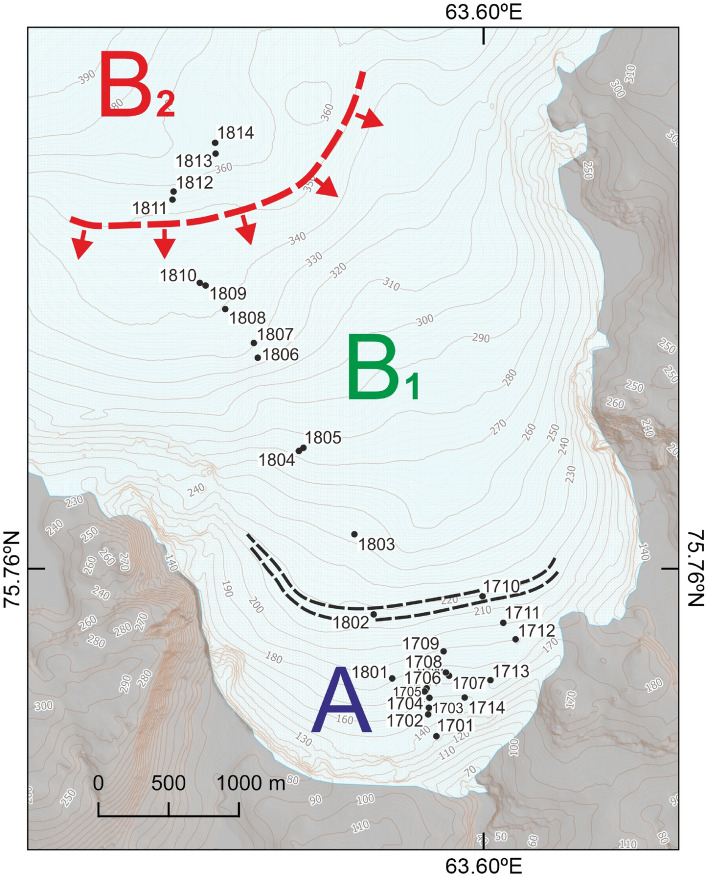
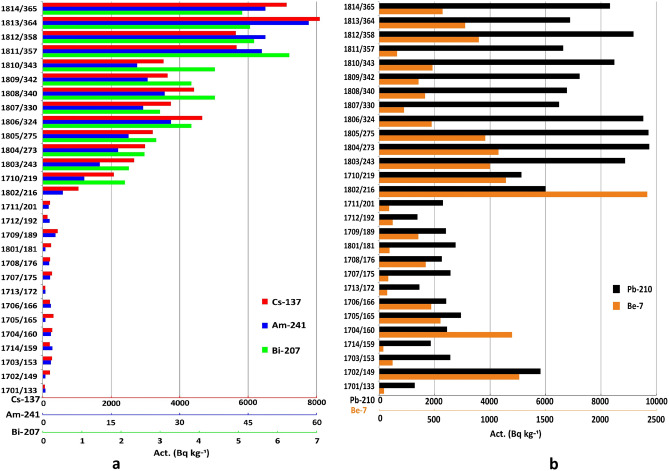
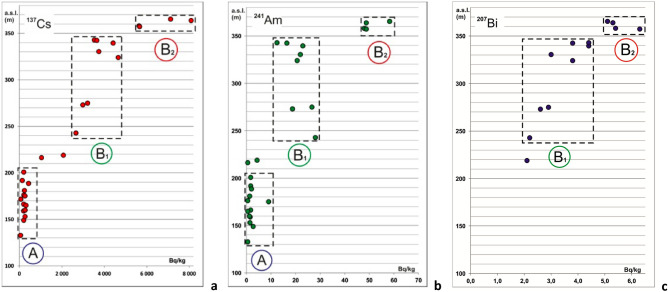
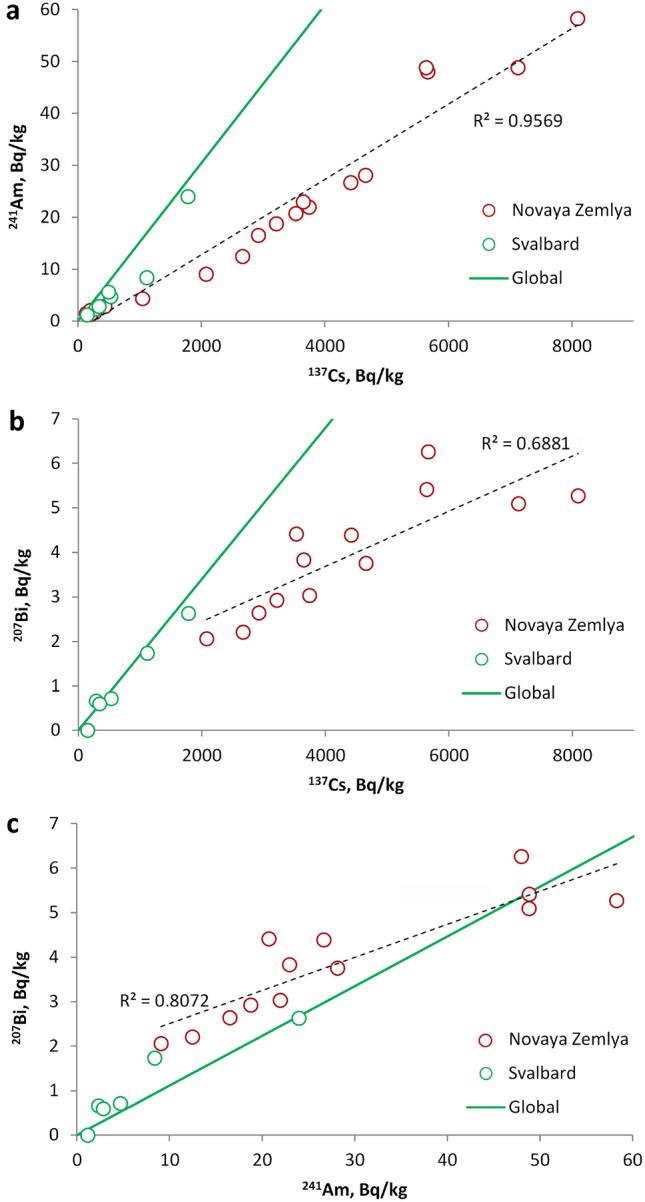
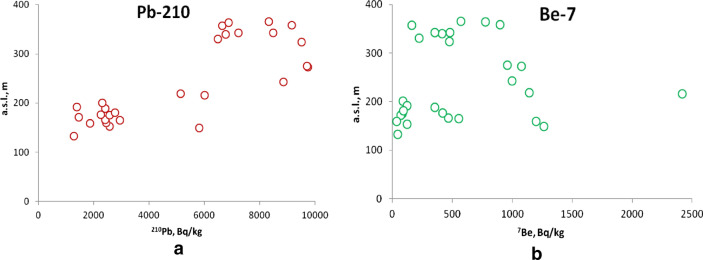
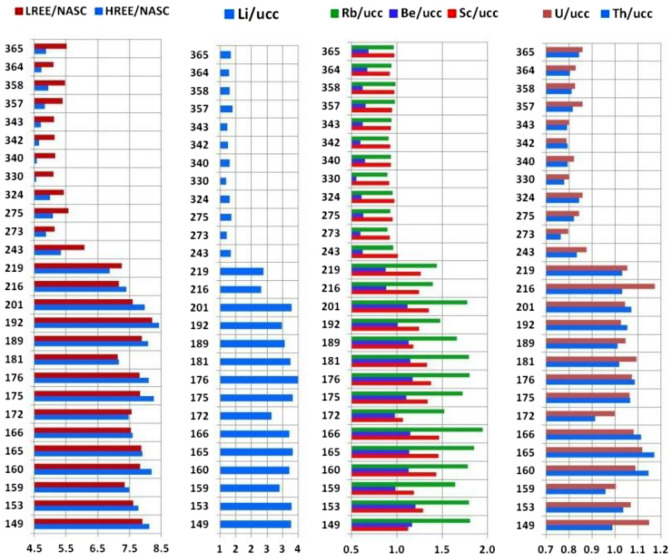
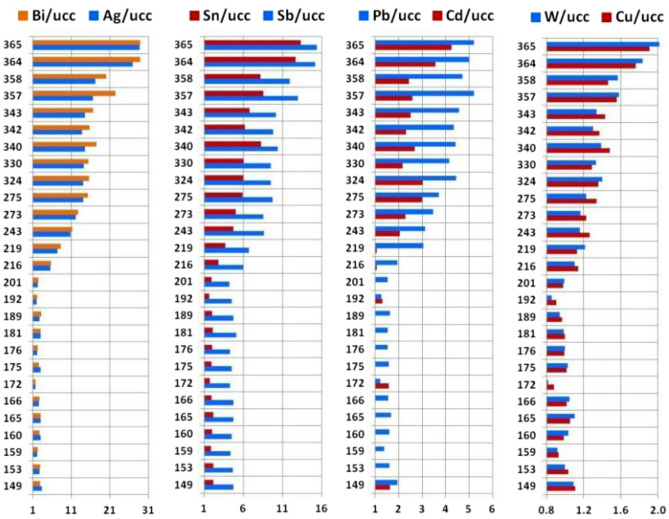
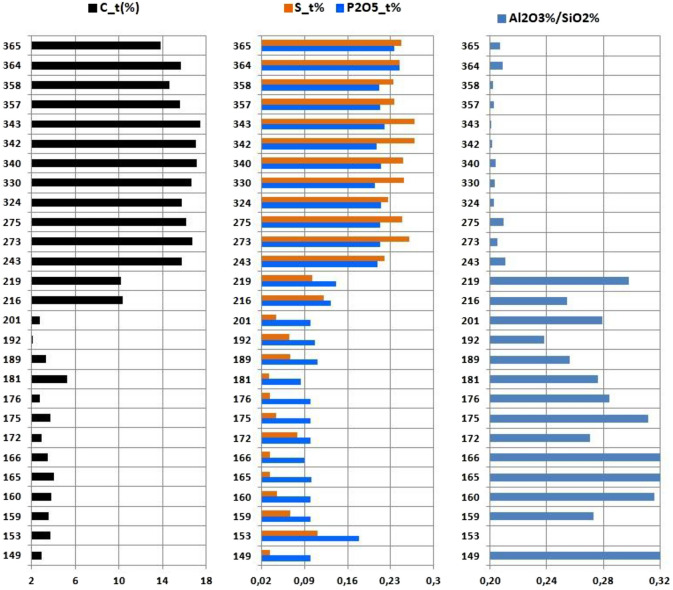
In recent years, cryoconite has received growing attention from a radioecological point of view, since several studies have shown that this material is extremely efficient in accumulating natural and anthropogenic radionuclides. The Novaya Zemlya Archipelago (Russian Arctic) hosts the second largest glacial system in the Arctic. From 1957 to 1962, numerous atmospheric nuclear explosions were conducted at Novaya Zemlya, but to date, very little is known about the radioecology of its ice cap. Analysis of radionuclides and other chemical elements in cryoconite holes on Nalli Glacier reveals the presence of two main zones at different altitudes that present different radiological features. The first zone is 130-210 m above sea level (a.s.l.), has low radioactivity, high concentrations of lithophile elements and a chalcophile content close to that of upper continental crust clarkes. The second zone (220-370 m a.s.l.) is characterized by high activity levels of radionuclides and "inversion" of geochemical behaviour with lower concentrations of lithophiles and higher chalcophiles. In the upper part of this zone (350-370 m a.s.l.), Cs activity reaches the record levels for Arctic cryoconite (5700-8100 Bq/kg). High levels of Sn, Sb, Bi and Ag, significantly exceeding those of upper continental crust clarkes, also appear here. We suggest that a buried layer of contaminated ice that formed during atmospheric nuclear tests serves as a local secondary source of radionuclide contamination. Its melting is responsible for the formation of this zone.
近年来,从放射生态学的角度来看,冰尘受到了越来越多的关注,因为多项研究表明,这种物质在积累天然和人为放射性核素方面极为高效。新地岛群岛(俄罗斯北极地区)拥有北极第二大冰川系统。1957年至1962年期间,新地岛进行了多次大气核爆炸,但迄今为止,对其冰盖的放射生态学了解甚少。对纳利冰川上冰尘坑中的放射性核素和其他化学元素进行分析后发现,在不同海拔高度存在两个主要区域,呈现出不同的放射学特征。第一个区域位于海平面以上130 - 210米,放射性较低,亲石元素浓度较高,亲铜元素含量接近上地壳克拉克值。第二个区域(海平面以上220 - 370米)的特征是放射性核素活性水平较高,地球化学行为出现“反转”,亲石元素浓度较低,亲铜元素浓度较高。在该区域的上部(海平面以上350 - 370米),铯活度达到北极冰尘的最高纪录水平(5700 - 8100贝克勒尔/千克)。此处还出现了高水平的锡、锑、铋和银,显著超过上地壳克拉克值。我们认为,大气核试验期间形成的一层掩埋污染冰层是放射性核素污染的局部二次源。其融化导致了这个区域的形成。