Division of Cardiovascular Medicine Department of Medicine University of California, San Diego San Diego CA.
Division of Cardiology Department of Medicine Adult Medical Genetics Program University of Colorado Anschutz Medical Campus Aurora CO.
J Am Heart Assoc. 2021 Dec 7;10(23):e022544. doi: 10.1161/JAHA.121.022544. Epub 2021 Nov 30.
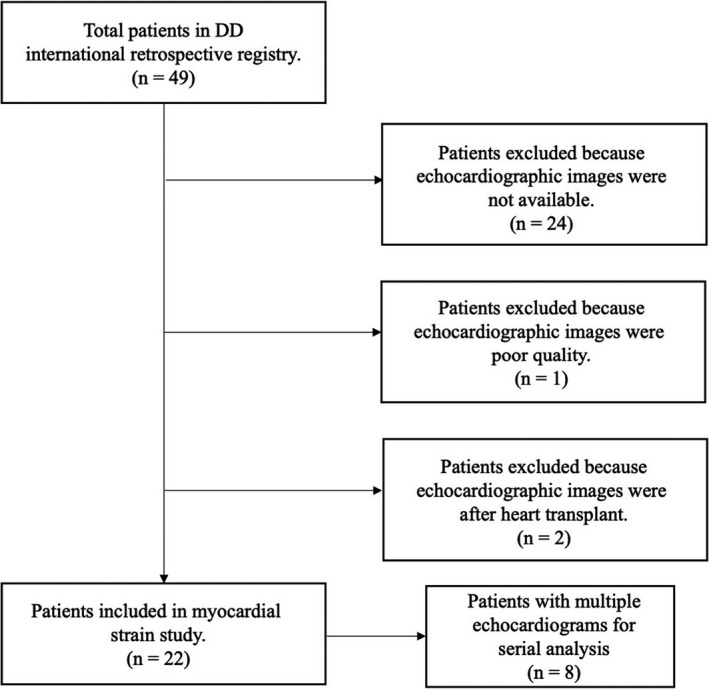
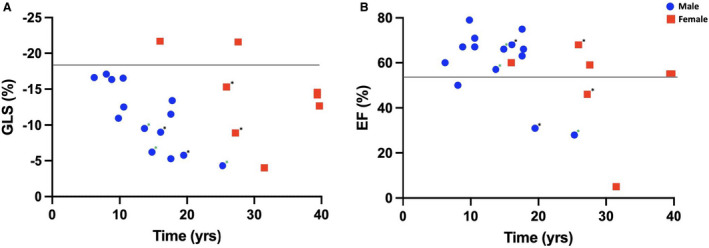
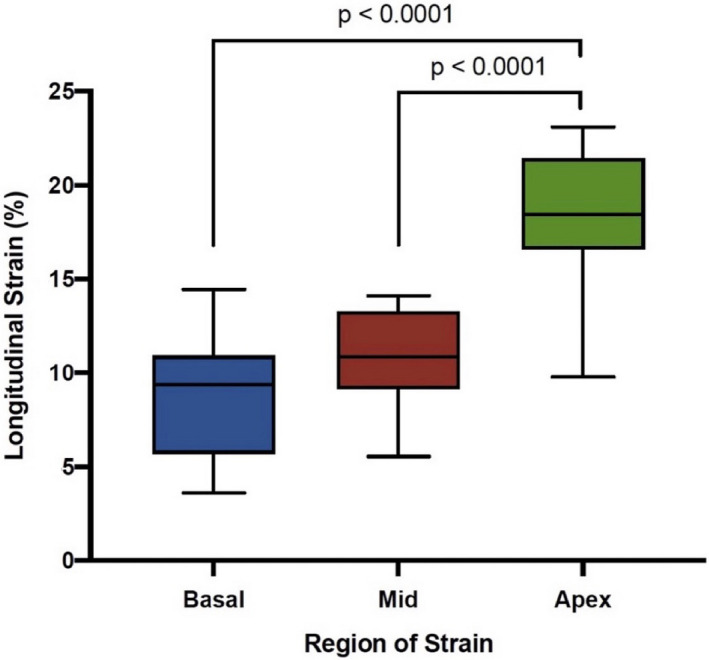
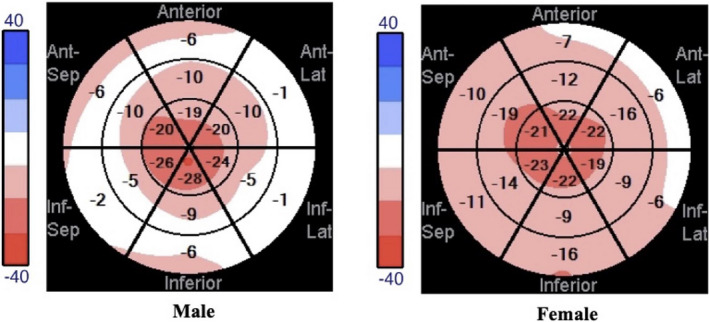
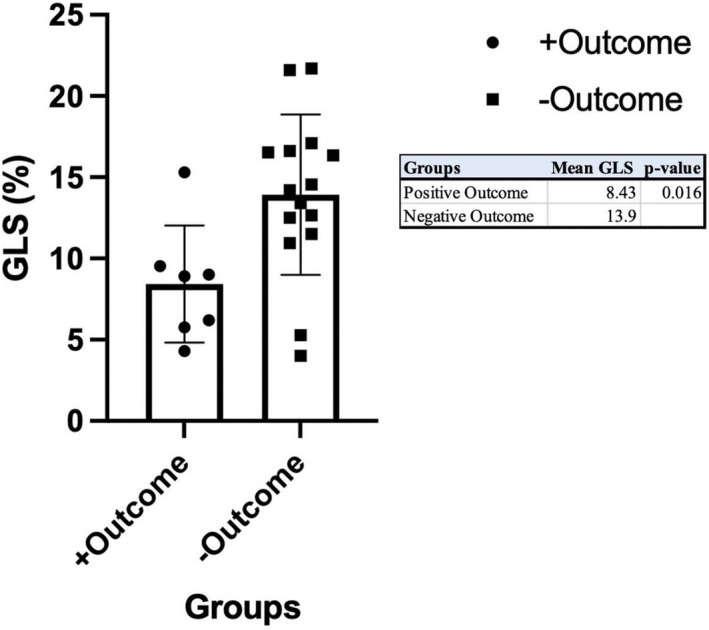
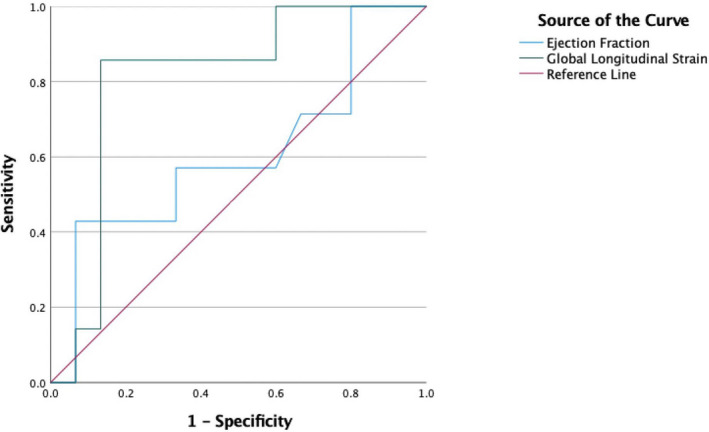
Background Myocardial strain can identify subclinical left ventricular dysfunction in various cardiac diseases, but its association with clinical outcomes in genetic cardiomyopathies remains unknown. Herein, we assessed myocardial strain in patients with Danon disease (DD), a rare X-linked autophagic disorder that causes severe cardiac manifestations. Methods and Results Echocardiographic images were reviewed and used to calculate myocardial strain from a retrospective, international registry of patients with DD. Regression analyses were performed to evaluate for an association of global longitudinal strain (GLS) and ejection fraction with the composite outcome (death, ventricular assist device, heart transplantation, and implantable cardioverter defibrillator for secondary prevention). A total of 22 patients with DD (male 14 [63.6%], median age 16.5 years) had sufficient echocardiograms for analysis. Absolute GLS was reduced with a mean of 12.2% with an apical-sparing pattern observed. Univariable regression for GLS and composite outcome showed an odds ratio of 1.32 (95% CI, 1.02-1.71) with =0.03. For receiver operating characteristic analysis, the areas under the curve for GLS and ejection fraction were 0.810 (=0.02) and 0.605 (=0.44), respectively. An absolute GLS cutoff of 10.0% yielded a true positive rate of 85.7% and false positive rate of 13.3%. Conclusions In this cohort of patients with DD, GLS may be a useful assessment of myocardial function and may predict clinical outcomes. This study highlights the potential use of myocardial strain phenotyping to monitor disease progression and potentially to predict clinical outcomes in DD and other genetic cardiomyopathies.
心肌应变可在各种心脏疾病中识别亚临床左心室功能障碍,但在遗传性心肌病中,其与临床结局的关系尚不清楚。在此,我们评估了丹诺病(DD)患者的心肌应变,DD 是一种罕见的 X 连锁自噬性疾病,可导致严重的心脏表现。
回顾性分析了国际 DD 患者注册研究中的超声心动图图像,并计算了心肌应变。回归分析评估了整体纵向应变(GLS)和射血分数与复合结局(死亡、心室辅助装置、心脏移植和植入式心脏复律除颤器用于二级预防)之间的关联。共有 22 名 DD 患者(男性 14 名[63.6%],中位年龄 16.5 岁)的超声心动图检查足够用于分析。GLS 的绝对值降低了 12.2%,呈心尖保留模式。GLS 和复合结局的单变量回归显示比值比为 1.32(95%CI,1.02-1.71),=0.03。对于接受者操作特征分析,GLS 和射血分数的曲线下面积分别为 0.810(=0.02)和 0.605(=0.44)。GLS 的绝对值截断值为 10.0%时,真阳性率为 85.7%,假阳性率为 13.3%。
在本队列的 DD 患者中,GLS 可能是评估心肌功能的有用指标,并可能预测临床结局。这项研究强调了心肌应变表型学在监测疾病进展和潜在预测 DD 和其他遗传性心肌病的临床结局方面的潜在应用。