Department of Applied Genetics and Cell Biology, Natural Resources and Life Sciences, Vienna, Austria.
Faculty of Agriculture, Department of Plant Genetics and Breeding, Tarbiat Modares University, Tehran, Iran.
PLoS One. 2021 Nov 30;16(11):e0260796. doi: 10.1371/journal.pone.0260796. eCollection 2021.
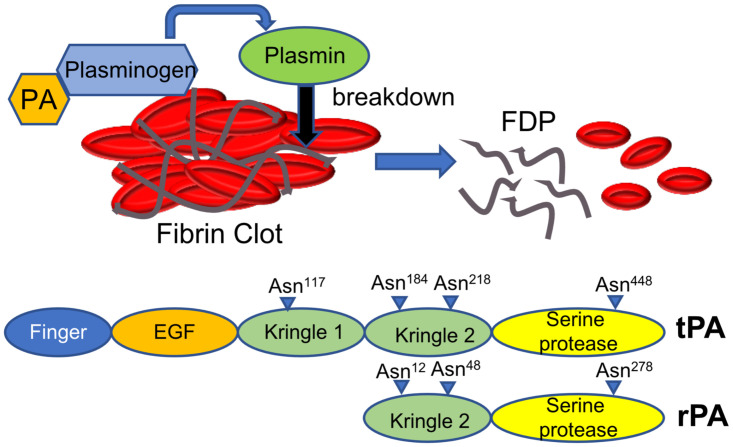
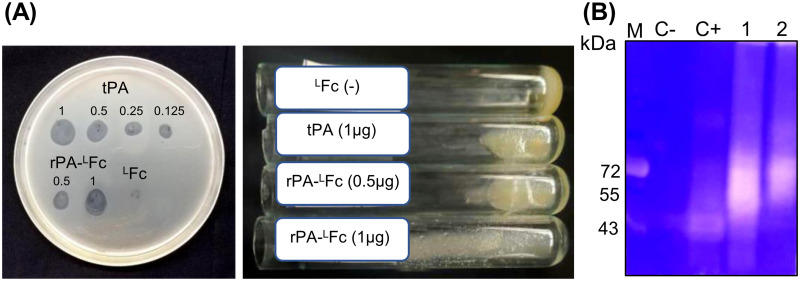
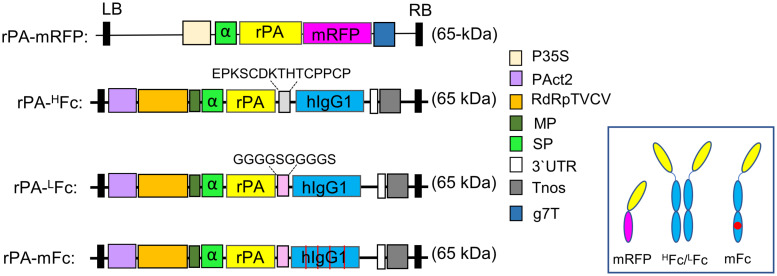
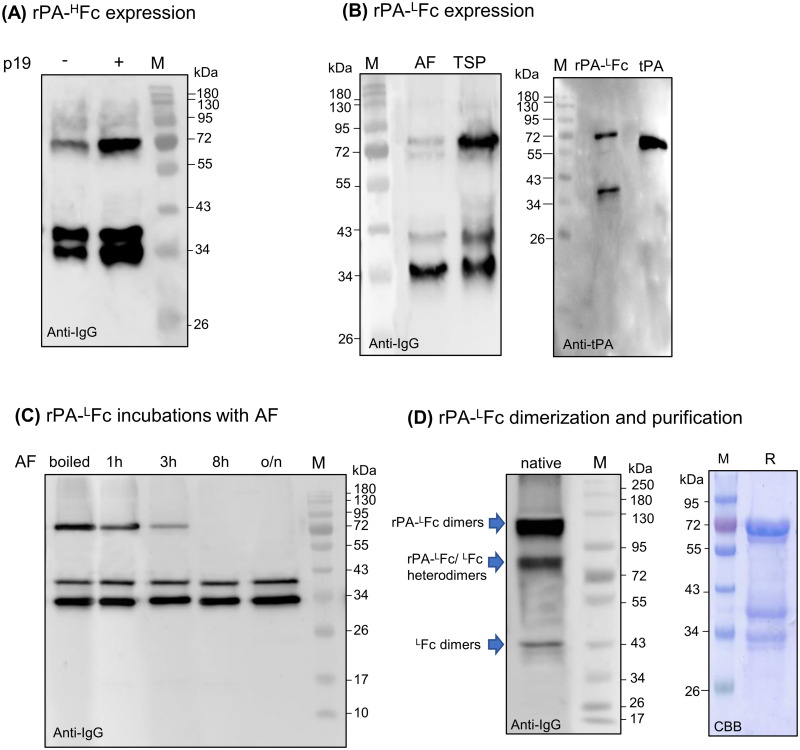
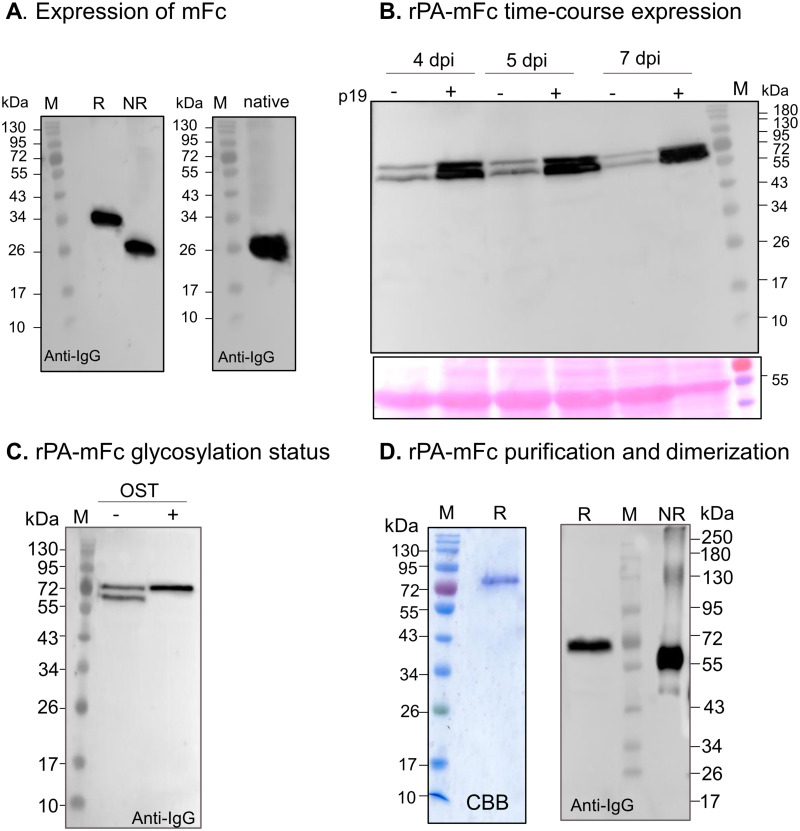
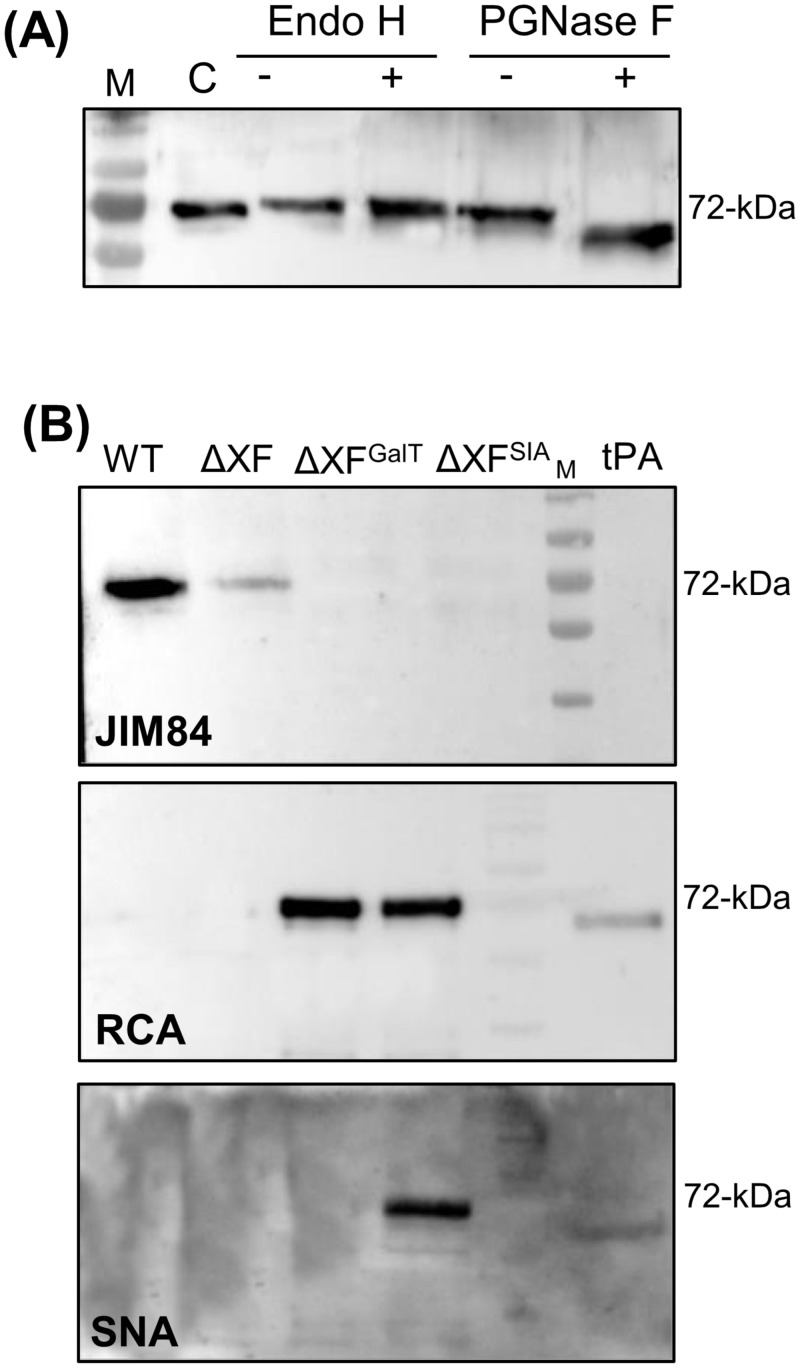
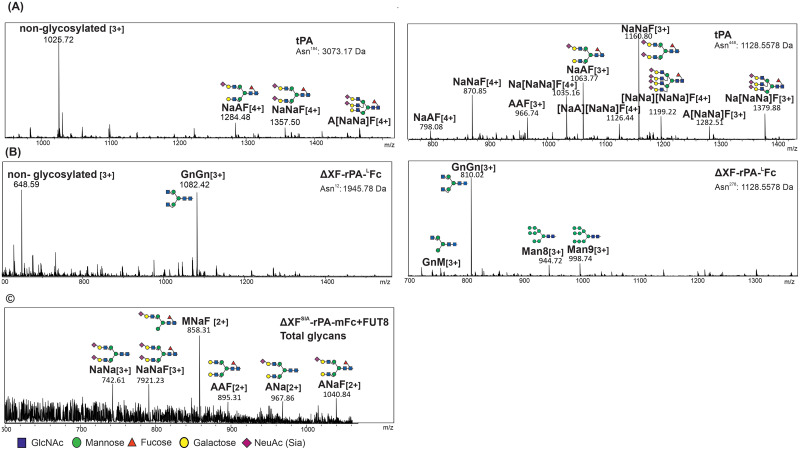
Thrombolytic and fibrinolytic therapies are effective treatments to dissolve blood clots in stroke therapy. Thrombolytic drugs activate plasminogen to its cleaved form plasmin, a proteolytic enzyme that breaks the crosslinks between fibrin molecules. The FDA-approved human tissue plasminogen activator Reteplase (rPA) is a non-glycosylated protein produced in E. coli. rPA is a deletion mutant of the wild-type Alteplase that benefits from an extended plasma half-life, reduced fibrin specificity and the ability to better penetrate into blood clots. Different methods have been proposed to improve the production of rPA. Here we show for the first time the transient expression in Nicotiana benthamiana of rPA fused to the immunoglobulin fragment crystallizable (Fc) domain on an IgG1, a strategy commonly used to improve the stability of therapeutic proteins. Despite our success on the expression and purification of dimeric rPA-Fc fusions, protein instability results in high amounts of Fc-derived degradation products. We hypothesize that the "Y"- shape of dimeric Fc fusions cause steric hindrance between protein domains and leads to physical instability. Indeed, mutations of critical residues in the Fc dimerization interface allowed the expression of fully stable rPA monomeric Fc-fusions. The ability of rPA-Fc to convert plasminogen into plasmin was demonstrated by plasminogen zymography and clot lysis assay shows that rPA-Fc is able to dissolve blood clots ex vivo. Finally, we addressed concerns with the plant-specific glycosylation by modulating rPA-Fc glycosylation towards serum-like structures including α2,6-sialylated and α1,6-core fucosylated N-glycans completely devoid of plant core fucose and xylose residues.
溶栓和纤维蛋白溶解疗法是溶解中风治疗中血栓的有效方法。溶栓药物激活纤溶酶原转化为其裂解形式纤溶酶,纤溶酶是一种蛋白水解酶,可破坏纤维蛋白分子之间的交联。美国食品和药物管理局批准的人组织型纤溶酶原激活剂瑞替普酶(rPA)是一种在大肠杆菌中产生的非糖基化蛋白。rPA 是野生型 Alteplase 的缺失突变体,具有延长的血浆半衰期、降低的纤维蛋白特异性和更好穿透血栓的能力。已经提出了不同的方法来提高 rPA 的产量。在这里,我们首次展示了 rPA 与 IgG1 上的免疫球蛋白片段结晶(Fc)结构域融合的瞬时表达,这是一种常用于提高治疗性蛋白质稳定性的策略。尽管我们成功地表达和纯化了二聚体 rPA-Fc 融合物,但蛋白质的不稳定性导致大量 Fc 衍生的降解产物。我们假设二聚体 Fc 融合物的“Y”形导致蛋白质结构域之间的空间位阻,并导致物理不稳定性。事实上,Fc 二聚化界面关键残基的突变允许表达完全稳定的 rPA 单体 Fc 融合物。rPA-Fc 将纤溶酶原转化为纤溶酶的能力通过纤溶酶原酶谱和凝块溶解试验得到证明,表明 rPA-Fc 能够在体外溶解血栓。最后,我们通过调节 rPA-Fc 的糖基化使其向血清样结构(包括完全不含植物核心岩藻糖和木糖残基的α2,6-唾液酸化和α1,6-核心岩藻糖基化 N-聚糖)转化,解决了植物特异性糖基化的问题。