
通过RNA测序以及整合的加权基因共表达网络分析(WGCNA)和蛋白质-蛋白质相互作用(PPI)网络分析鉴定非糜烂性反流病中的独特转录组特征和核心基因
Identification of Unique Transcriptomic Signatures and Hub Genes Through RNA Sequencing and Integrated WGCNA and PPI Network Analysis in Nonerosive Reflux Disease.
作者信息
Zhao Ye, Ma Teng, Zou Duowu
机构信息
Department of Gastroenterology, Ruijin Hospital, Shanghai Jiao Tong University School of Medicine, Shanghai, 200025, People's Republic of China.
Department of Thoracic Surgery, Zhongshan Hospital, Fudan University, Shanghai, 200032, People's Republic of China.
出版信息
J Inflamm Res. 2021 Nov 23;14:6143-6156. doi: 10.2147/JIR.S340452. eCollection 2021.
PURPOSE
Transcriptomic studies on gastroesophageal reflux disease are scarce, and gene expression signatures in nonerosive reflux disease (NERD) remain elusive. The aim of the study was to identify gene expression profiles and potential hub genes in NERD.
PATIENTS AND METHODS
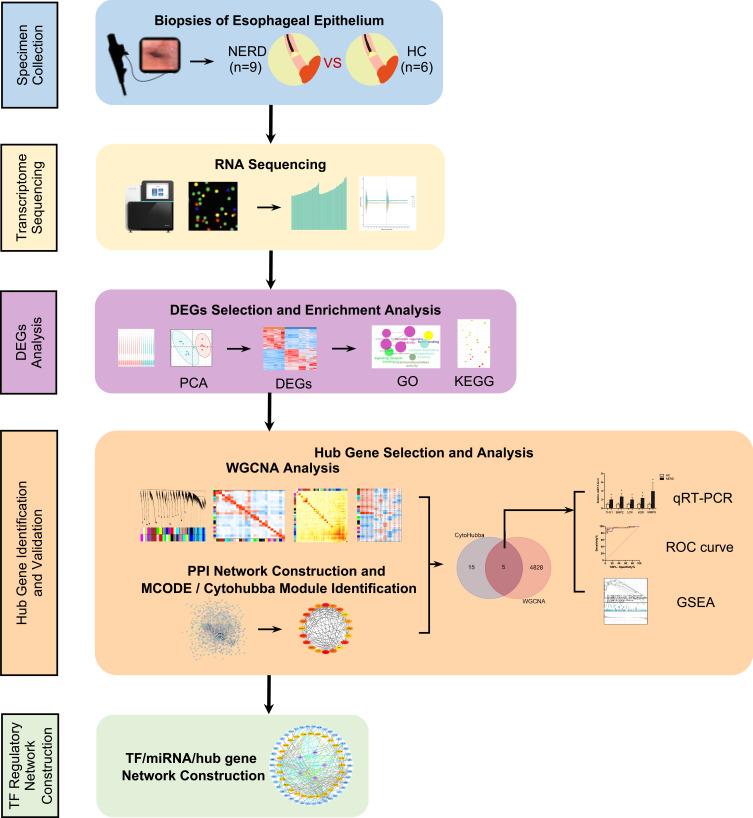
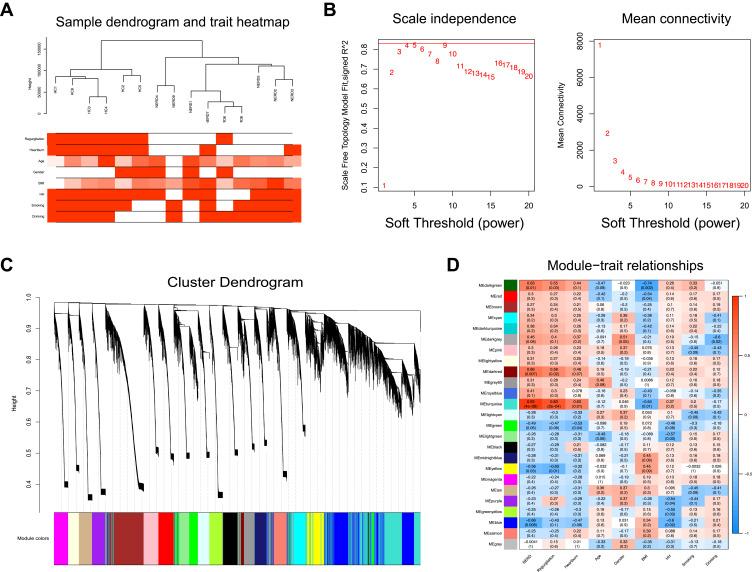
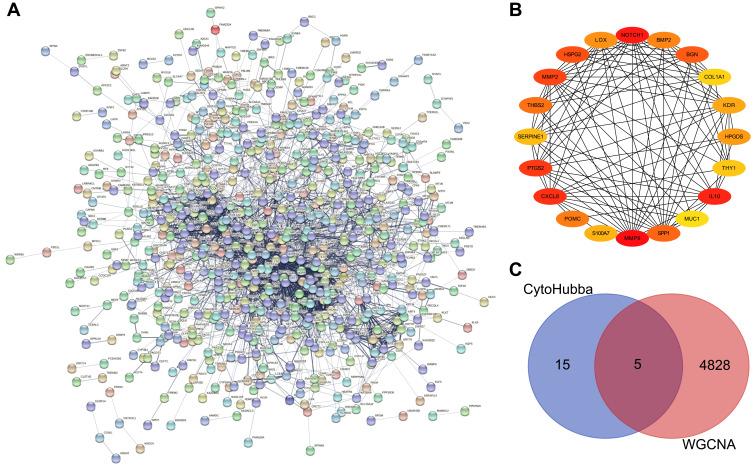
We performed RNA sequencing on biopsy samples from nine consecutive patients with NERD and six healthy controls. Differentially expressed genes (DEGs) were analysed with the DESeq2 R package. A DEG-based protein-protein interaction (PPI) network was constructed to filter hub genes using Cytoscape. Weighted gene coexpression network analysis (WGCNA) was conducted to identify the coexpression relationships of all modules and explore the relationship between gene sets and clinical traits.
RESULTS
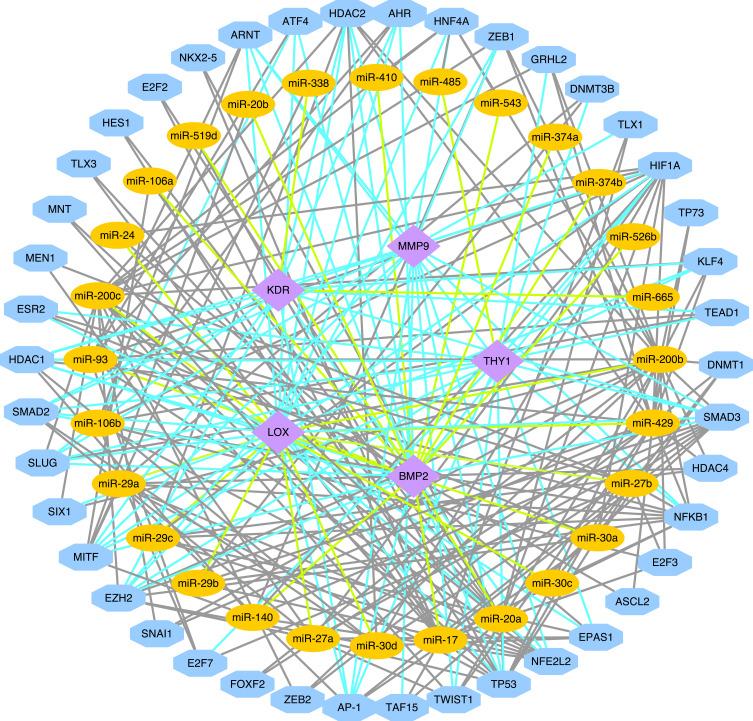
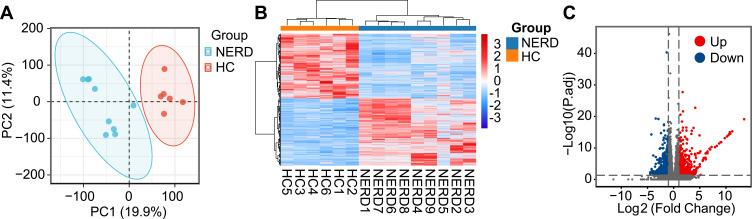
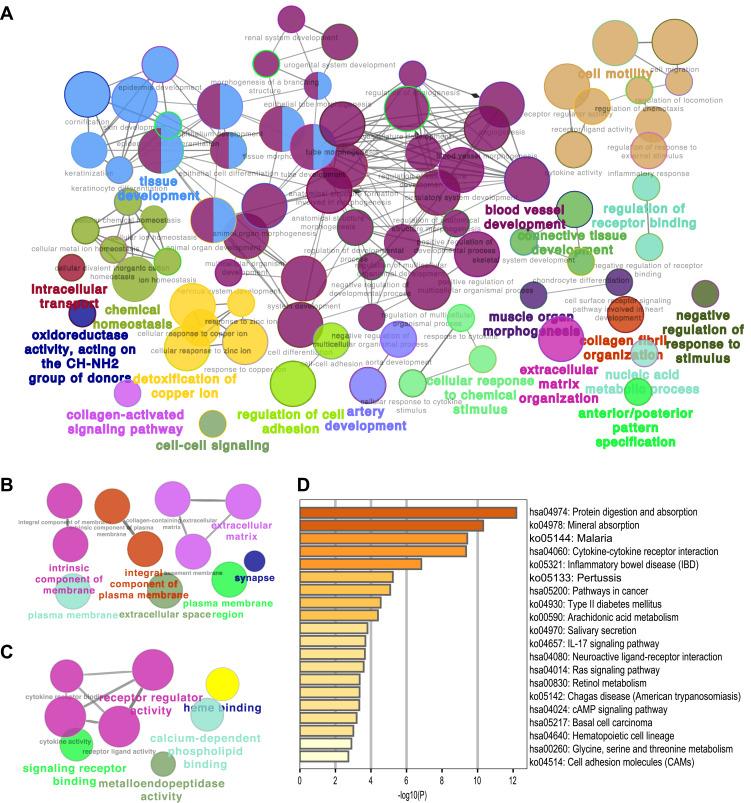
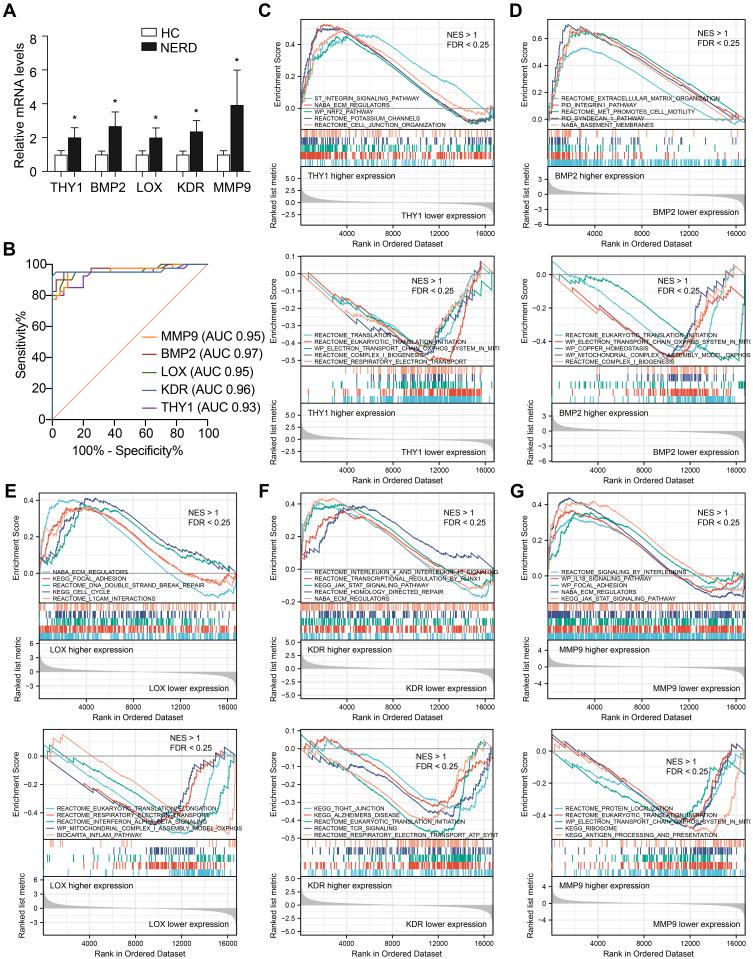
In total, 1195 DEGs were identified, including 649 upregulated and 546 downregulated genes involved in regulating the inflammatory response and epithelial cell differentiation. Overlap of the PPI and WGCNA networks identified five shared genes, namely, THY1, BMP2, LOX, KDR and MMP9, as candidate hub genes in NERD. Quantitative PCR analysis of the expression of these five genes confirmed the sequencing results. Receiver operating characteristic analyses indicated that these hub genes had diagnostic potential for NERD patients. Gene set enrichment analysis confirmed that each hub gene was closely associated with the pathophysiological processes of NERD. In addition, a regulatory network comprising 42 transcription factors (TFs), 28 miRNAs and 5 hub genes was established.
CONCLUSION
The five core genes may be promising biomarkers of NERD. The TF/miRNA/hub gene network can improve the understanding of the molecular mechanisms underlying disease progression.
目的
关于胃食管反流病的转录组学研究较少,非糜烂性反流病(NERD)中的基因表达特征仍不明确。本研究的目的是鉴定NERD中的基因表达谱和潜在的核心基因。
患者和方法
我们对9例连续的NERD患者和6例健康对照的活检样本进行了RNA测序。使用DESeq2 R软件包分析差异表达基因(DEG)。构建基于DEG的蛋白质-蛋白质相互作用(PPI)网络,使用Cytoscape筛选核心基因。进行加权基因共表达网络分析(WGCNA)以鉴定所有模块的共表达关系,并探索基因集与临床特征之间的关系。
结果
共鉴定出1195个DEG,包括649个上调基因和546个下调基因,这些基因参与调节炎症反应和上皮细胞分化。PPI和WGCNA网络的重叠鉴定出5个共享基因,即THY1、BMP2、LOX、KDR和MMP9,作为NERD的候选核心基因。对这5个基因表达的定量PCR分析证实了测序结果。受试者工作特征分析表明,这些核心基因对NERD患者具有诊断潜力。基因集富集分析证实每个核心基因都与NERD的病理生理过程密切相关。此外,建立了一个由42个转录因子(TF)、28个miRNA和5个核心基因组成的调控网络。
结论
这5个核心基因可能是有前景的NERD生物标志物。TF/miRNA/核心基因网络可以增进对疾病进展潜在分子机制的理解。
 Zotero 插件