Department of Gynecology, Molecular Gynecology and Metabolomics Lab, College of Medicine of the Federal University of São Paulo (EPM-UNIFESP), São Paulo, São Paulo, Brazil.
Nagourney Institute, Long Beach, California, United States of America.
PLoS One. 2021 Dec 1;16(12):e0259909. doi: 10.1371/journal.pone.0259909. eCollection 2021.
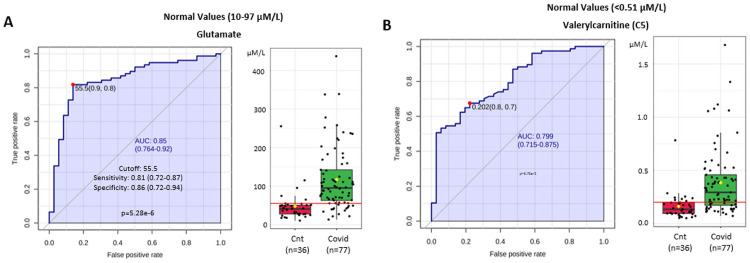
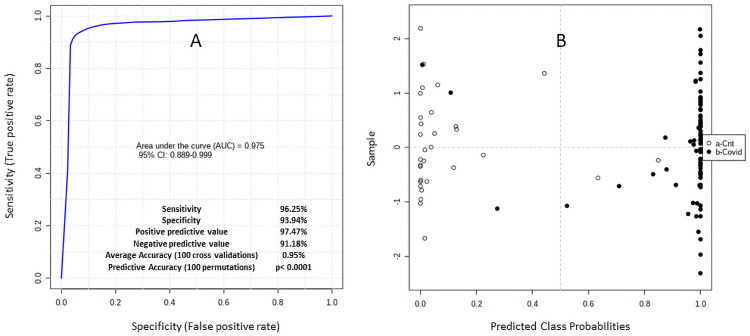
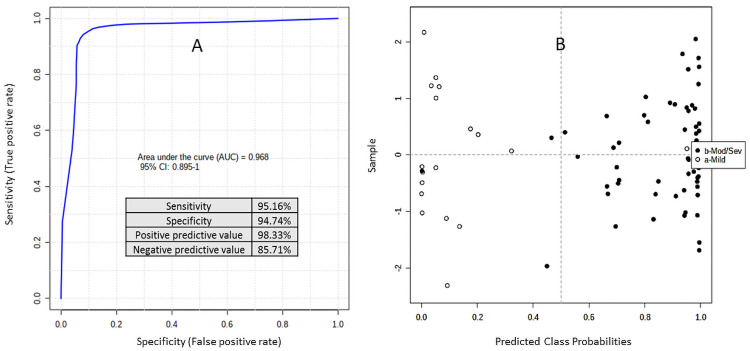
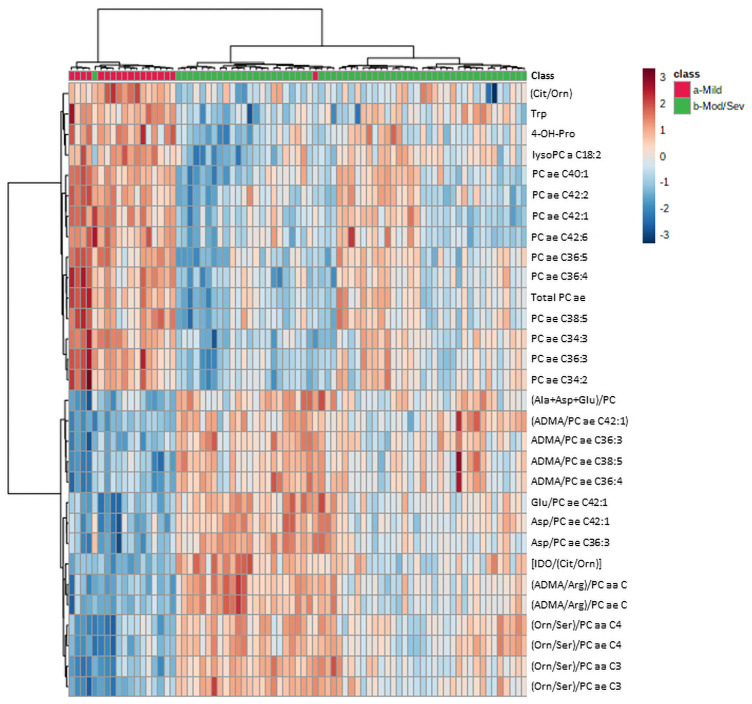
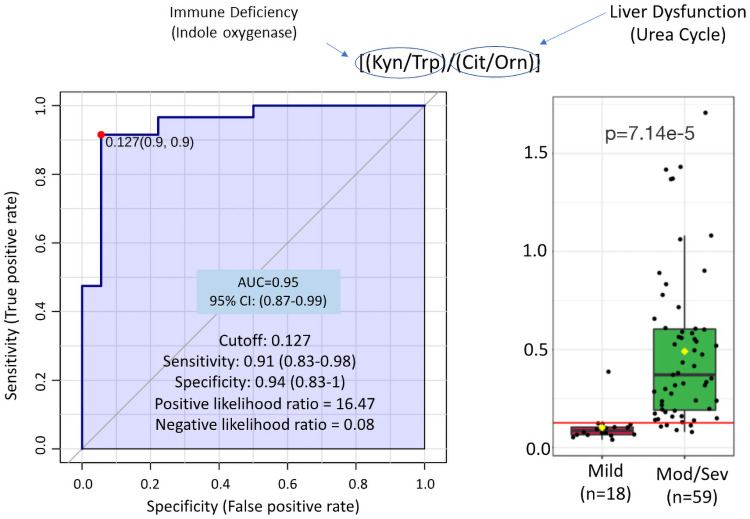
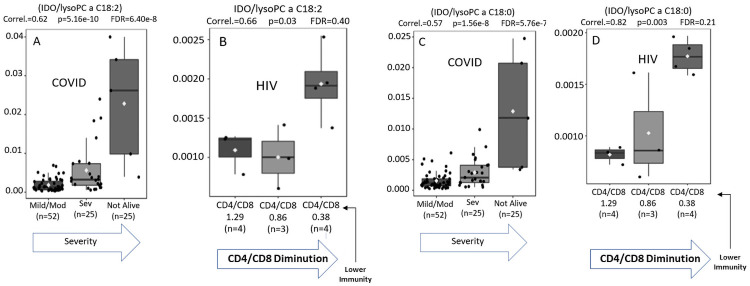
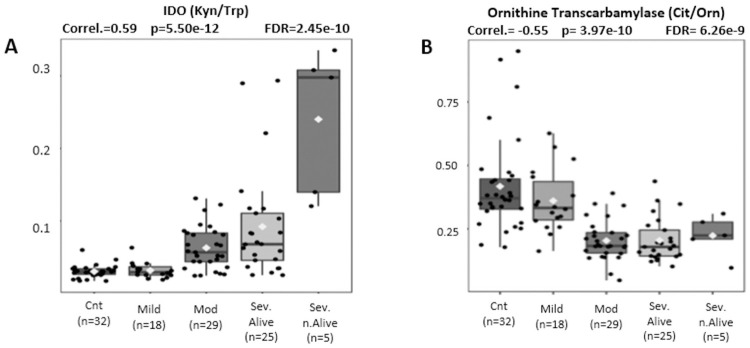
This study investigated the association between COVID-19 infection and host metabolic signatures as prognostic markers for disease severity and mortality. We enrolled 82 patients with RT-PCR confirmed COVID-19 infection who were classified as mild, moderate, or severe/critical based upon their WHO clinical severity score and compared their results with 31 healthy volunteers. Data on demographics, comorbidities and clinical/laboratory characteristics were obtained from medical records. Peripheral blood samples were collected at the time of clinical evaluation or admission and tested by quantitative mass spectrometry to characterize metabolic profiles using selected metabolites. The findings in COVID-19 (+) patients reveal changes in the concentrations of glutamate, valeryl-carnitine, and the ratios of Kynurenine/Tryptophan (Kyn/Trp) to Citrulline/Ornithine (Cit/Orn). The observed changes may serve as predictors of disease severity with a (Kyn/Trp)/(Cit/Orn) Receiver Operator Curve (ROC) AUC = 0.95. Additional metabolite measures further characterized those likely to develop severe complications of their disease, suggesting that underlying immune signatures (Kyn/Trp), glutaminolysis (Glutamate), urea cycle abnormalities (Cit/Orn) and alterations in organic acid metabolism (C5) can be applied to identify individuals at the highest risk of morbidity and mortality from COVID-19 infection. We conclude that host metabolic factors, measured by plasma based biochemical signatures, could prove to be important determinants of Covid-19 severity with implications for prognosis, risk stratification and clinical management.
这项研究调查了 COVID-19 感染与宿主代谢特征之间的关联,这些特征可作为疾病严重程度和死亡率的预后标志物。我们招募了 82 名经 RT-PCR 确诊的 COVID-19 感染患者,根据世界卫生组织临床严重程度评分将其分为轻症、中度或重症/危重症,并将其结果与 31 名健康志愿者进行了比较。从病历中获取了人口统计学、合并症和临床/实验室特征的数据。在临床评估或入院时采集外周血样本,并通过定量质谱法进行测试,以使用选定的代谢物来描述代谢谱。在 COVID-19(+)患者中发现的变化包括谷氨酸、戊酰肉碱和犬尿氨酸/色氨酸(Kyn/Trp)与瓜氨酸/精氨酸(Cit/Orn)的比值的浓度变化。观察到的变化可能是疾病严重程度的预测指标,(Kyn/Trp)/(Cit/Orn)接收器操作特征(ROC)曲线 AUC 为 0.95。其他代谢物指标进一步描述了那些可能发生疾病严重并发症的患者,这表明潜在的免疫特征(Kyn/Trp)、谷氨酰胺分解代谢(谷氨酸)、尿素循环异常(Cit/Orn)和有机酸代谢改变(C5)可用于识别 COVID-19 感染发病率和死亡率最高的个体。我们得出结论,宿主代谢因素,通过基于血浆的生化特征进行测量,可能成为 COVID-19 严重程度的重要决定因素,对预后、风险分层和临床管理具有重要意义。