Discipline of Physiotherapy, School of Health Sciences, The University of Newcastle, Callaghan, NSW, 2308, Australia.
BMC Musculoskelet Disord. 2021 Dec 1;22(1):1004. doi: 10.1186/s12891-021-04885-3.
Shoulder impingement syndrome (SIS) is the most common form of shoulder pain. Conservative and surgical treatments for SIS are often not effective. One such surgical intervention is subacromial decompression, aimed at widening the subacromial space (SAS). A better understanding of the changes in the SAS may help explain the relative ineffectiveness of current interventions.
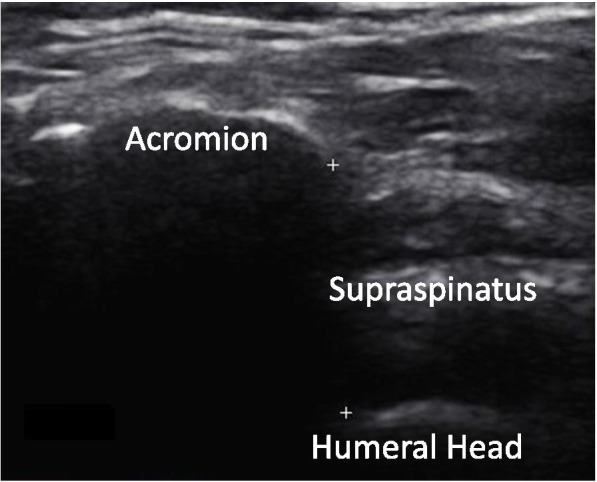
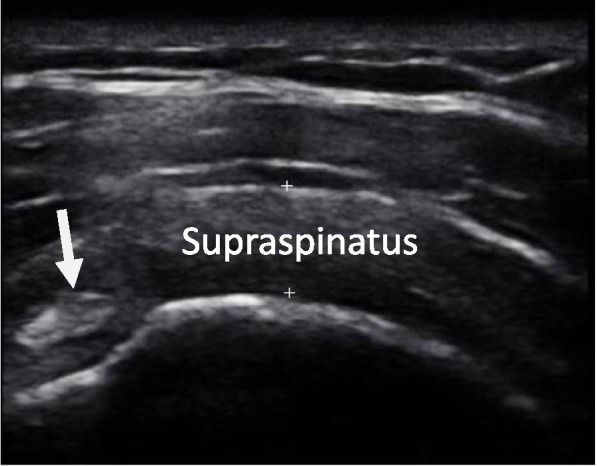
To measure the acromiohumeral distance (AHD) and supraspinatus tendon thickness (STT) in people with SIS using a case control study.
The AHD and STT of 39 participants with SIS ≥3 months and 39 age, gender and dominant arm matched controls were measured using ultrasound imaging. Between-group differences for AHD and STT were compared using t-tests. A linear regression was used to determine if there was a relationship between AHD and STT measures, with group as a covariate.
Compared to controls (mean age 55.7 years, SD 10.6), individuals with SIS (mean age 57.1 years, SD 11.1) had a significantly larger AHD (mean difference 2.14 mm, 95% CI 1.21, 3.07, p < 0.001) and STT (mean difference 1.25 mm, 95% CI 0.60, 1.90, p < 0.001). The linear regression model indicated an association between AHD and STT (β = 0.59, 95% CI 0.29, 0.89, p < 0.01, R = 0.35, n = 78), suggesting that as STT increases in size, so does the AHD.
Individuals with SIS had a larger AHD and greater STT than controls. These results suggest the SAS is already wider in people with SIS and that the symptoms associated with SIS may be more related to an increased STT than a smaller SAS.
肩峰下撞击综合征(SIS)是最常见的肩部疼痛形式。SIS 的保守和手术治疗通常效果不佳。一种此类手术干预是肩峰下减压术,旨在拓宽肩峰下空间(SAS)。更好地了解 SAS 的变化可能有助于解释当前干预措施的相对无效性。
使用病例对照研究来测量患有 SIS 的人的肩峰肱距离(AHD)和冈上肌腱厚度(STT)。
使用超声成像测量 39 名 SIS≥3 个月的患者和 39 名年龄、性别和优势臂匹配的对照组的 AHD 和 STT。使用 t 检验比较 AHD 和 STT 的组间差异。使用线性回归来确定 AHD 和 STT 测量值之间是否存在关系,以组为协变量。
与对照组(平均年龄 55.7 岁,标准差 10.6)相比,患有 SIS 的个体(平均年龄 57.1 岁,标准差 11.1)的 AHD(平均差异 2.14mm,95%CI 1.21,3.07,p<0.001)和 STT(平均差异 1.25mm,95%CI 0.60,1.90,p<0.001)明显更大。线性回归模型表明 AHD 和 STT 之间存在关联(β=0.59,95%CI 0.29,0.89,p<0.01,R=0.35,n=78),表明随着 STT 的增大,AHD 也增大。
患有 SIS 的个体的 AHD 和 STT 均大于对照组。这些结果表明,SAS 在患有 SIS 的人群中已经更宽,与 SIS 相关的症状可能与更大的 STT 而不是更小的 SAS 更相关。