Hospital Pulau Pinang, Penang, Malaysia.
School of Pharmaceutical Sciences, Universiti Sains Malaysia, Penang, Malaysia.
Rev Diabet Stud. 2021 Nov 1;17(2):82-89. doi: 10.1900/RDS.2021.17.82.
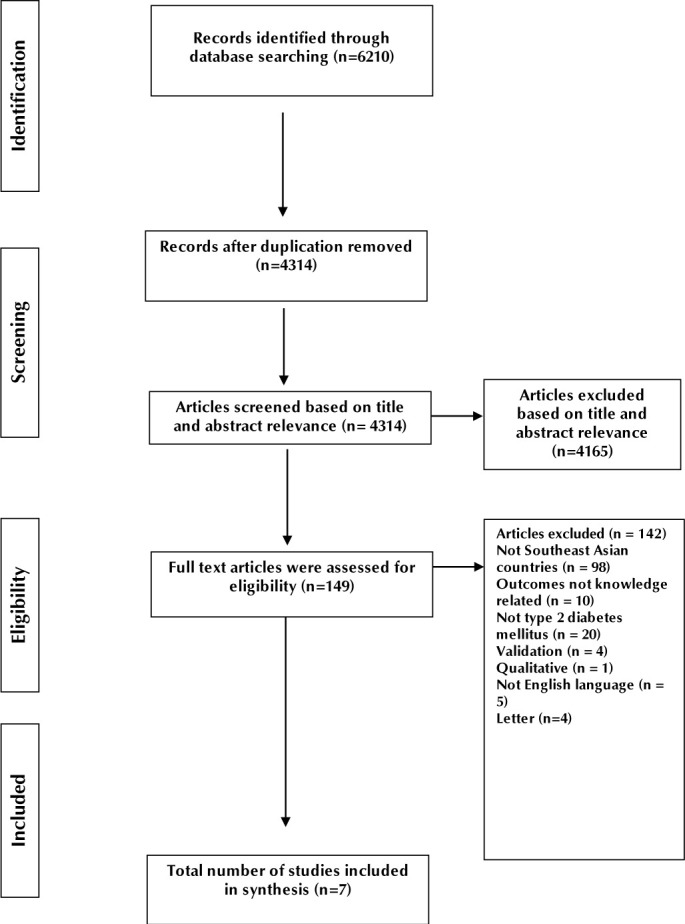
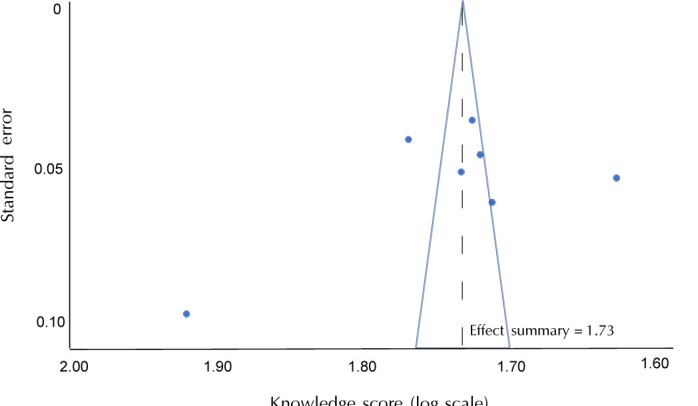
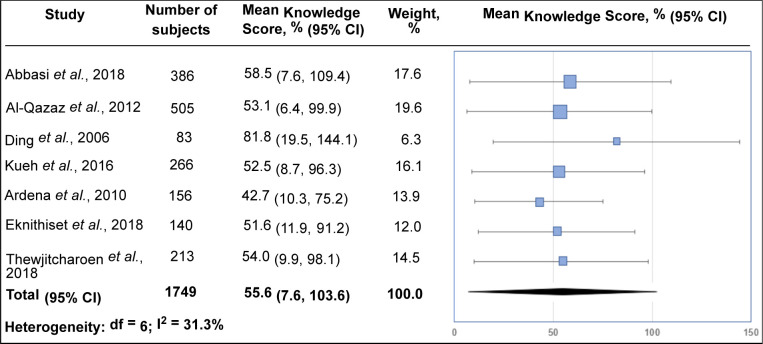
Recognition of patient baseline knowledge is important in educating patients with type 2 diabetes mellitus (T2D) to manage their disease effectively. The purpose of this study is to review current evidence on the level of diabetes knowledge among T2D patients and determine factors affecting their knowledge. A systematic search of English language articles published between 1990 and June 2019 was conducted using six electronic databases. Only quantitative studies that assessed knowledge of T2D patients in Southeast Asian countries were included. Data were extracted and a meta-analysis was conducted. A total of 6210 articles were retrieved; seven articles met the inclusion criteria, comprising 1,749 T2D patients. The calculated mean knowledge score was 55.6% (95% CI: 7.6 to 103.6). Five types of assessment tools were identified ranging from five to 41 questions that focused on disease specifics, treatment, and nutrition. Age, education level, and glycemic control were the most common factors impacting knowledge. The level of knowledge among T2D patients in Southeast Asia was unsatisfactory, especially in older patients with low education levels and poor glycemic control. Hence, an appropriate educational plan should be prioritized to these groups.
认识患者的基线知识对于教育 2 型糖尿病(T2D)患者有效管理其疾病非常重要。本研究旨在回顾 T2D 患者糖尿病知识水平的现有证据,并确定影响其知识的因素。采用六个电子数据库,对 1990 年至 2019 年 6 月期间发表的英文文献进行了系统检索。仅纳入评估东南亚国家 T2D 患者知识的定量研究。提取数据并进行荟萃分析。共检索到 6210 篇文章,7 篇文章符合纳入标准,共纳入 1749 例 T2D 患者。计算出的平均知识得分 55.6%(95%CI:7.6 至 103.6)。确定了五种评估工具,问题数量从 5 到 41 不等,重点关注疾病特异性、治疗和营养。年龄、教育程度和血糖控制是影响知识的最常见因素。东南亚 T2D 患者的知识水平不尽如人意,尤其是年龄较大、教育程度较低和血糖控制较差的患者。因此,应优先为这些人群制定适当的教育计划。