
严重急性呼吸综合征冠状病毒2(SARS-CoV-2):在各种甲状腺疾病发病机制中的新作用
SARS-CoV-2: Emerging Role in the Pathogenesis of Various Thyroid Diseases.
作者信息
Murugan Avaniyapuram Kannan, Alzahrani Ali S
机构信息
Division of Molecular Endocrinology, Department of Molecular Oncology, King Faisal Specialist Hospital and Research Centre, Riyadh, 11211, Saudi Arabia.
Department of Medicine, King Faisal Specialist Hospital and Research Centre, Riyadh, 11211, Saudi Arabia.
出版信息
J Inflamm Res. 2021 Nov 24;14:6191-6221. doi: 10.2147/JIR.S332705. eCollection 2021.
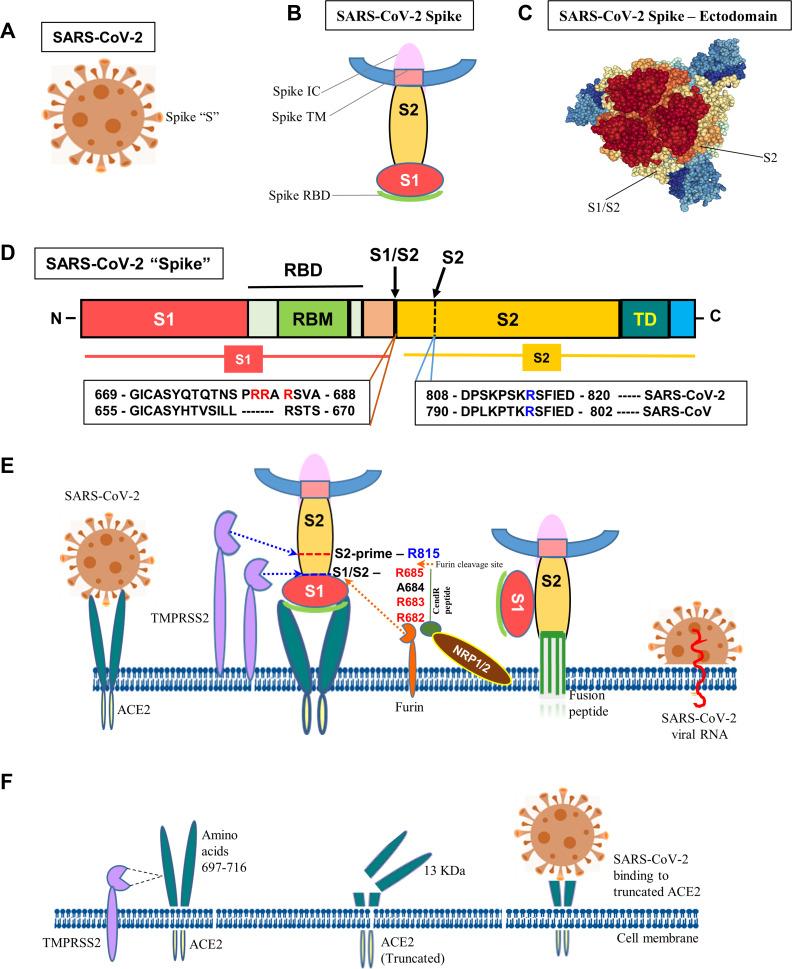
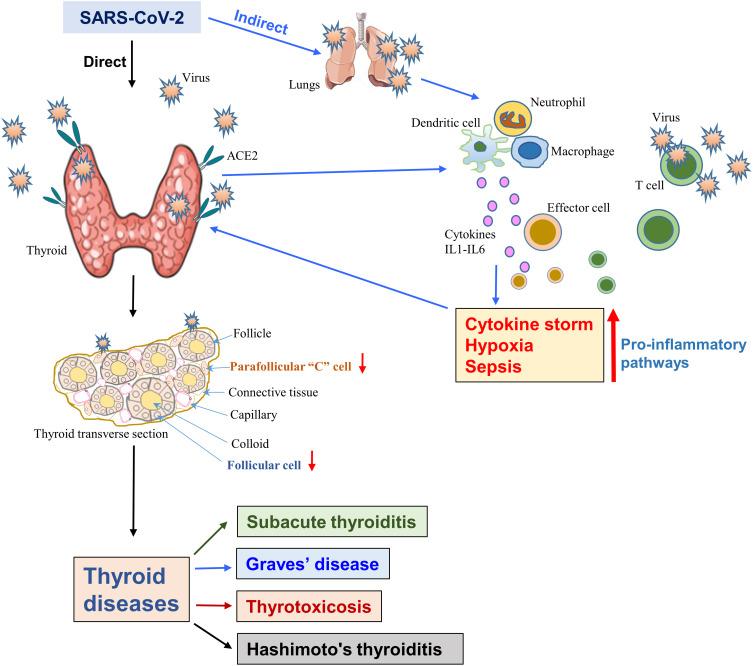
Coronavirus disease-2019 (COVID-19) is asymptomatic in most cases, but it is impartible and fatal in fragile and elderly people. Heretofore, more than four million people succumbed to COVID-19, while it spreads to every part of the globe. Severe acute respiratory syndrome-coronavirus-2 (SARS-CoV-2) induces various dysfunctions in many vital organs including the thyroid by utilizing ACE2 as a receptor for cellular entry. Emerging reports clearly show the involvement of SARS-CoV-2 in diverse thyroid disorders. Thus, this review article aims to review comprehensively all the recent developments in SARS-CoV-2-induced pathogenesis of thyroid diseases. The review briefly summarizes the recent key findings on the mechanism of SARS-CoV-2 infection, the role of ACE2 receptor in viral entry, SARS-CoV-2-activated molecular signaling in host cells, ACE2 expression in the thyroid, cytokine storm, and its vital role in thyroid dysfunction and long-COVID in relation to thyroid and autoimmunity. Further, it extensively discusses rapidly evolving knowledge on the potential part of SARS-CoV-2 in emerging various thyroid dysfunctions during and post-COVID-19 conditions which include subacute thyroiditis, Graves' diseases, Hashimoto's thyroiditis, thyrotoxicosis, and other recent advances in further discerning the implications of this virus within thyroid dysfunction. Unraveling the pathophysiology of SARS-CoV-2-triggered thyroid dysfunctions may aid pertinent therapeutic options and management of these patients in both during and post-COVID-19 scenarios.
2019冠状病毒病(COVID-19)在大多数情况下是无症状的,但在体弱者和老年人中具有传染性且可能致命。迄今为止,已有超过400万人死于COVID-19,同时该病毒已传播到全球各地。严重急性呼吸综合征冠状病毒2(SARS-CoV-2)通过利用血管紧张素转换酶2(ACE2)作为细胞进入受体,在包括甲状腺在内的许多重要器官中引发各种功能障碍。新出现的报告清楚地表明SARS-CoV-2与多种甲状腺疾病有关。因此,这篇综述文章旨在全面回顾SARS-CoV-2诱导甲状腺疾病发病机制的所有最新进展。该综述简要总结了SARS-CoV-2感染机制、ACE2受体在病毒进入中的作用、SARS-CoV-2激活的宿主细胞分子信号传导、甲状腺中ACE2的表达、细胞因子风暴及其在甲状腺功能障碍以及与甲状腺和自身免疫相关的长期COVID中的重要作用等方面的最新关键发现。此外,它还广泛讨论了关于SARS-CoV-2在COVID-19期间和之后引发各种甲状腺功能障碍中潜在作用的快速发展的知识,这些功能障碍包括亚急性甲状腺炎、格雷夫斯病、桥本甲状腺炎、甲状腺毒症以及在进一步识别该病毒在甲状腺功能障碍中的影响方面的其他最新进展。阐明SARS-CoV-2引发的甲状腺功能障碍的病理生理学可能有助于在COVID-19期间和之后为这些患者提供相关的治疗选择和管理。



 Zotero 插件