Biosciences Institute, Vascular Biology and Medicine Theme, Faculty of Medical Sciences, Newcastle University, Newcastle Upon Tyne, UK; First Department of Propaedeutic Internal Medicine and Joint Rheumatology Program, School of Medicine, National and Kapodistrian University of Athens, Athens, Greece; Freeman Hospital, Newcastle Upon Tyne Hospitals NHS Foundation Trust, Newcastle Upon Tyne, UK.
Biosciences Institute, Vascular Biology and Medicine Theme, Faculty of Medical Sciences, Newcastle University, Newcastle Upon Tyne, UK.
J Autoimmun. 2021 Dec;125:102755. doi: 10.1016/j.jaut.2021.102755. Epub 2021 Nov 29.
Adenosine deaminase acting on RNA-1 (ADAR1) enzyme is a type I interferon (IFN)-stimulated gene (ISG) catalyzing the deamination of adenosine-to-inosine, a process called A-to-I RNA editing. A-to-I RNA editing takes place mainly in Alu elements comprising a primate-specific level of post-transcriptional gene regulation. Whether RNA editing is involved in type I IFN responses in systemic sclerosis (SSc) patients remains unknown.
ISG expression was quantified in skin biopsies and peripheral blood mononuclear cells derived from SSc patients and healthy subjects. A-to-I RNA editing was examined in the ADAR1-target cathepsin S (CTSS) by an RNA editing assay. The effect of ADAR1 on interferon-α/β-induced CTSS expression was assessed in human endothelial cells in vitro.
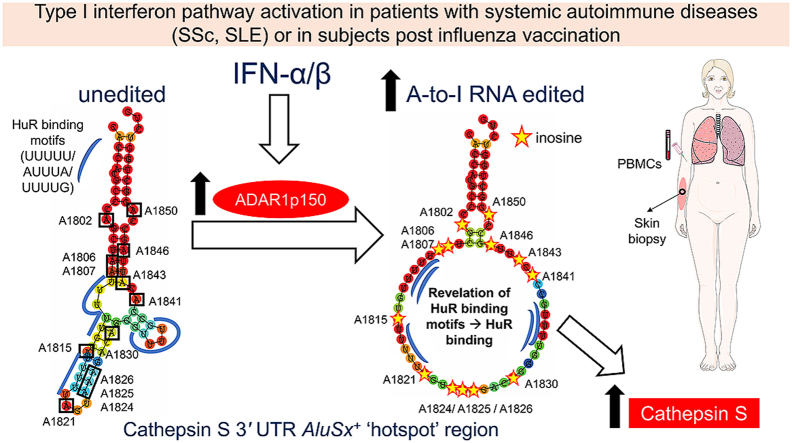
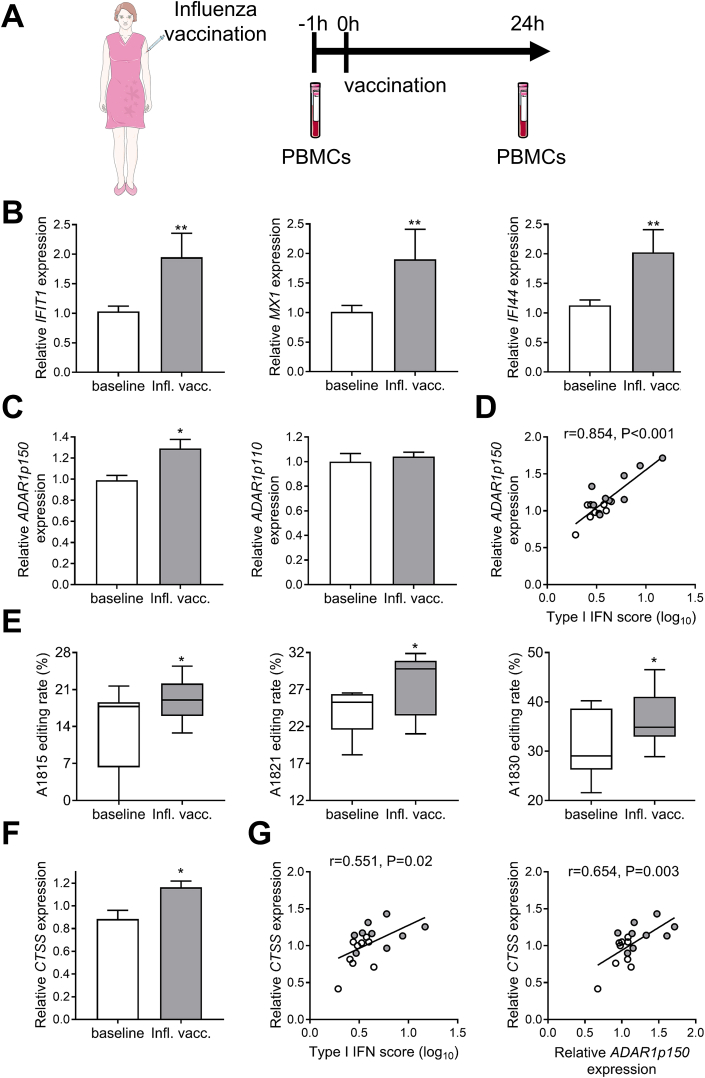
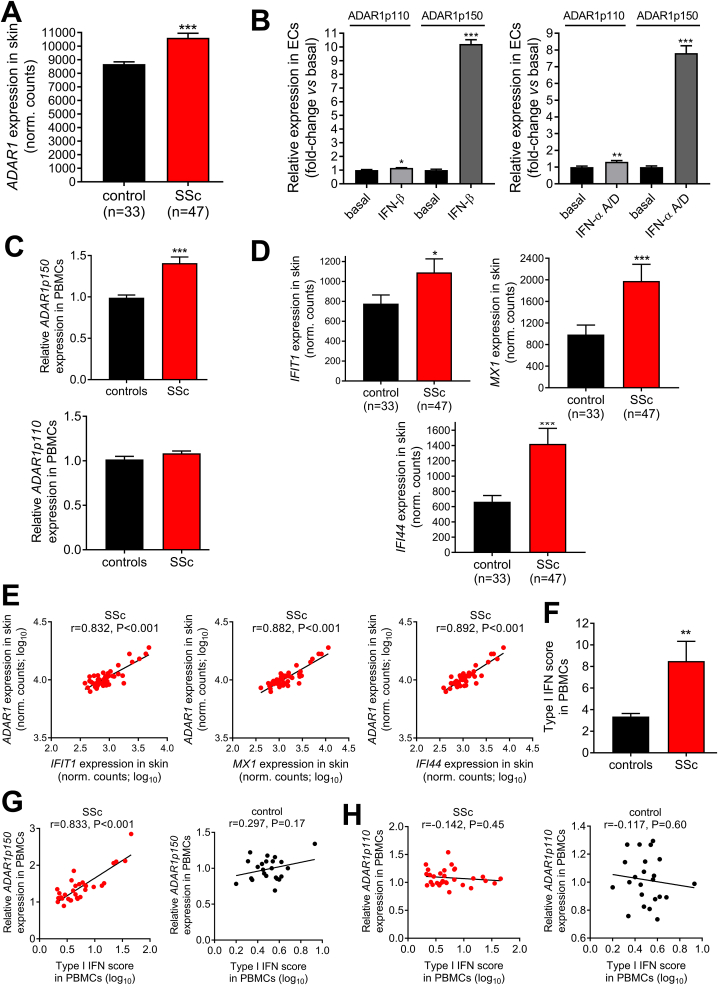
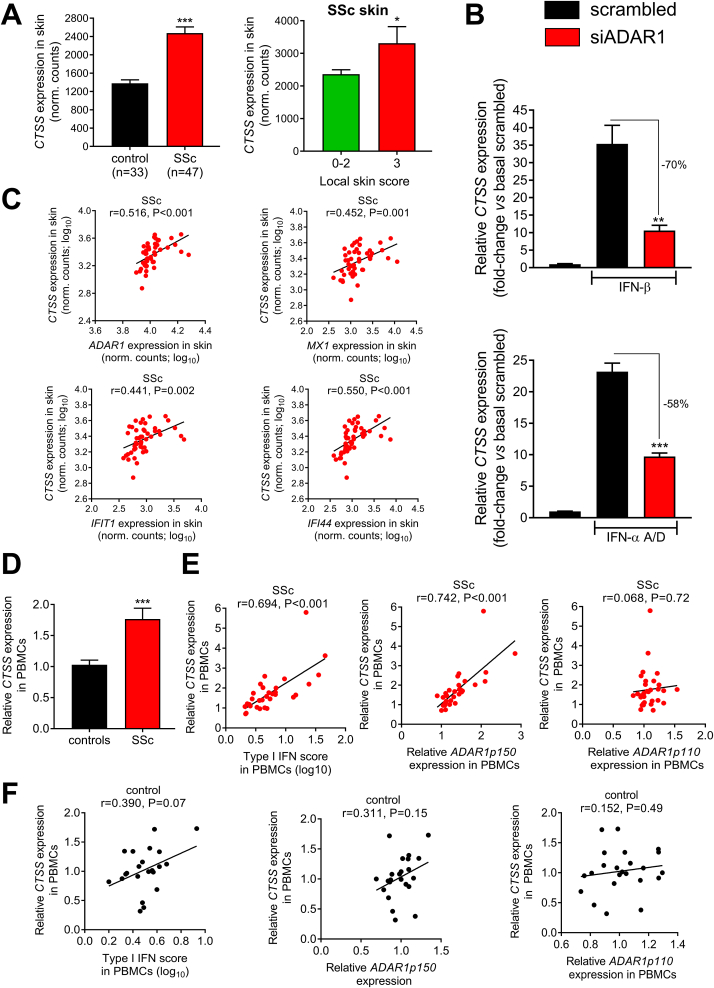
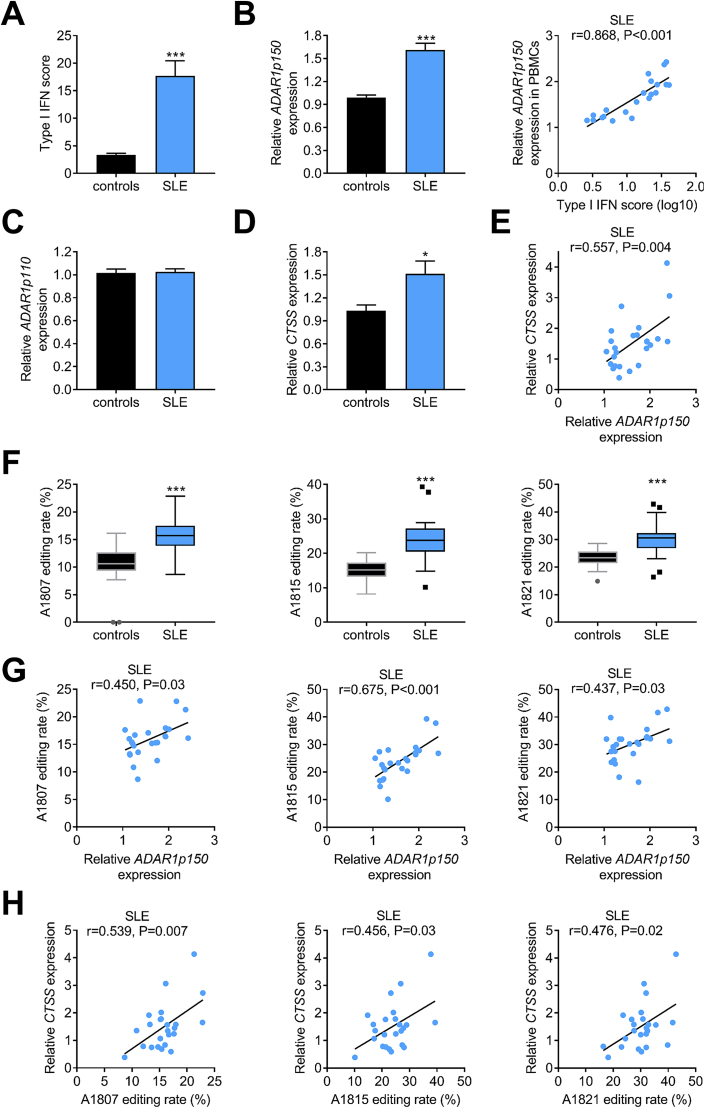
Increased expression levels of the RNA editor ADAR1, and specifically the long ADAR1p150 isoform, and its target CTSS are strongly associated with type I IFN signature in skin biopsies and peripheral blood derived from SSc patients. Notably, IFN-α/β-treated human endothelial cells show 8-10-fold increased ADAR1p150 and 23-35-fold increased CTSS expression, while silencing of ADAR1 reduces CTSS expression by 60-70%. In SSc patients, increased RNA editing rate of individual adenosines located in CTSS 3' UTR Alu elements is associated with higher CTSS expression (r = 0.36-0.6, P < 0.05 for all). Similar findings were obtained in subjects with activated type I IFN responses including SLE patients or healthy subjects after influenza vaccination.
ADAR1p150-mediated A-to-I RNA editing is critically involved in type I IFN responses highlighting the importance of post-transcriptional regulation of proinflammatory gene expression in systemic autoimmunity, including SSc.
RNA 结合蛋白 1(ADAR1)酶是一种 I 型干扰素(IFN)刺激基因(ISG),可催化腺苷脱氨酶到肌苷,这一过程称为 A 到 I RNA 编辑。A 到 I RNA 编辑主要发生在 Alu 元件中,Alu 元件构成了灵长类动物中特定水平的转录后基因调控。RNA 编辑是否参与系统性硬化症(SSc)患者的 I 型 IFN 反应尚不清楚。
在 SSc 患者和健康受试者的皮肤活检和外周血单核细胞中定量检测 ISG 表达。通过 RNA 编辑测定法检测 ADAR1 靶标组织蛋白酶 S(CTSS)中的 A 到 I RNA 编辑。在体外人内皮细胞中评估 ADAR1 对干扰素-α/β诱导的 CTSS 表达的影响。
RNA 编辑物 ADAR1 的表达水平升高,特别是长 ADAR1p150 同工型及其靶标 CTSS,与 SSc 患者皮肤活检和外周血中的 I 型 IFN 特征密切相关。值得注意的是,IFN-α/β 处理的人内皮细胞显示 ADAR1p150 增加 8-10 倍,CTSS 增加 23-35 倍,而 ADAR1 沉默使 CTSS 表达减少 60-70%。在 SSc 患者中,位于 CTSS 3'UTR Alu 元件中的单个腺苷的 RNA 编辑率增加与 CTSS 表达增加相关(所有 r=0.36-0.6,P<0.05)。在包括 Sjögren 综合征患者或健康受试者在内的具有激活的 I 型 IFN 反应的受试者中也得到了类似的发现。
ADAR1p150 介导的 A 到 I RNA 编辑在 I 型 IFN 反应中起着至关重要的作用,突出了转录后对包括 SSc 在内的系统性自身免疫中促炎基因表达的调控的重要性。