Luo Liang, Zhang Wei, Wang Jing, Zhao Ming, Shen Kuo, Jia Yanhui, Li Yan, Zhang Jian, Cai Weixia, Xiao Dan, Bai Xiaozhi, Liu Kaituo, Wang Kejia, Zhang Yue, Zhu Huayu, Zhou Qin, Hu Dahai
Department of Burns and Cutaneous Surgery, Xijing Hospital, the Fourth Military Medical University, Xi' an, China.
Department of Plastic and Aesthetic Surgery, The First Affiliated Hospital of Xi'an Medical University, Xi'an, China.
Front Cell Dev Biol. 2021 Nov 11;9:737275. doi: 10.3389/fcell.2021.737275. eCollection 2021.
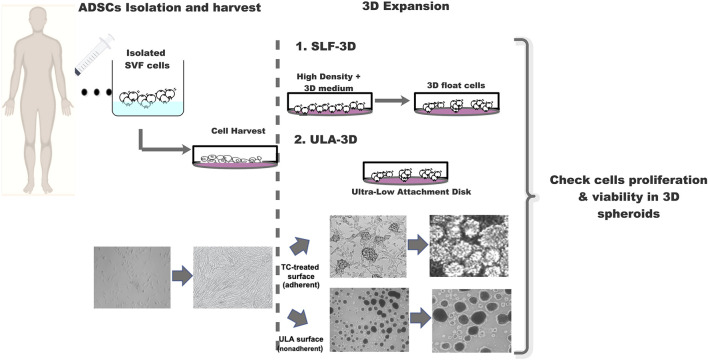
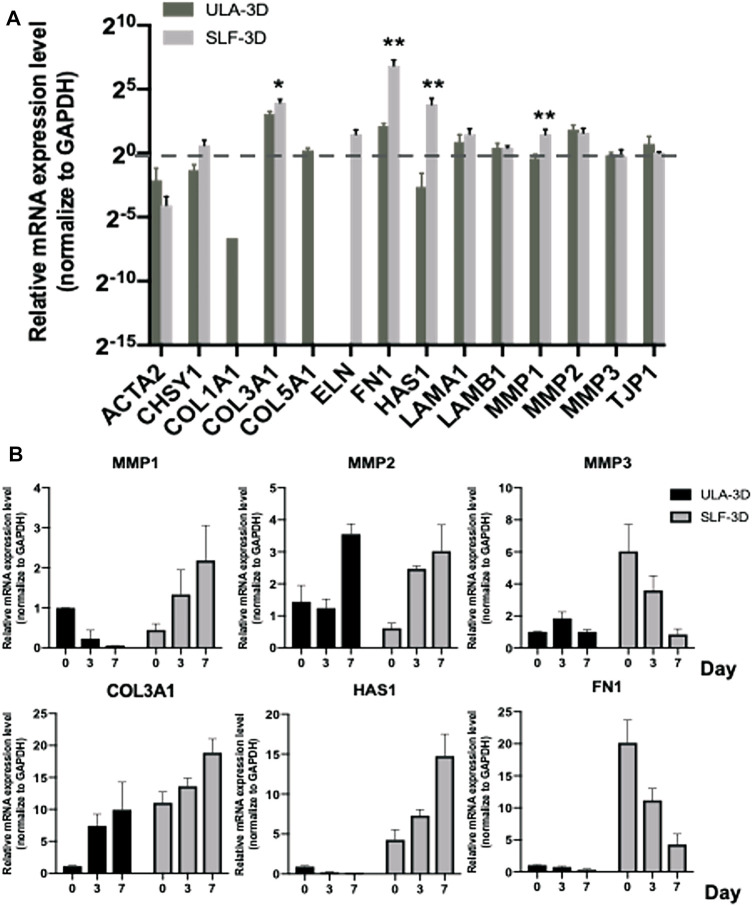
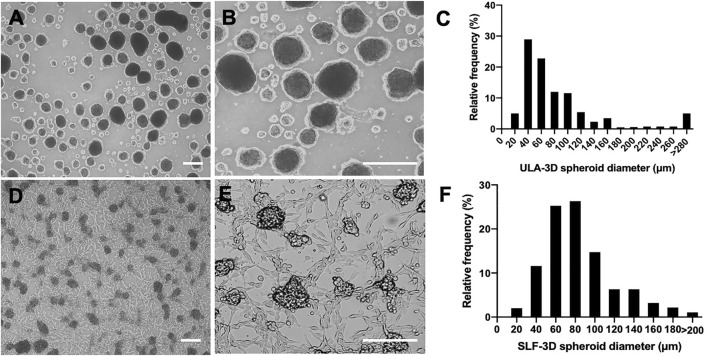
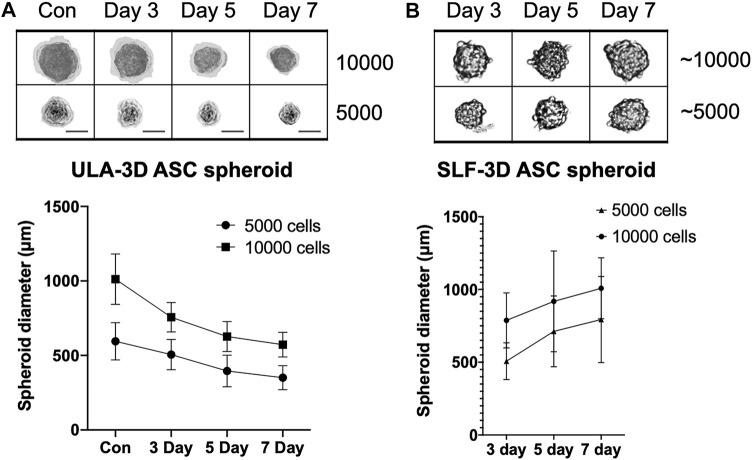
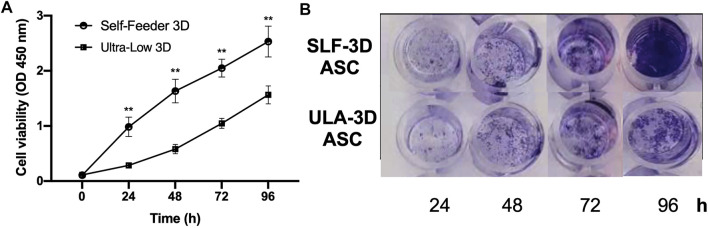
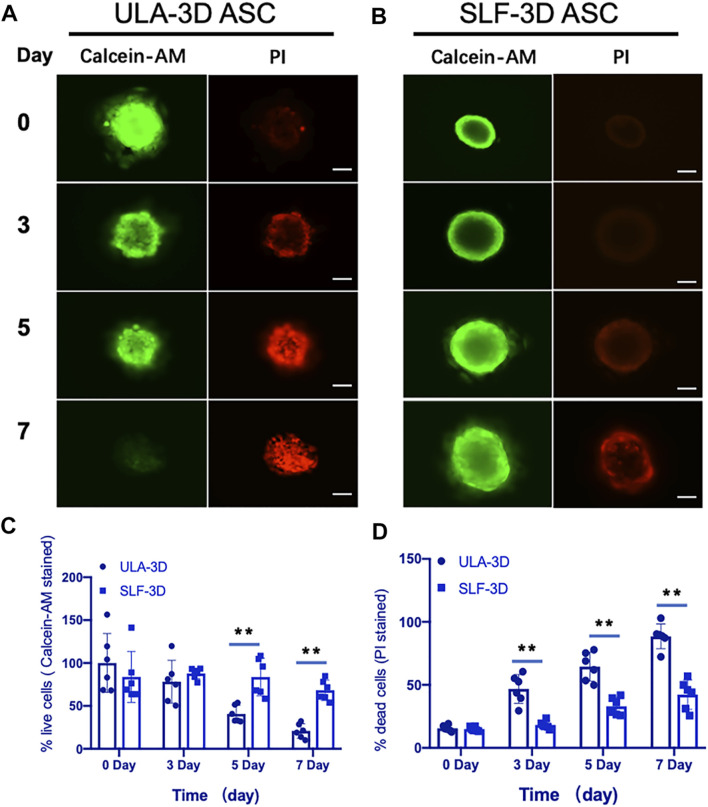
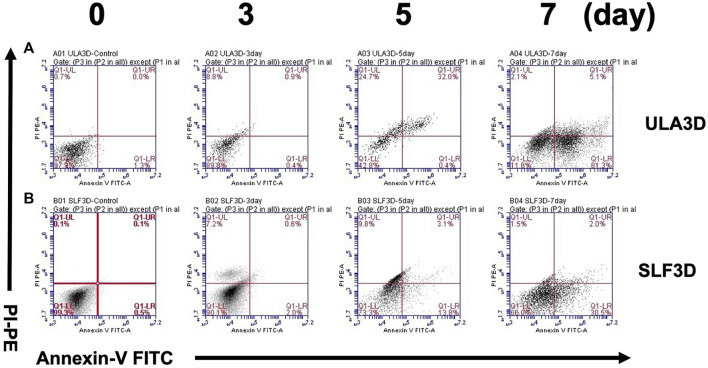
3D cell culture technologies have recently shown very valuable promise for applications in regenerative medicine, but the most common 3D culture methods for mesenchymal stem cells still have limitations for clinical application, mainly due to the slowdown of inner cell proliferation and increase in cell death rate. We previously developed a new 3D culture of adipose-derived mesenchymal stem cells (ASCs) based on its self-feeder layer, which solves the two issues of ASC 3D cell culture on ultra-low attachment (ULA) surface. In this study, we compared the 3D spheroids formed on the self-feeder layer (SLF-3D ASCs) with the spheroids formed by using ULA plates (ULA-3D ASCs). We discovered that the cells of SLF-3D spheroids still have a greater proliferation ability than ULA-3D ASCs, and the volume of these spheroids increases rather than shrinks, with more viable cells in 3D spheroids compared with the ULA-3D ASCs. Furthermore, it was discovered that the SLF-3D ASCs are likely to exhibit the abovementioned unique properties due to change in the expression level of ECM-related genes, like COL3A1, MMP3, HAS1, and FN1. These results indicate that the SLF-3D spheroid is a promising way forward for clinical application.
3D细胞培养技术最近在再生医学应用中展现出了非常有价值的前景,但用于间充质干细胞的最常见3D培养方法在临床应用中仍存在局限性,主要原因是内部细胞增殖放缓和细胞死亡率增加。我们之前基于其自饲养层开发了一种新的脂肪来源间充质干细胞(ASCs)3D培养方法,该方法解决了在超低附着(ULA)表面进行ASC 3D细胞培养的两个问题。在本研究中,我们将在自饲养层上形成的3D球体(SLF - 3D ASCs)与使用ULA板形成的球体(ULA - 3D ASCs)进行了比较。我们发现,SLF - 3D球体中的细胞仍然比ULA - 3D ASCs具有更强的增殖能力,并且这些球体的体积增加而非缩小,与ULA - 3D ASCs相比,3D球体中有更多的活细胞。此外,还发现SLF - 3D ASCs可能由于ECM相关基因(如COL3A1、MMP3、HAS1和FN1)表达水平的变化而表现出上述独特特性。这些结果表明,SLF - 3D球体是临床应用中一个很有前景的发展方向。