Psychology Department, Davidson College, Davidson, NC, 28035, USA.
Veterinary Medicine, Texas A&M, College Station, TX, USA.
Anim Cogn. 2022 Jun;25(3):683-690. doi: 10.1007/s10071-021-01580-7. Epub 2021 Dec 3.
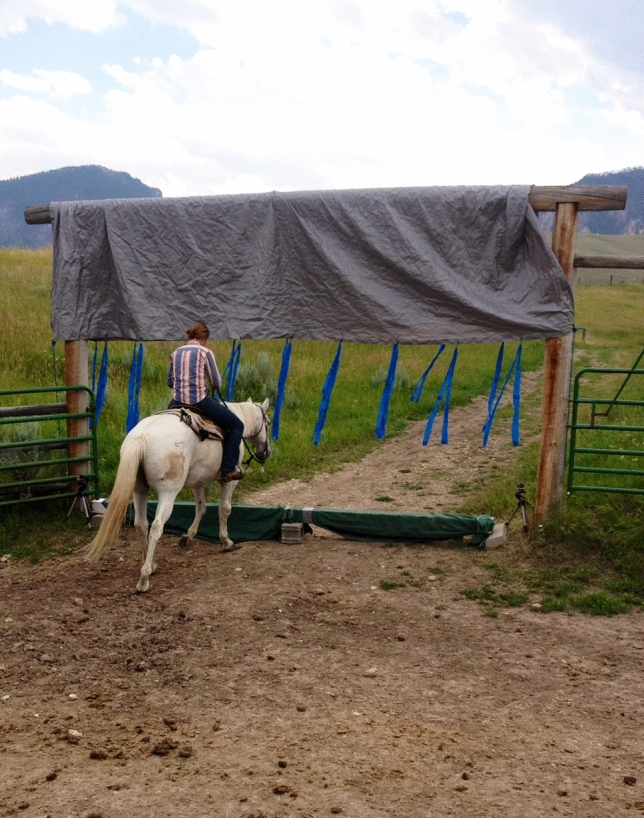
This field experiment examined whether the well-documented benefit of spaced over massed training for humans and other animals generalizes to horses. Twenty-nine randomly selected horses (Equus ferus caballus) repeatedly encountered a novel obstacle-crossing task while under saddle. Horses were randomly assigned to the spaced-training condition (2 min work, 2 min rest, 2 min work, 2 min rest) or the massed-training condition (4 min work, 4 min rest). Total training time per session and total rest per session were held constant. Days between sessions (M = 3) were held as consistent as possible given the constraints of conducting research on a working ranch and safety-threatening weather conditions. During each training session, the same hypothesis-naïve rider shaped horses to cross a novel obstacle. Fifteen of 16 horses in the spaced-training condition reached performance criterion (94% success) while only 5 of 13 horses in the massed-training condition reached performance criterion (39% success). Horses in the spaced-training condition also initiated their first obstacle-crossing faster than horses in the massed-training condition and were faster at completing eight crossings than horses in the massed-training condition. Overall, task acquisition was higher for horses undergoing spaced training despite both groups experiencing the same total work and rest time per session. These findings generalize the learning-performance benefit observed in human spaced practice to horses and offer applied benefit to equine training.
这项现场实验检验了在人类和其他动物中得到充分证明的间隔训练优于集中训练的益处是否适用于马。29 匹随机选择的马(Equus ferus caballus)在骑马时反复遇到一项新的障碍物跨越任务。马被随机分配到间隔训练条件(2 分钟工作,2 分钟休息,2 分钟工作,2 分钟休息)或集中训练条件(4 分钟工作,4 分钟休息)。每次训练的总时间和总休息时间保持不变。考虑到在工作牧场进行研究和安全威胁天气条件的限制,每次训练之间的天数(M=3)尽可能保持一致。在每次训练中,同样是假设性的骑手让马跨越一个新的障碍物。在间隔训练条件下的 16 匹马中有 15 匹达到了性能标准(94%的成功率),而在集中训练条件下的 13 匹马中只有 5 匹达到了性能标准(39%的成功率)。间隔训练条件下的马也比集中训练条件下的马更快地开始第一次障碍物穿越,并且在完成八次穿越时比集中训练条件下的马更快。总的来说,尽管两组马在每次训练中都经历了相同的总工作和休息时间,但接受间隔训练的马的任务完成率更高。这些发现将人类在间隔练习中观察到的学习表现优势推广到了马身上,并为马的训练提供了实际的益处。