Department of Animal Health and Antimicrobial Strategies, National Veterinary Institute, Uppsala, Sweden.
Department of Clinical Sciences, Swedish University of Agricultural Sciences, Uppsala, Sweden.
PLoS One. 2021 Dec 3;16(12):e0252973. doi: 10.1371/journal.pone.0252973. eCollection 2021.
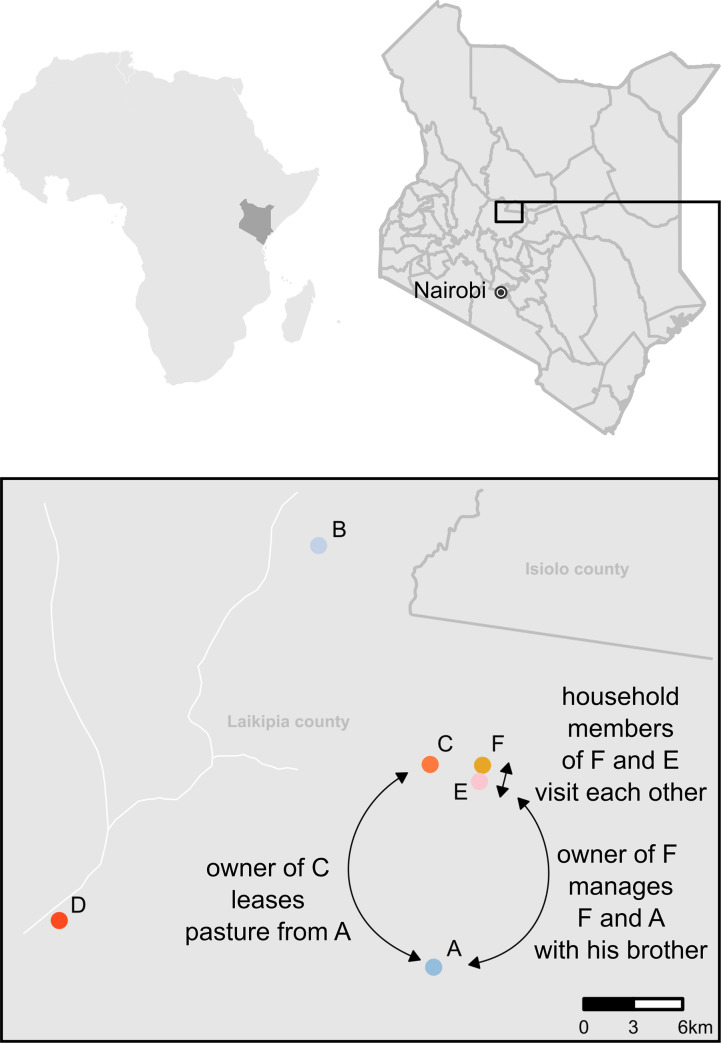
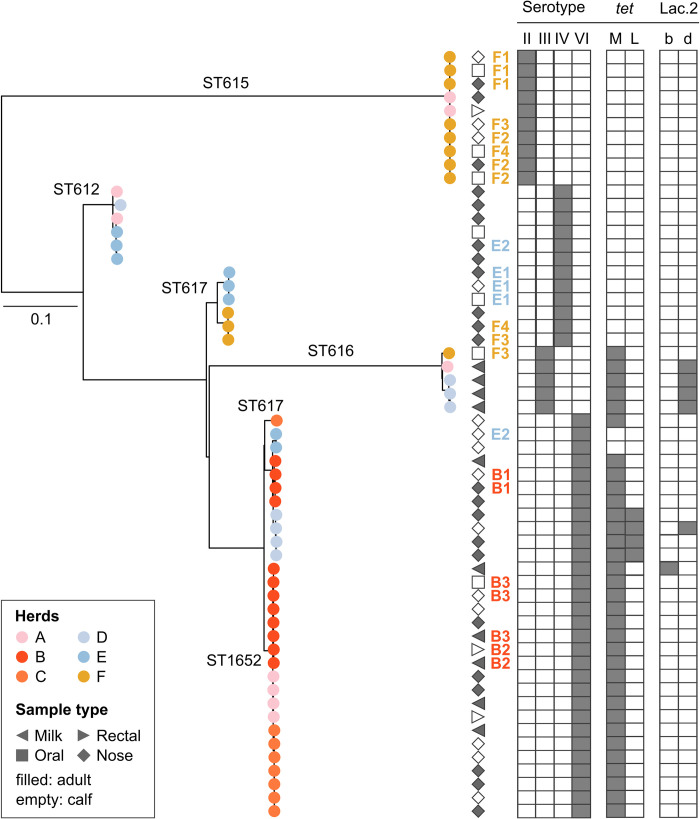
Camels are vital to food production in the drylands of the Horn of Africa, with milk as their main contribution to food security. A major constraint to camel milk production is mastitis, inflammation of the mammary gland. The condition negatively impacts milk yield and quality as well as household income. A leading cause of mastitis in dairy camels is Streptococcus agalactiae, or group B Streptococcus (GBS), which is also a commensal and pathogen of humans and cattle. It has been suggested that extramammary reservoirs for this pathogen may contribute to the occurrence of mastitis in camels. We explored the molecular epidemiology of GBS in camels using a cross-sectional study design for sample collection and phenotypic, genomic and phylogenetic analysis of isolates. Among 88 adult camels and 93 calves from six herds in Laikipia County, Kenya, GBS was detected in 20% of 50 milk samples, 25% of 152 nasal swabs, 8% of 90 oral swabs and 3% of 90 rectal swabs, but not in vaginal swabs. Per camel herd, two to four sequence types (ST) were identified using Multi Locus Sequence Typing (MLST). More than half of the isolates belonged to ST617 or its single-locus variant, ST1652, with these STs found across all sample types. Capsular serotype VI was detected in 30 of 58 isolates. In three herds, identical STs were detected in milk and swab samples, suggesting that extramammary sources of GBS may contribute to the maintenance and spread of GBS within camel herds. This needs to be considered when developing prevention and control strategies for GBS mastitis. The high nasal carriage rate, low recto-vaginal carriage rate, and high prevalence of serotype VI for GBS in camels are in stark contrast to the distribution of GBS in humans and in cattle and reveal hitherto unknown ecological and molecular features of this bacterial species.
骆驼对非洲之角干旱地区的粮食生产至关重要,其主要贡献是提供牛奶以保障食品安全。骆驼乳腺炎是制约骆驼奶生产的主要因素,这是一种乳腺炎症。该疾病会降低牛奶产量和质量,并影响家庭收入。导致奶牛乳腺炎的一个主要原因是无乳链球菌,也称为 B 群链球菌(GBS),它也是人类和牛的共生菌和病原体。有人认为,这种病原体的乳腺外储库可能导致骆驼乳腺炎的发生。我们使用横断面研究设计来收集样本,并对分离株进行表型、基因组和系统发育分析,以此研究 GBS 在骆驼中的分子流行病学。在肯尼亚莱基皮亚县的六个牛群中,我们检测了 88 头成年骆驼和 93 头小牛,结果发现 50 份牛奶样本中有 20%、152 份鼻腔拭子中有 25%、90 份口腔拭子中有 8%、90 份直肠拭子中有 3%的样本中存在 GBS,而阴道拭子中未检测到 GBS。使用多位点序列分型(MLST)对每个牛群识别出 2 到 4 个序列型(ST)。超过一半的分离株属于 ST617 或其单一位点变体 ST1652,这些 ST 存在于所有样本类型中。在 58 个分离株中检测到 30 个荚膜血清型 VI。在三个牛群中,在牛奶和拭子样本中检测到相同的 ST,这表明 GBS 的乳腺外来源可能导致 GBS 在骆驼群中持续存在和传播。在制定 GBS 乳腺炎的预防和控制策略时,需要考虑到这一点。骆驼中 GBS 的高鼻腔携带率、低直肠-阴道携带率和血清型 VI 的高流行率与人类和牛中 GBS 的分布形成鲜明对比,揭示了这种细菌物种迄今为止未知的生态和分子特征。