Khare Sanika, Kim Laura C, Lobel Graham, Doulias Paschalis-Thomas, Ischiropoulos Harry, Nissim Itzhak, Keith Brian, Simon M Celeste
Abramson Family Cancer Research Institute, Perelman School of Medicine, University of Pennsylvania, Philadelphia, PA, 19104, USA.
Children's Hospital of Philadelphia Research Institute and Departments of Pediatrics and Pharmacology, Perelman School of Medicine at the University of Pennsylvania, Philadelphia, PA, 19104, USA.
Cancer Metab. 2021 Dec 3;9(1):40. doi: 10.1186/s40170-021-00271-8.
Kidney cancer is a common adult malignancy in the USA. Clear cell renal cell carcinoma (ccRCC), the predominant subtype of kidney cancer, is characterized by widespread metabolic changes. Urea metabolism is one such altered pathway in ccRCC. The aim of this study was to elucidate the contributions of urea cycle enzymes, argininosuccinate synthase 1 (ASS1), and argininosuccinate lyase (ASL) towards ccRCC progression.
We employed a combination of computational, genetic, and metabolomic tools along with in vivo animal models to establish a tumor-suppressive role for ASS1 and ASL in ccRCC.
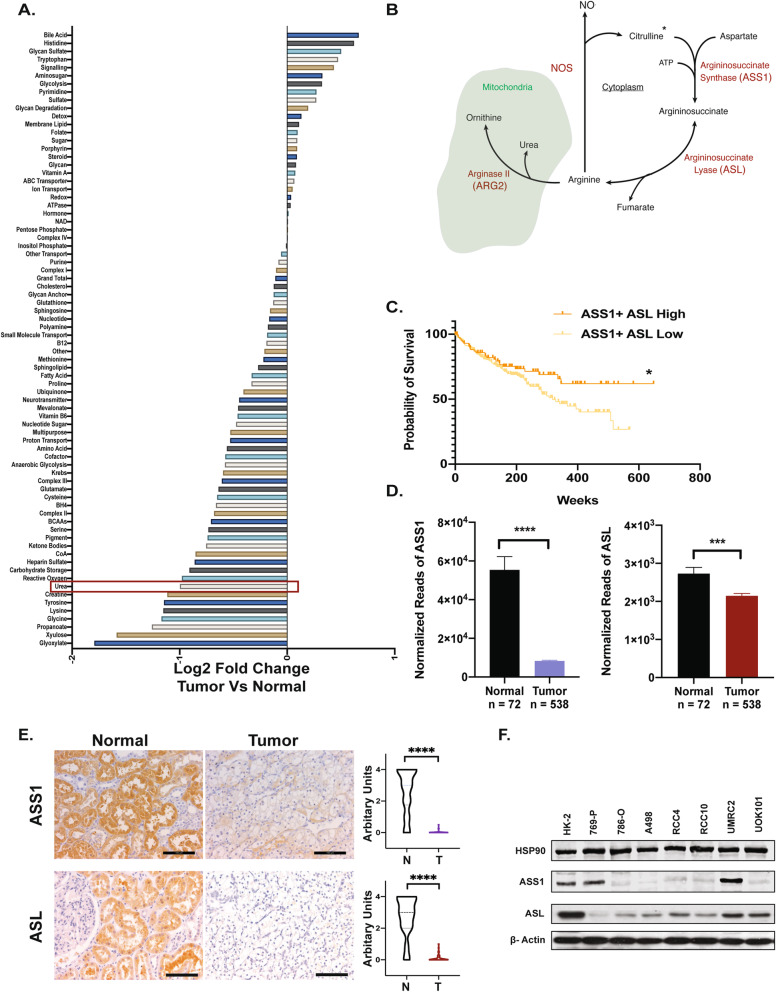
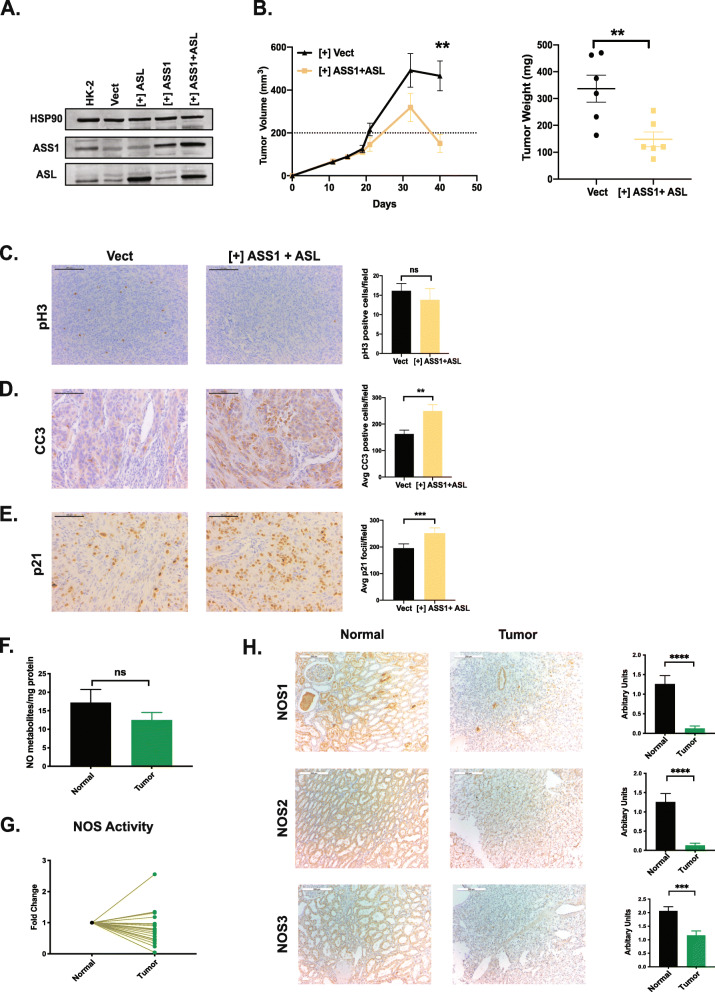
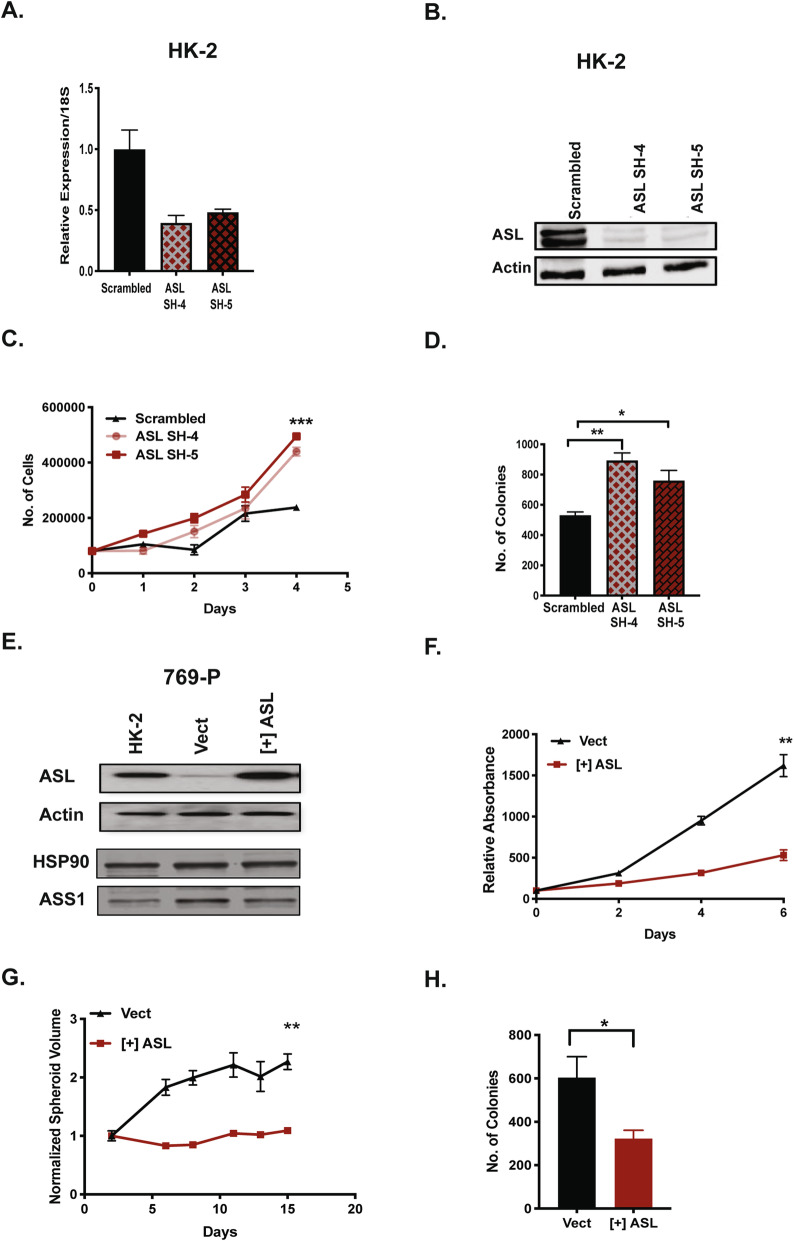
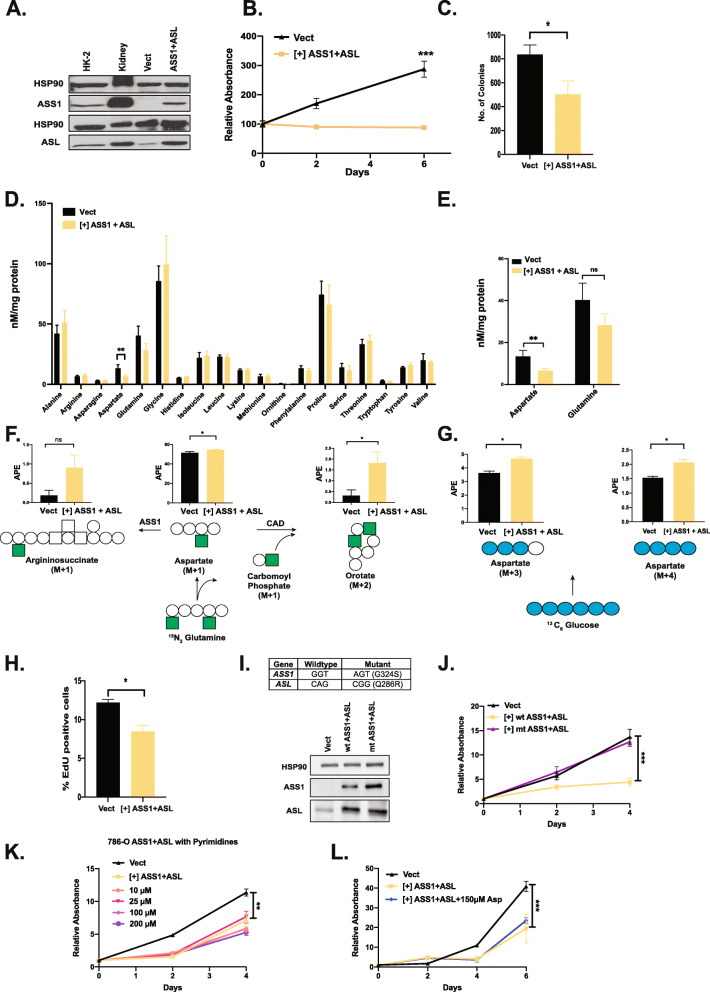
We show that the mRNA and protein expression of urea cycle enzymes ASS1 and ASL are reduced in ccRCC tumors when compared to the normal kidney. Furthermore, the loss of ASL in HK-2 cells (immortalized renal epithelial cells) promotes growth in 2D and 3D growth assays, while combined re-expression of ASS1 and ASL in ccRCC cell lines suppresses growth in 2D, 3D, and in vivo xenograft models. We establish that this suppression is dependent on their enzymatic activity. Finally, we demonstrate that conservation of cellular aspartate, regulation of nitric oxide synthesis, and pyrimidine production play pivotal roles in ASS1+ASL-mediated growth suppression in ccRCC.
ccRCC tumors downregulate the components of the urea cycle including the enzymes argininosuccinate synthase 1 (ASS1) and argininosuccinate lyase (ASL). These cytosolic enzymes lie at a critical metabolic hub in the cell and are involved in aspartate catabolism and arginine and nitric oxide biosynthesis. Loss of ASS1 and ASL helps cells redirect aspartate towards pyrimidine synthesis and support enhanced proliferation. Additionally, reduced levels of ASS1 and ASL might help regulate nitric oxide (NO) generation and mitigate its cytotoxic effects. Overall, our work adds to the understanding of urea cycle enzymes in a context-independent of ureagenesis, their role in ccRCC progression, and uncovers novel potential metabolic vulnerabilities in ccRCC.
肾癌是美国常见的成人恶性肿瘤。透明细胞肾细胞癌(ccRCC)是肾癌的主要亚型,其特征是广泛的代谢变化。尿素代谢是ccRCC中一条发生改变的途径。本研究的目的是阐明尿素循环酶精氨酸琥珀酸合酶1(ASS1)和精氨酸琥珀酸裂解酶(ASL)对ccRCC进展的作用。
我们结合了计算、遗传和代谢组学工具以及体内动物模型,以确定ASS1和ASL在ccRCC中的肿瘤抑制作用。
我们发现,与正常肾脏相比,ccRCC肿瘤中尿素循环酶ASS1和ASL的mRNA和蛋白质表达降低。此外,HK-2细胞(永生化肾上皮细胞)中ASL的缺失在二维和三维生长试验中促进生长,而在ccRCC细胞系中联合重新表达ASS1和ASL则在二维、三维和体内异种移植模型中抑制生长。我们确定这种抑制作用取决于它们的酶活性。最后,我们证明细胞天冬氨酸的守恒、一氧化氮合成的调节和嘧啶的产生在ASS1+ASL介导的ccRCC生长抑制中起关键作用。
ccRCC肿瘤下调尿素循环的组成部分,包括精氨酸琥珀酸合酶1(ASS1)和精氨酸琥珀酸裂解酶(ASL)。这些胞质酶位于细胞关键的代谢枢纽,参与天冬氨酸分解代谢以及精氨酸和一氧化氮的生物合成。ASS1和ASL的缺失有助于细胞将天冬氨酸重新导向嘧啶合成并支持增殖增强。此外,ASS1和ASL水平降低可能有助于调节一氧化氮(NO)的生成并减轻其细胞毒性作用。总体而言,我们的工作增进了对尿素循环酶在与尿素生成无关的背景下的理解,它们在ccRCC进展中的作用,并揭示了ccRCC中新的潜在代谢弱点。