Mukherjee Raktim, Pandya Parth, Baxi Darshee, Ramachandran A V
Shree P.M. Patel Institute of PG Studies and Research in Science, Affiliated to Sardar Patel University, Anand, Gujarat India.
Department of Biomedical and Life Sciences, School of Science, Navrachana University, Vadodara, 391410 Gujarat India.
Proc Zool Soc. 2021;74(4):432-442. doi: 10.1007/s12595-021-00414-1. Epub 2021 Dec 1.
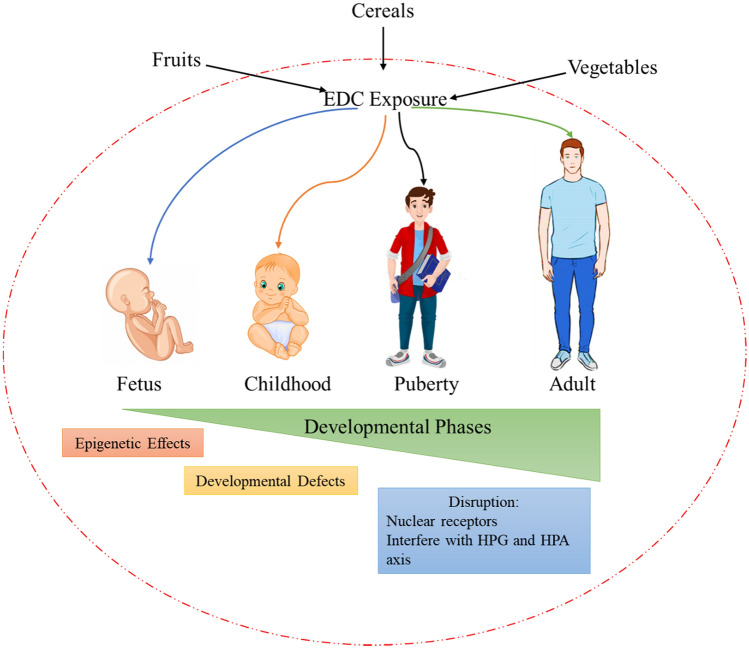
Green vegetables, fruits, cereals, and pulses are all rich sources of antioxidants. Retinoic acid, ascorbate, proanthocyanidins, tannins, saponins, melatonin, curcumin, allicin, and alpha-lipoic acid stand documented in plants as bioactive compounds. The international dietary committee advocates a specific quantum of these natural antioxidants through diet. Interestingly, environmental pollution has indeed affected most of these farm products. The use of chemical fertilizers, pesticides and heavy metals in soil has a cumulative effect on human health. Enough evidence is available for the presence of phytoestrogen, xenoestrogen, and a host of other endocrine disruptors in the food. These plant-based nutrients can mimic or enhance the natural hormone's health effects. While endocrine disruptors are found in many everyday products, this review aims to address endocrine disruptors from food in the Asian subcontinent. 'Food for thought' justifies the paradigm shift towards good endocrine health by swaying away from the conventional daily dietary recommendations.
绿色蔬菜、水果、谷物和豆类都是抗氧化剂的丰富来源。视黄酸、抗坏血酸、原花青素、单宁、皂苷、褪黑素、姜黄素、大蒜素和α-硫辛酸在植物中作为生物活性化合物有记载。国际饮食委员会提倡通过饮食摄入一定量的这些天然抗氧化剂。有趣的是,环境污染确实影响了大多数这些农产品。土壤中使用化肥、农药和重金属对人类健康有累积影响。有足够的证据表明食物中存在植物雌激素、外源性雌激素和许多其他内分泌干扰物。这些植物性营养素可以模拟或增强天然激素对健康的影响。虽然在许多日常产品中都发现了内分泌干扰物,但本综述旨在探讨亚洲次大陆食物中的内分泌干扰物。“发人深省”通过摒弃传统的日常饮食建议,为向良好内分泌健康的范式转变提供了依据。