McFadden Dennis
Department of Psychology, Center for Perceptual Systems, University of Texas, Austin, TX, United States.
Front Psychol. 2021 Nov 16;12:763432. doi: 10.3389/fpsyg.2021.763432. eCollection 2021.
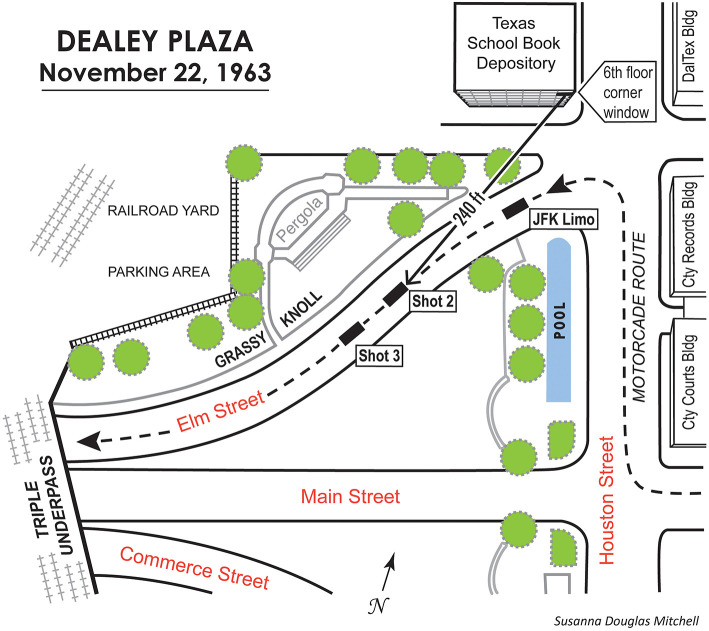
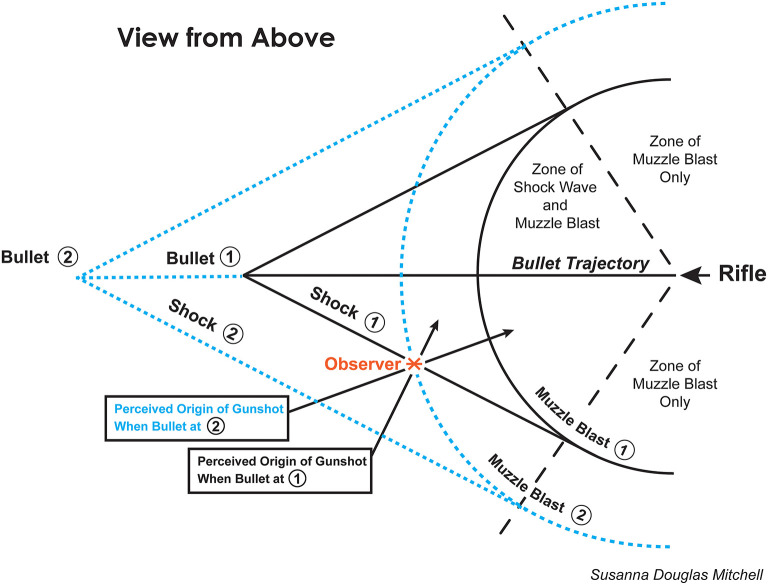
Earwitnesses to the 1963 assassination of President John F. Kennedy (JFK) did not agree about the location of the gunman even though their judgments about the number and timing of the gunshots were reasonably consistent. Even earwitnesses at the same general location disagreed. An examination of the acoustics of supersonic bullets and the characteristics of human sound localization help explain the general disagreement about the origin of the gunshots. The key fact is that a shock wave produced by the supersonic bullet arrived prior to the muzzle blast for many earwitnesses, and the shock wave provides erroneous information about the origin of the gunshot. During the government's official re-enactment of the JFK assassination in 1978, expert observers were highly accurate in localizing the origin of gunshots taken from either of two locations, but their supplementary observations help explain the absence of a consensus among the earwitnesses to the assassination itself.
1963年约翰·F·肯尼迪总统遇刺案的听觉证人,尽管他们对枪声的数量和时间判断相当一致,但对于枪手的位置却意见不一。即使是在大致相同地点的听觉证人也存在分歧。对超音速子弹的声学特性以及人类声音定位特征的研究,有助于解释为何对于枪声来源普遍存在分歧。关键事实是,对于许多听觉证人来说,超音速子弹产生的冲击波在枪口 blast 之前到达,而冲击波会提供关于枪声来源的错误信息。在1978年政府对肯尼迪遇刺案进行的官方重演中,专家观察员在确定来自两个地点中任何一个地点的枪声来源时非常准确,但他们的补充观察有助于解释刺杀案的听觉证人之间为何没有达成共识。 (注:原文中“muzzle blast”未准确翻译,blast有爆炸、冲击波等意思,这里大概是指枪口发出的某种声响相关,但结合语境准确意思不太明确。)