Bu Ru, Yan Bing, Sun Huijie, Zhou Mengcheng, Bai Huashan, Cai Xinghua, Mo Xueyan, Su Guijiao, Jiang Chengjian
State Key Laboratory for Conservation and Utilization of Subtropical Agro-bioresources, Guangxi Research Center for Microbial and Enzyme Engineering Technology, College of Life Science and Technology, Guangxi University, Nanning, China.
Guangxi Key Lab of Mangrove Conservation and Utilization, Guangxi Mangrove Research Center, Guangxi Academy of Sciences, Beihai, China.
Front Microbiol. 2021 Nov 18;12:771878. doi: 10.3389/fmicb.2021.771878. eCollection 2021.
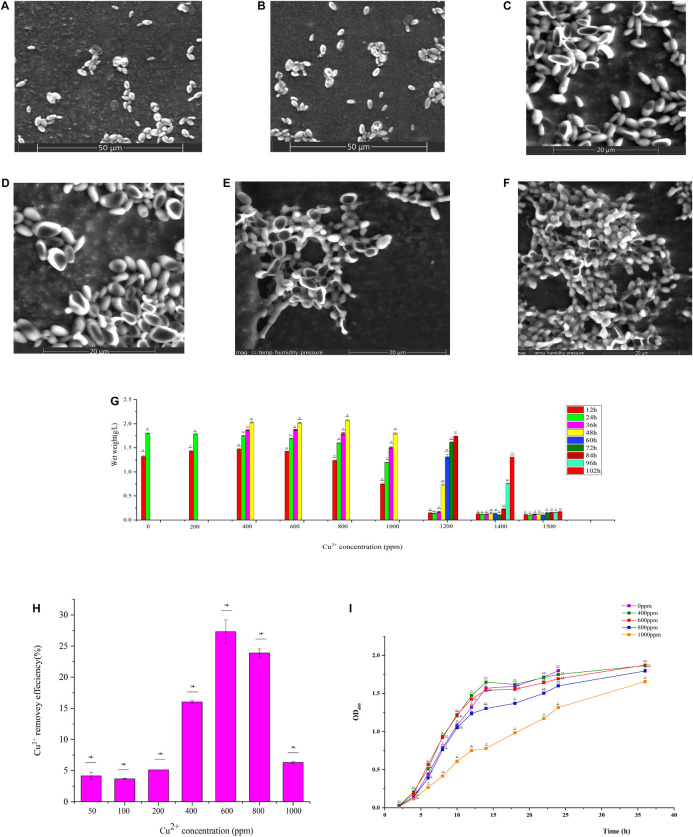
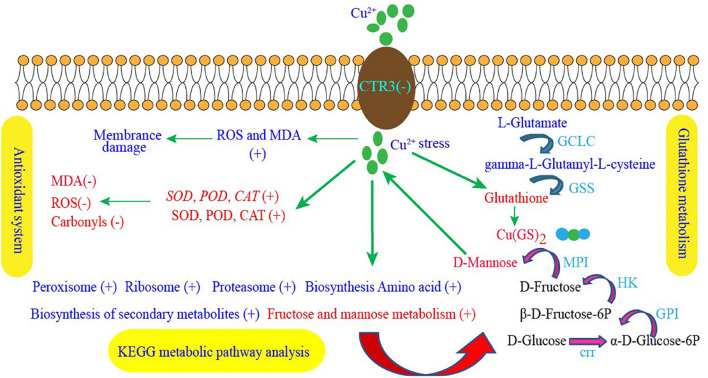
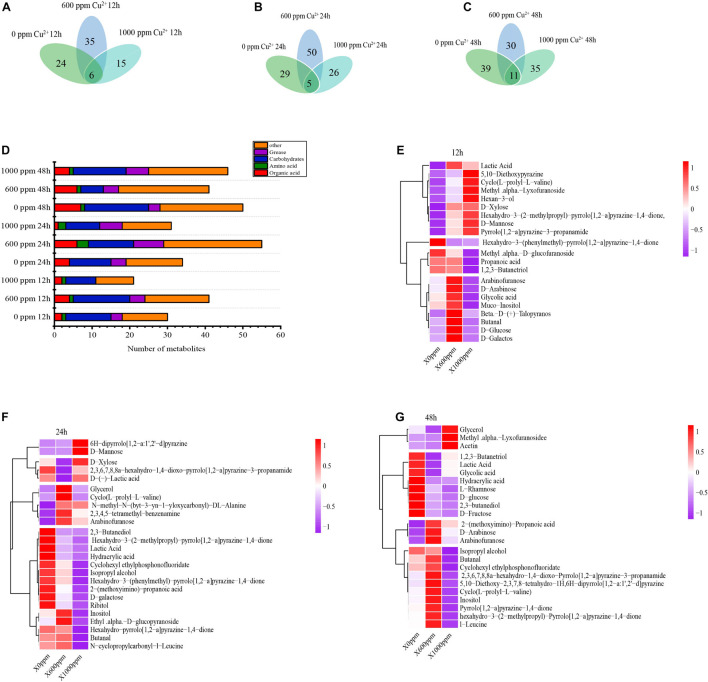
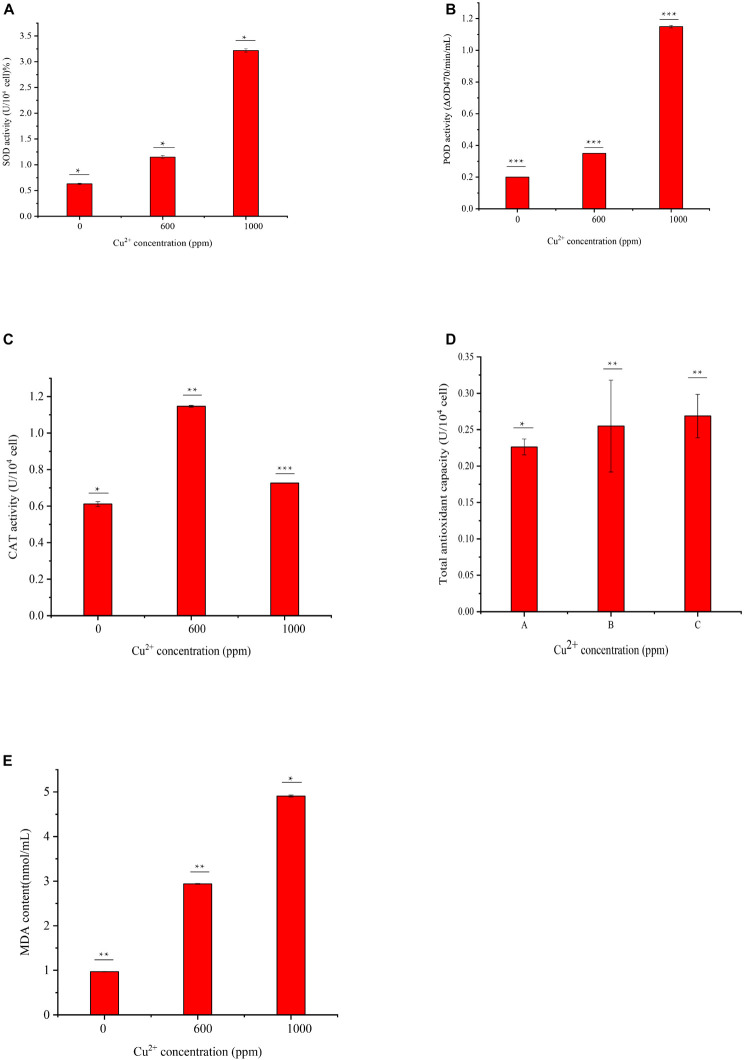
Various agricultural products used in food fermentation are polluted by heavy metals, especially copper, which seriously endangers human health. Methods to remove copper with microbial strategies have gained interests. A novel GXDK6 could survive independently under high stress of copper (1400 ppm). The copper tolerance mechanism of GXDK6 was revealed by integrated omics in this work. Whole-genome analysis showed that nine genes (i.e., , , , , , , , , and ) were related to GXDK6 copper tolerance. Copper stress elevated glutathione metabolism-related gene expression, glutathione content, and glutathione sulfur transferase activity, suggesting enhanced copper conjugation and detoxification in cells. The inhibited copper uptake by Ctr3 and enhanced copper efflux by Ccc2 contributed to the decrease in intracellular copper concentration. The improved expression of antioxidant enzyme genes (, , and ), accompanied by the enhanced activities of antioxidant enzymes (peroxidase, superoxide dismutase, and catalase), decreased copper-induced reactive oxygen species production, protein carbonylation, lipid peroxidation, and cell death. The metabolite D-mannose against harsh stress conditions was beneficial to improving copper tolerance. This study contributed to understanding the copper tolerance mechanism of and its application in removing copper during fermentation.
用于食品发酵的各种农产品受到重金属污染,尤其是铜,这严重危害人类健康。利用微生物策略去除铜的方法已引起关注。一种新型的GXDK6能够在高铜胁迫(1400 ppm)下独立存活。本研究通过多组学技术揭示了GXDK6的耐铜机制。全基因组分析表明,九个基因(即,,,,,,,,和)与GXDK6的耐铜性有关。铜胁迫提高了谷胱甘肽代谢相关基因的表达、谷胱甘肽含量和谷胱甘肽硫转移酶活性,表明细胞内铜的结合和解毒能力增强。Ctr3对铜摄取的抑制和Ccc2对铜外排的增强导致细胞内铜浓度降低。抗氧化酶基因(,,和)表达的提高,伴随着抗氧化酶(过氧化物酶、超氧化物歧化酶和过氧化氢酶)活性的增强,减少了铜诱导的活性氧产生、蛋白质羰基化、脂质过氧化和细胞死亡。代谢物D-甘露糖对抗恶劣胁迫条件有利于提高耐铜性。本研究有助于理解的耐铜机制及其在发酵过程中去除铜的应用。