Shen Zhengze, Liu Shengwei, Liu Jie, Liu Jingdong, Yao Caoyuan
Yongchuan Hospital of Chongqing Medical University, Chongqing, China.
JiangJin Central Hosptial of Chongqing, Chongqing, China.
Front Genet. 2021 Nov 16;12:756235. doi: 10.3389/fgene.2021.756235. eCollection 2021.
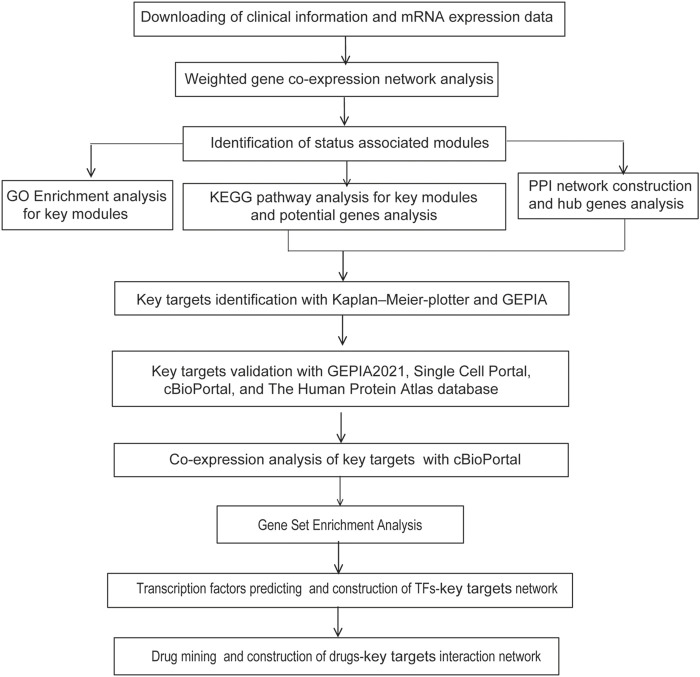
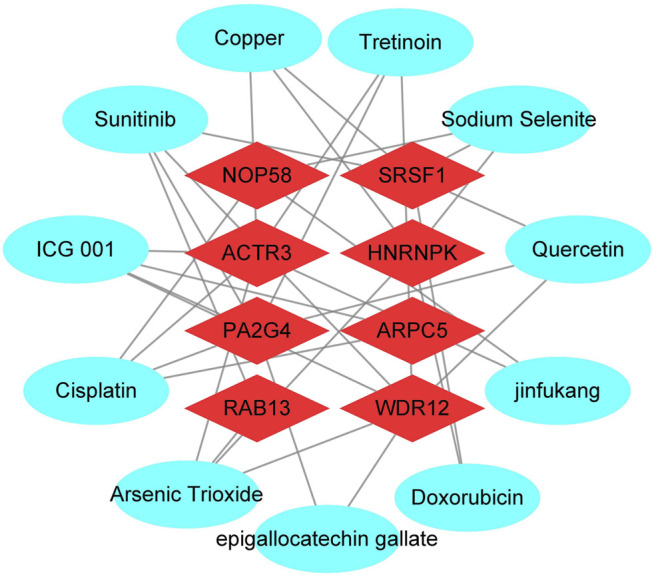
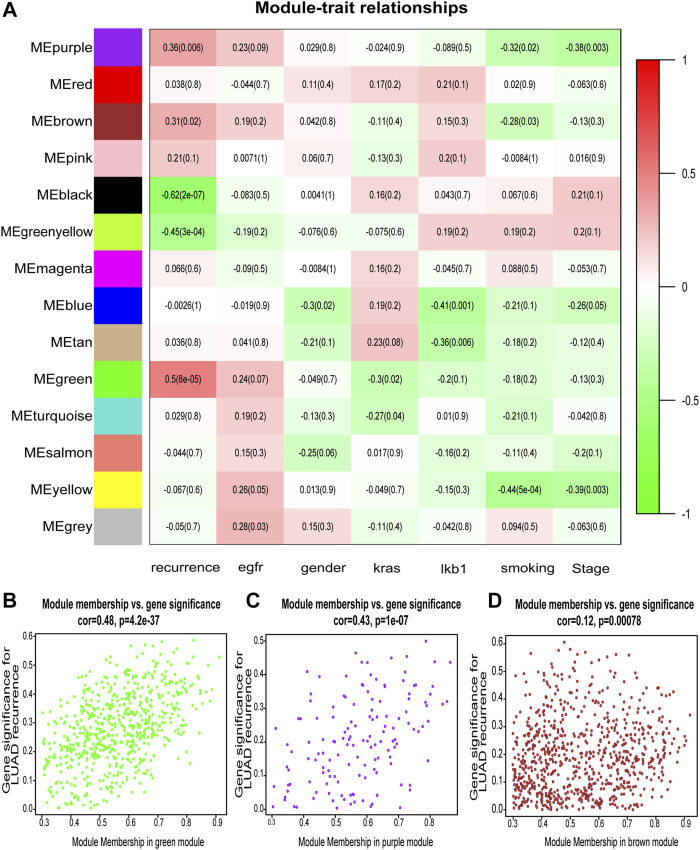
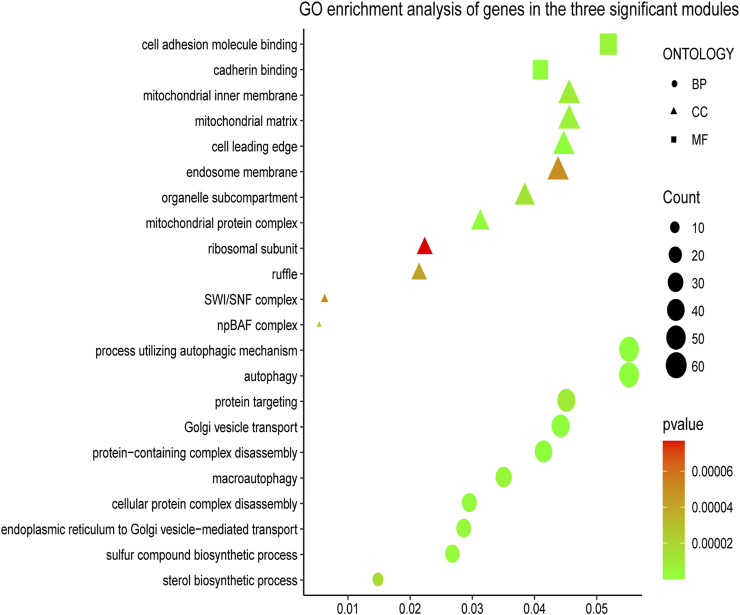
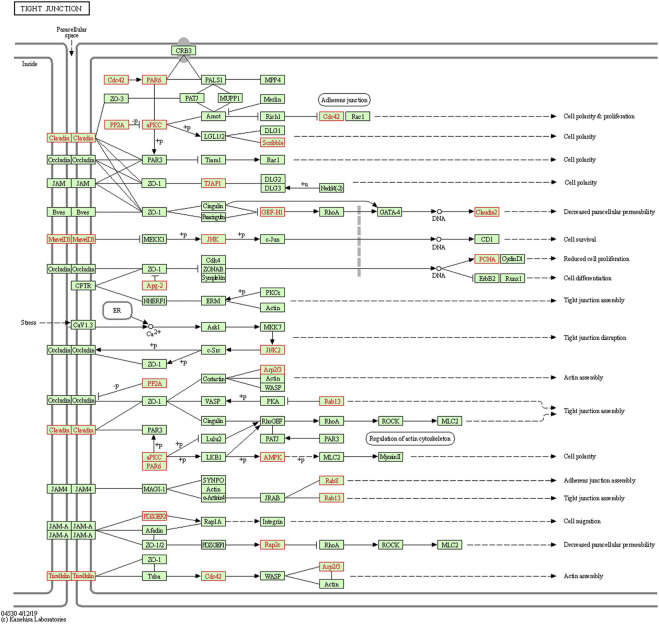
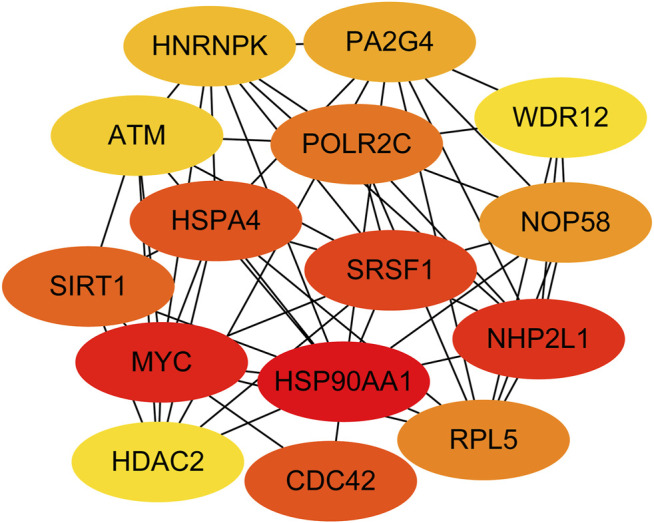
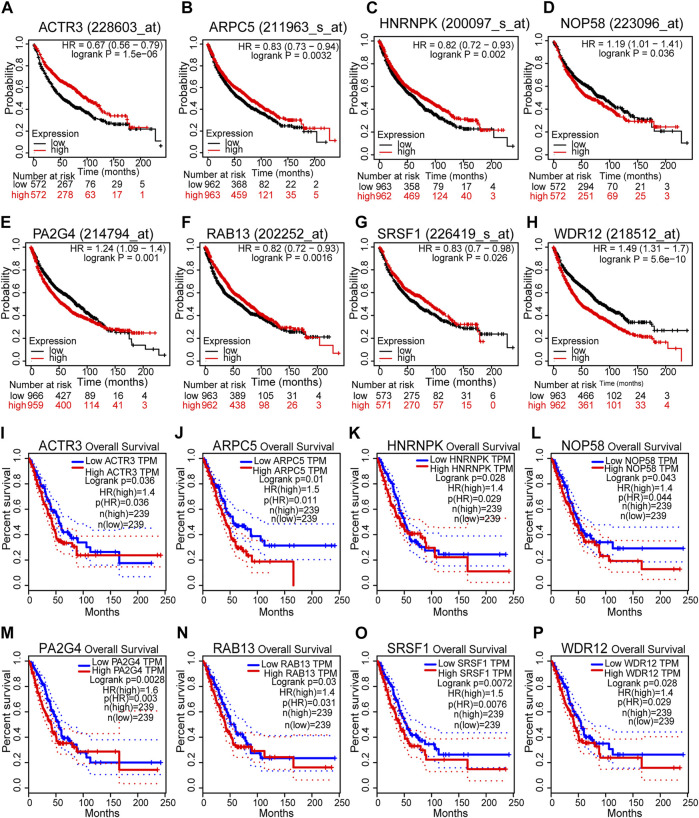
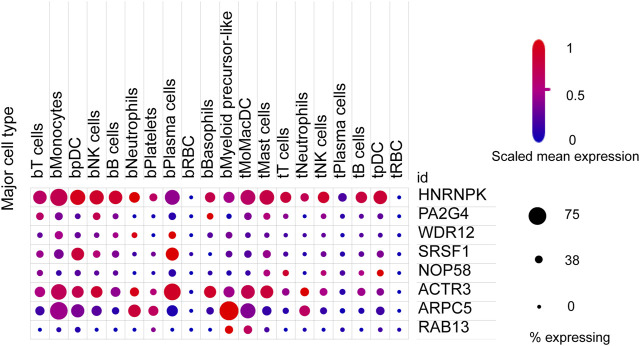
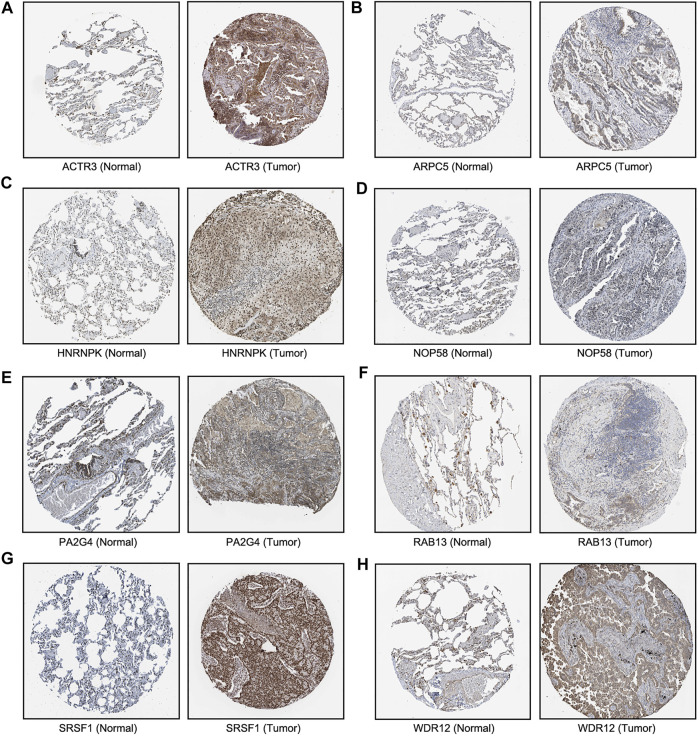
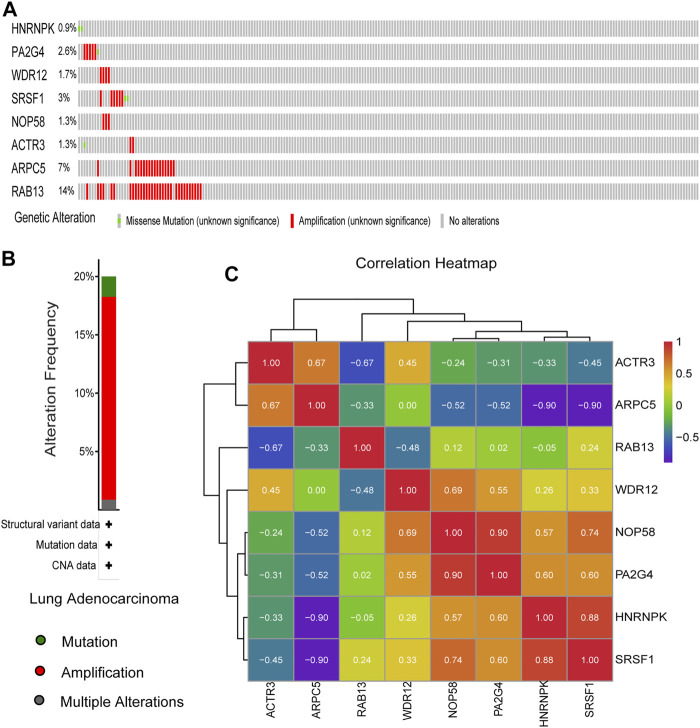
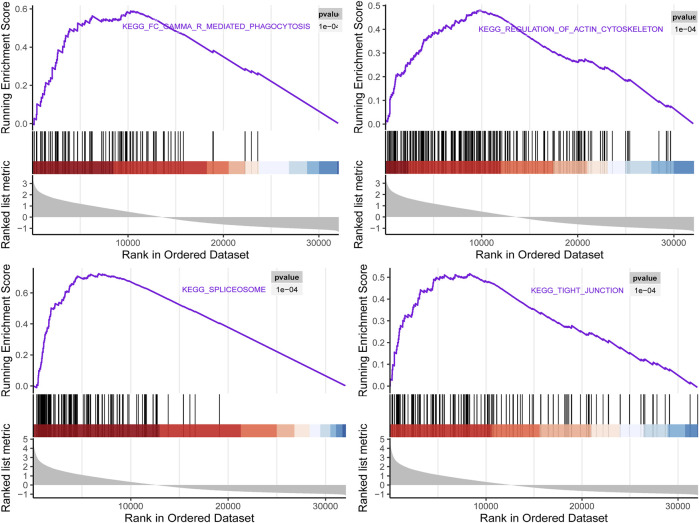
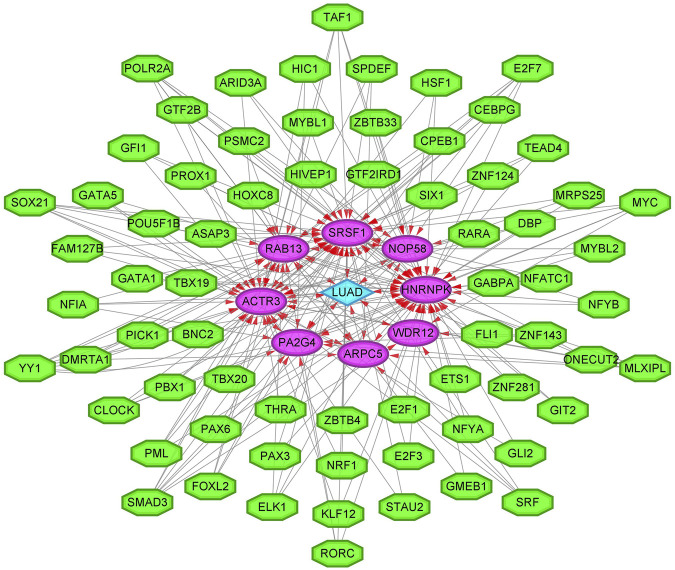
Despite the recent progress of lung adenocarcinoma (LUAD) therapy, tumor recurrence remained to be a challenging factor that impedes the effectiveness of treatment. The objective of the present study was to predict the hub genes affecting LUAD recurrence via weighted gene co-expression network analysis (WGCNA). Microarray samples from LUAD dataset of GSE32863 were analyzed, and the modules with the highest correlation to tumor recurrence were selected. Functional enrichment analysis was conducted, followed by establishment of a protein-protein interaction (PPI) network. Subsequently, hub genes were identified by overall survival analyses and further validated by evaluation of expression in both myeloid populations and tissue samples of LUAD. Gene set enrichment analysis (GSEA) was then carried out, and construction of transcription factors (TF)-hub gene and drug-hub gene interaction network was also achieved. A total of eight hub genes (, , , , , , , and ) were finally identified to be closely correlated with LUAD recurrence. In addition, TFs that regulate hub genes have been predicted, including MYC, PML, and YY1. Finally, drugs including arsenic trioxide, cisplatin, Jinfukang, and sunitinib were mined for the treatment of the eight hub genes. In conclusion, our study may facilitate the invention of targeted therapeutic drugs and shed light on the understanding of the mechanism for LUAD recurrence.
尽管肺腺癌(LUAD)治疗最近取得了进展,但肿瘤复发仍然是阻碍治疗效果的一个具有挑战性的因素。本研究的目的是通过加权基因共表达网络分析(WGCNA)预测影响LUAD复发的关键基因。对来自GSE32863的LUAD数据集的微阵列样本进行了分析,并选择了与肿瘤复发相关性最高的模块。进行了功能富集分析,随后建立了蛋白质-蛋白质相互作用(PPI)网络。随后,通过总生存分析鉴定出关键基因,并通过评估其在LUAD的髓系细胞群体和组织样本中的表达进行进一步验证。然后进行基因集富集分析(GSEA),并构建了转录因子(TF)-关键基因和药物-关键基因相互作用网络。最终共鉴定出8个与LUAD复发密切相关的关键基因(、、、、、、和)。此外,还预测了调控关键基因的转录因子,包括MYC、PML和YY1。最后,挖掘出包括三氧化二砷、顺铂、金复康和舒尼替尼在内的药物用于治疗这8个关键基因。总之,我们的研究可能有助于靶向治疗药物的研发,并为理解LUAD复发机制提供线索。