Siewe Fodjo Joseph Nelson, Njamnshi Wepnyu Y, Ngarka Leonard, Nfor Leonard N, Ayuk Constance, Mundih Noelar N, Ekwoge Hilda T, Nganchfu Kevin, Njamnshi Kongnyu G, Yerema Rachel, Ngoundjou Pernelle, Awasume Edward, Ashu George, Tabah Earnest N, Colebunders Robert, Njamnshi Alfred K
Global Health Institute, University of Antwerp, Antwerp, Belgium.
Brain Research Africa Initiative (BRAIN), Yaoundé, Cameroon.
J Pediatr Neuropsychol. 2021;7(4):192-202. doi: 10.1007/s40817-021-00111-z. Epub 2021 Sep 7.
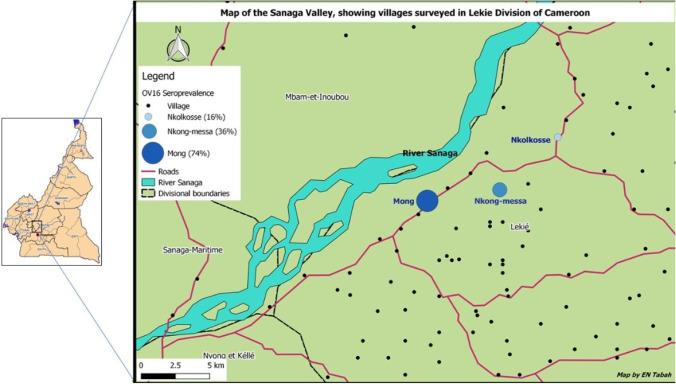
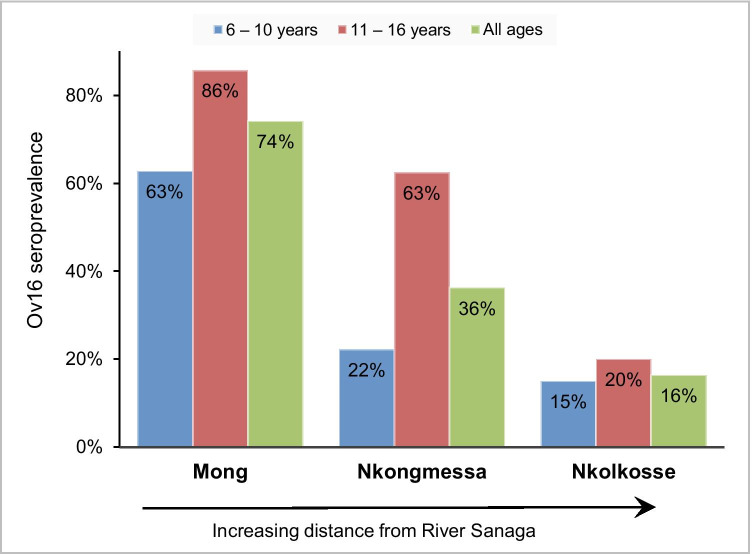
Infection with was recently reported to increase the risk for epilepsy in Cameroonian children. We investigated whether infection with may alter the cognitive function of children who may or may not develop epilepsy later in their lifetime. Using rapid diagnostic tests, we determined the presence of Ov16 antibodies in 209 school-aged children without epilepsy recruited from three Cameroonian villages, as a proxy for onchocerciasis exposure. In addition, the neurocognitive performance of these children was assessed using a battery of validated tools. Participants were aged 6-16 years, and 46.4% were Ov16 seropositive. Upon standardizing age-specific neurocognitive scores and investigating predictors of neurocognitive performance using multiple linear regression models (adjusted for gender, education level, previous ivermectin use, and anthropometric parameters), we found that being Ov16-positive was significantly associated with reduced semantic verbal fluency (estimate -0.38; 95% confidence interval -0.65 to -0.11; = 0.006) and lower scores on the International HIV Dementia Scale (estimate -0.31; confidence interval -0.56 to -0.04; = 0.025). Furthermore, an increasing frequency of past ivermectin use was associated with increased neurocognitive scores. Our findings suggest that exposure to may affect neurocognitive performance of children.
The online version contains supplementary material available at 10.1007/s40817-021-00111-z.
最近有报道称,喀麦隆儿童感染 会增加患癫痫的风险。我们调查了感染 是否会改变那些在其一生中可能会或可能不会患癫痫的儿童的认知功能。我们使用快速诊断测试,确定了从喀麦隆三个村庄招募的209名无癫痫的学龄儿童中是否存在Ov16抗体,以此作为盘尾丝虫病暴露的指标。此外,使用一系列经过验证的工具评估了这些儿童的神经认知表现。参与者年龄在6至16岁之间,46.4%的人Ov16血清呈阳性。在对特定年龄的神经认知分数进行标准化,并使用多元线性回归模型(对性别、教育水平、以前使用伊维菌素的情况和人体测量参数进行了调整)调查神经认知表现的预测因素后,我们发现Ov16呈阳性与语义语言流畅性降低(估计值 -0.38;95%置信区间 -0.65至 -0.11; = 0.006)以及国际HIV痴呆量表得分较低(估计值 -0.31;置信区间 -0.56至 -0.04; = 0.025)显著相关。此外,过去使用伊维菌素的频率增加与神经认知分数增加有关。我们的研究结果表明,接触 可能会影响儿童的神经认知表现。
在线版本包含可在10.1007/s40817-021-00111-z获取的补充材料。