Tore Davide, Rampado Osvaldo, Guarnaccia Carla, Mina Roberto, Oronzio Maria, Santonocito Ambra, Serafini Alessandro, Strazzarino Giulio Antonino, Gianusso Laura, Bringhen Sara, Fonio Paolo, Depaoli Alessandro
Radiology Unit, Department of Surgical Sciences, University of Turin, Azienda Ospedaliero Universitaria (A.O.U.) Città della Salute e della Scienza di Torino, Turin, Italy.
Medical Physics Unit, Azienda Ospedaliero Universitaria (A.O.U.) Città della Salute e della Scienza di Torino, Turin, Italy.
Front Oncol. 2021 Nov 17;11:769295. doi: 10.3389/fonc.2021.769295. eCollection 2021.
The whole-body low-dose CT (WBLDCT) is the first-choice imaging technique in patients with suspected plasma cell disorder to assess the presence of osteolytic lesions. We investigated the performances of an optimized protocol, evaluating diagnostic accuracy and effective patient dose reduction using a latest generation scanner.
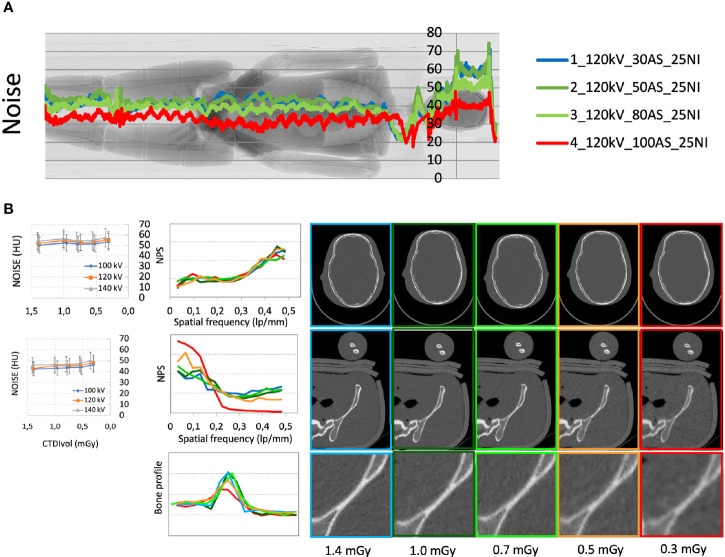
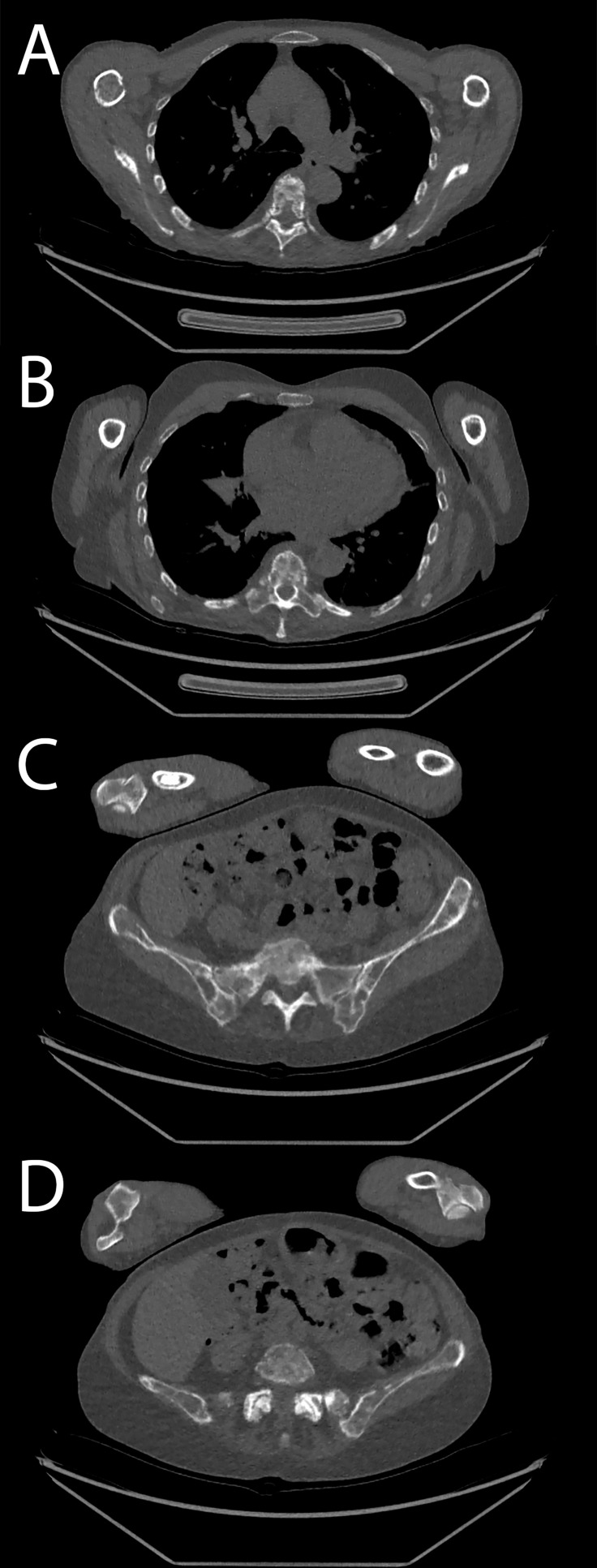
Retrospective study on 212 patients with plasma cell disorders performed on a 256-row CT scanner. First, WBLDCT examinations were performed using a reference protocol with acquisition parameters obtained from literature. A phantom study was performed for protocol optimization for subsequent exams to minimize dose while maintaining optimal diagnostic accuracy. Images were analyzed by three readers to evaluate image quality and to detect lesions. Effective doses (E) were evaluated for each patient considering the patient dimensions and the tube current modulation.
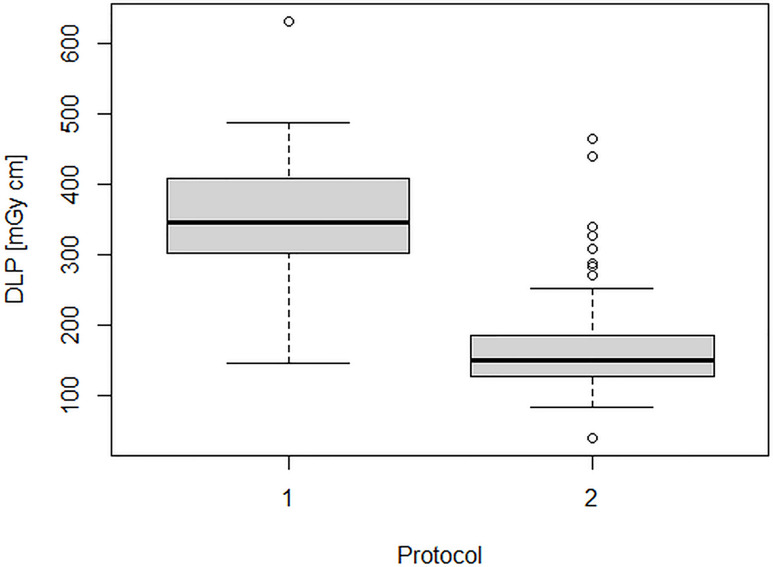
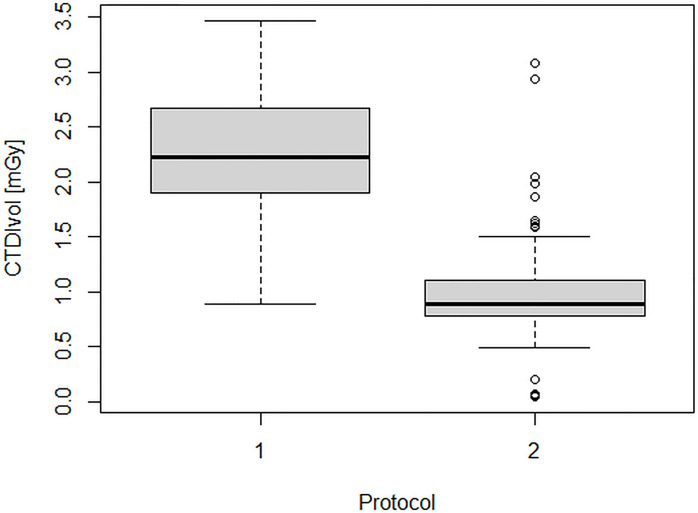
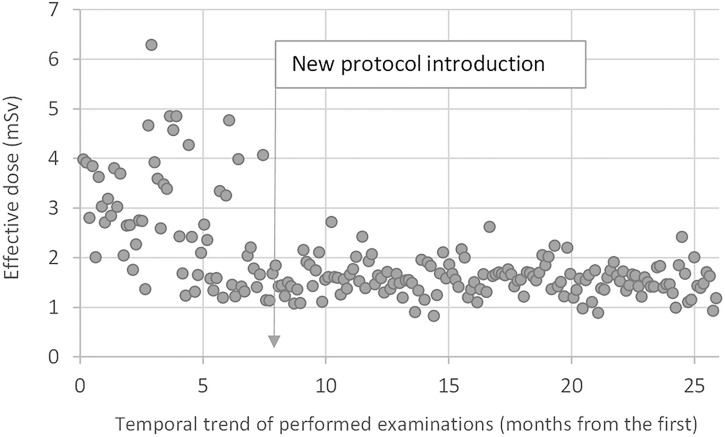
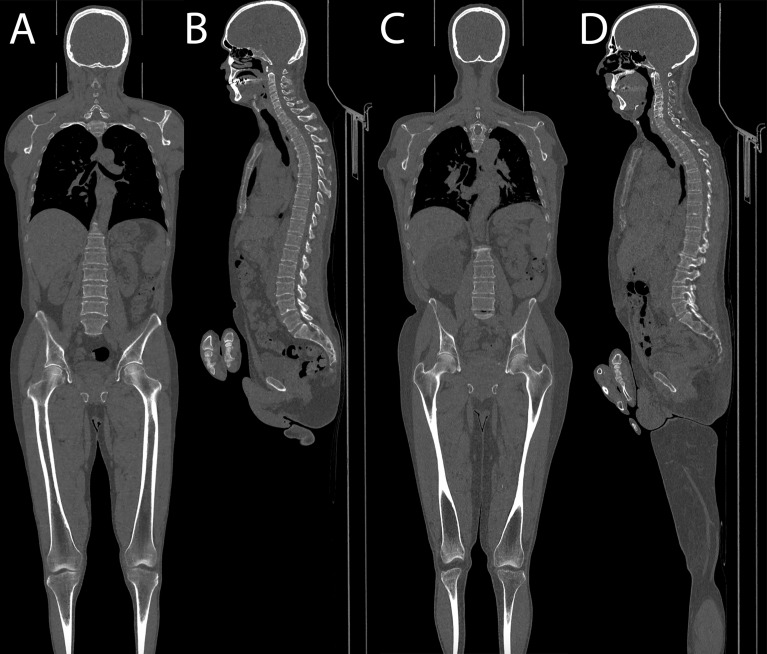
A similar, very good image quality was observed for both protocols by all readers with a good agreement at repeated measures ANOVA test (p>0.05). An excellent inter-rater agreement for lesion detection was achieved obtaining high values of Fleiss' kappa for all the districts considered (p<0.001). The optimized protocol resulted in a 56% reduction of median DLP (151) mGycm, interquartile range (IQR) 128-188 mGycm vs. 345 mGycm, IQR 302-408 mGycm), of 60% of CTDIvol (2.2 mGy, IQR 1.9-2.7 mGy vs. 0.9 mGy, IQR 0.8-1.2 mGy). The median E value was about 2.6 mSv (IQR 1.7-3.5 mSv) for standard protocol and about 1.5 mSv (IQR 1.4-1.7 mSv) for the optimized one. Dose reduction was statistically significant with p<0.001.
Protocol optimization makes ultra-low-dose WBLDCT feasible on latest generation CT scanners for patients with plasma cell disorders with effective doses inferior to conventional skeletal survey while maintaining excellent image quality and diagnostic accuracy. Dose reduction is crucial in such patients, as they are likely to undergo multiple whole-body CT scans during follow-up.
对于疑似浆细胞疾病的患者,全身低剂量CT(WBLDCT)是评估溶骨性病变存在情况的首选成像技术。我们研究了一种优化方案的性能,使用最新一代扫描仪评估其诊断准确性和有效降低患者剂量的情况。
对在256排CT扫描仪上进行检查的212例浆细胞疾病患者进行回顾性研究。首先,使用从文献中获取的采集参数的参考方案进行WBLDCT检查。进行了模体研究以优化后续检查的方案,在保持最佳诊断准确性的同时尽量减少剂量。由三位阅片者分析图像以评估图像质量并检测病变。根据患者尺寸和管电流调制评估每位患者的有效剂量(E)。
所有阅片者对两种方案均观察到相似的、非常好的图像质量,在重复测量方差分析测试中一致性良好(p>0.05)。在所有考虑的区域,病变检测的阅片者间一致性极佳,Fleiss' kappa值很高(p<0.001)。优化后的方案使中位剂量长度乘积(DLP)降低了56%(151 mGycm,四分位间距[IQR] 128 - 188 mGycm,而之前为345 mGycm,IQR 302 - 408 mGycm),容积CT剂量指数(CTDIvol)降低了60%(2.2 mGy,IQR 1.9 - 2.7 mGy,而之前为0.9 mGy,IQR 0.8 - 1.2 mGy)。标准方案的中位E值约为2.6 mSv(IQR 1.7 - 3.5 mSv),优化方案的中位E值约为1.5 mSv(IQR 1.4 - 1.7 mSv)。剂量降低具有统计学意义,p<0.001。
方案优化使超低剂量WBLDCT在最新一代CT扫描仪上对浆细胞疾病患者可行,有效剂量低于传统骨骼检查,同时保持优异的图像质量和诊断准确性。剂量降低在此类患者中至关重要,因为他们在随访期间可能需要进行多次全身CT扫描。