Zhang Xinyu, Ma Yanling, Wan Jipeng, Yuan Jia, Wang Diqing, Wang Weiyi, Sun Xiao, Meng Qingwei
Department of Medical Oncology, Harbin Medical University Cancer Hospital, Harbin, China.
Department of Chemical and Biomolecular Engineering, National University of Singapore, Singapore, Singapore.
Front Chem. 2021 Nov 16;9:768248. doi: 10.3389/fchem.2021.768248. eCollection 2021.
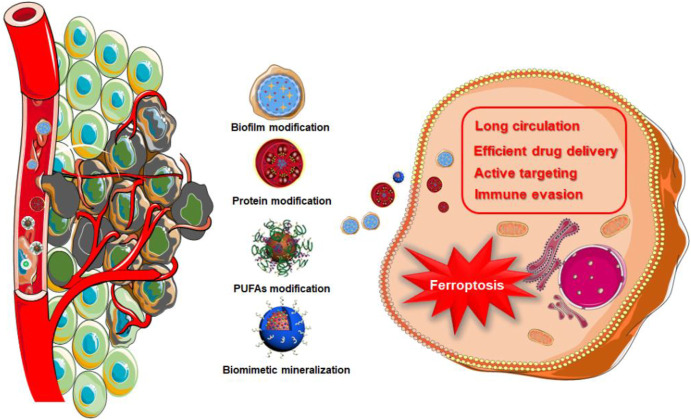
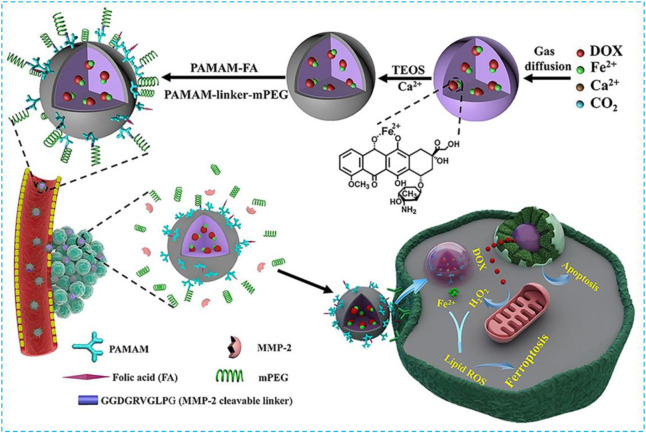
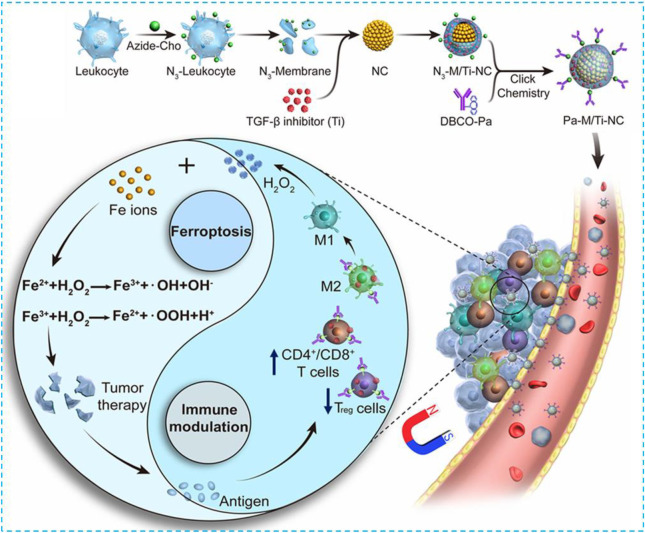
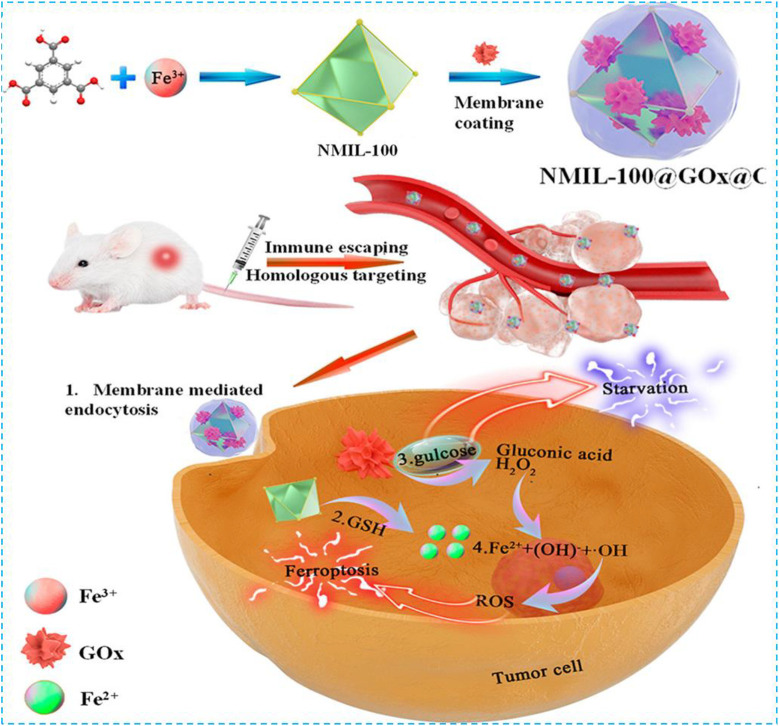
Ferroptosis, as a recently discovered non-apoptotic programmed cell death with an iron-dependent form, has attracted great attention in the field of cancer nanomedicine. However, many ferroptosis-related nano-inducers encountered unexpected limitations such as immune exposure, low circulation time, and ineffective tumor targeting. Biomimetic nanomaterials possess some unique physicochemical properties which can achieve immune escape and effective tumor targeting. Especially, certain components of biomimetic nanomaterials can further enhance ferroptosis. Therefore, this review will provide a comprehensive overview on recent developments of biomimetic nanomaterials in ferroptosis-related cancer nanomedicine. First, the definition and character of ferroptosis and its current applications associated with chemotherapy, radiotherapy, and immunotherapy for enhancing cancer theranostics were briefly discussed. Subsequently, the advantages and limitations of some representative biomimetic nanomedicines, including biomembranes, proteins, amino acids, polyunsaturated fatty acids, and biomineralization-based ferroptosis nano-inducers, were further spotlighted. This review would therefore help the spectrum of advanced and novice researchers who are interested in this area to quickly zoom in the essential information and glean some provoking ideas to advance this subfield in cancer nanomedicine.
铁死亡作为一种最近发现的非凋亡程序性细胞死亡形式,具有铁依赖性,在癌症纳米医学领域引起了极大关注。然而,许多与铁死亡相关的纳米诱导剂遇到了意想不到的局限性,如免疫暴露、循环时间短和肿瘤靶向无效。仿生纳米材料具有一些独特的物理化学性质,能够实现免疫逃逸和有效的肿瘤靶向。特别是,仿生纳米材料的某些成分可以进一步增强铁死亡。因此,本综述将全面概述仿生纳米材料在与铁死亡相关的癌症纳米医学中的最新进展。首先,简要讨论了铁死亡的定义、特征及其目前在与化疗、放疗和免疫疗法相关的癌症诊疗中的应用。随后,进一步聚焦了一些代表性仿生纳米药物的优缺点,包括生物膜、蛋白质、氨基酸、多不饱和脂肪酸和基于生物矿化的铁死亡纳米诱导剂。因此,本综述将有助于该领域的资深和新手研究人员快速聚焦关键信息,并收集一些激发性的想法,以推动癌症纳米医学这一子领域的发展。