Abbasi Ebrahim, Vafaei Seyed Alireza, Naseri Nima, Darini Ali, Azandaryani Masoumeh Taheri, Ara Farhad Kian, Mirzaei Fatemeh
Department of Biochemistry, School of Medicine, Hamadan University of Medical Sciences, Hamadan, Iran.
Department of Biology, Islamic Azad University, Sanandaj Branch, Sanandaj, Iran.
Metabol Open. 2021 Nov 18;12:100151. doi: 10.1016/j.metop.2021.100151. eCollection 2021 Dec.
Nanoparticles could represent a therapeutic approach for the treatment of various diseases. It has been reported that cerium oxide nanoparticles (CeO NPs) have potential useful effects. Therefore, we aimed to examine the protective effects of the CeO NPs in two models of liver injury, non-alcoholic fatty liver disease (NAFLD) and carbon tetrachloride (CCl)-induced liver fibrosis, in rats.
In this experimental study, male rats were randomly divided into different experimental groups including: Experiment 1; group1: healthy rats received normal saline, 2: CCl group, 3: CCl + nanoparticle. Experiment 2; group1: healthy rats received chow diet, 2: NAFLD group, 3: NAFLD + nanoparticle. The oxidative stress markers were determined in the liver and intestine. Tumor necrosis factor-α (TNF-α) levels were measured by ELISA. Histopathological changes of liver and intestine were evaluated by light microspore.
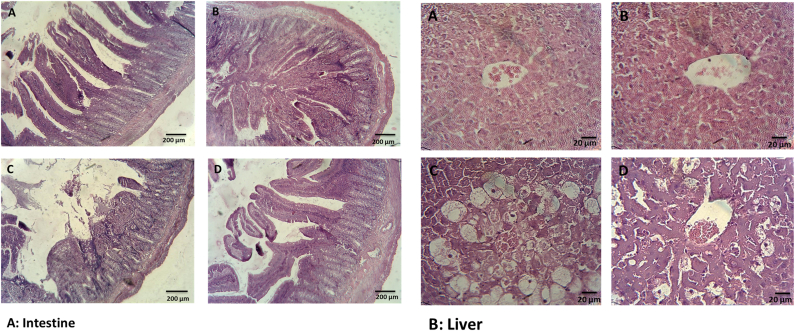
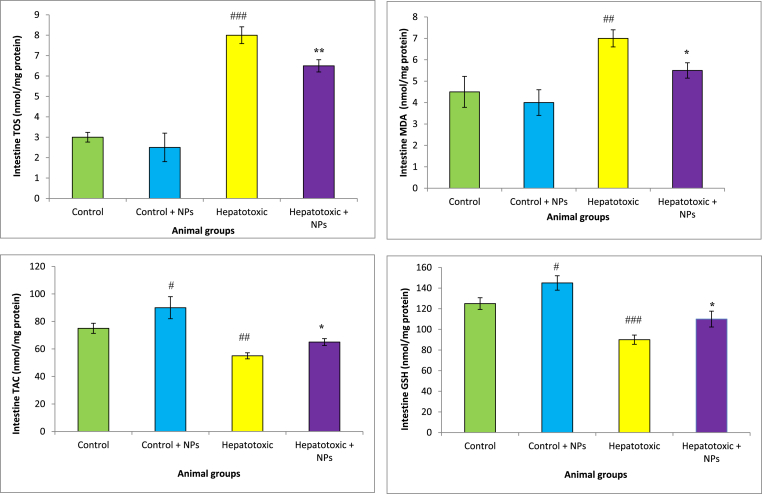
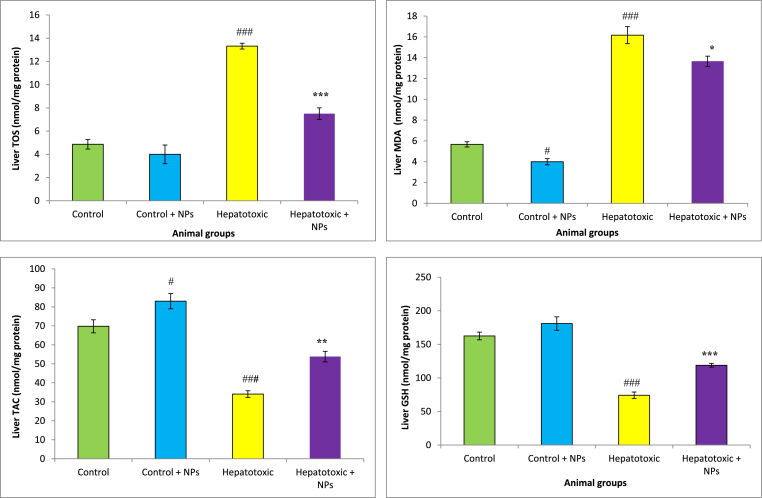
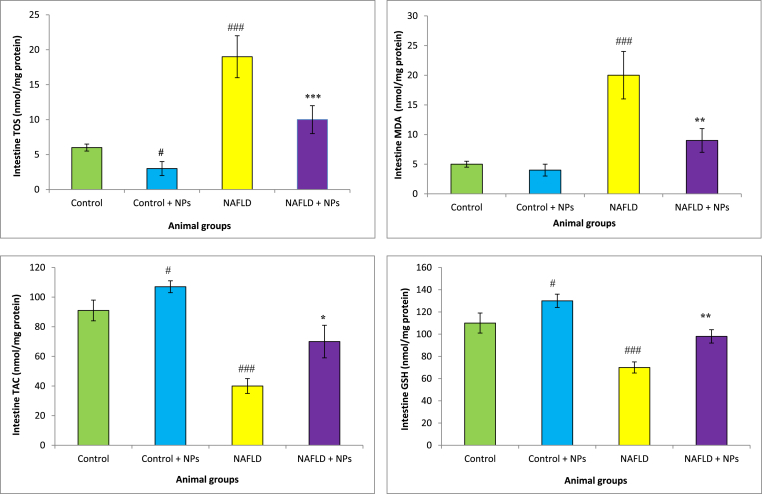
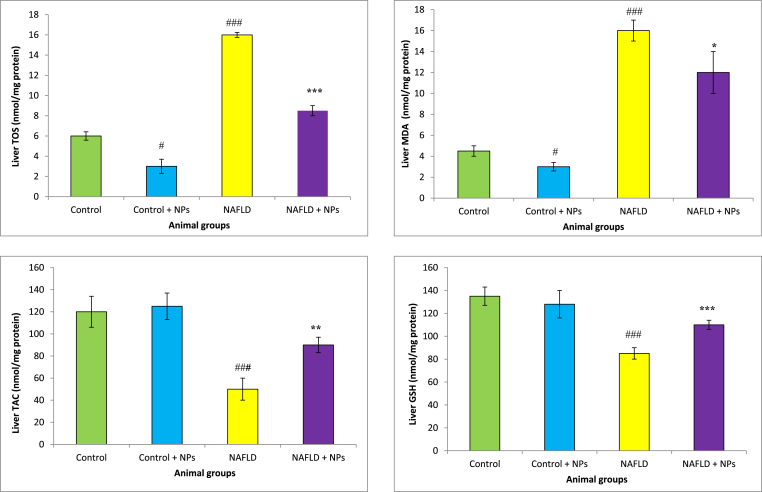
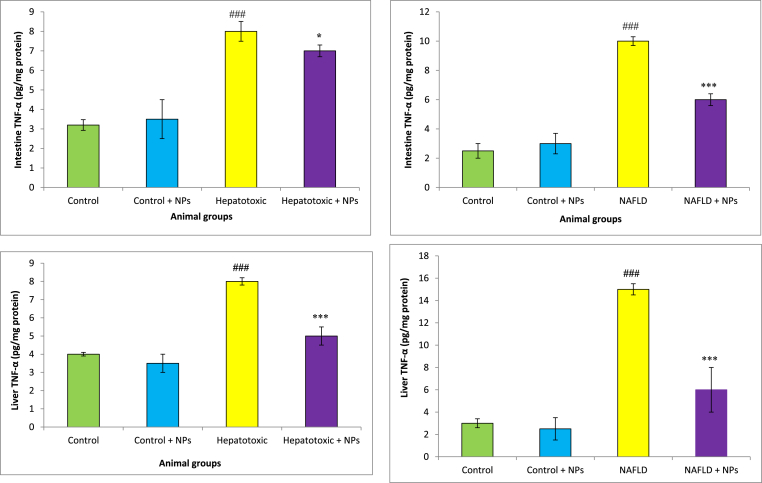
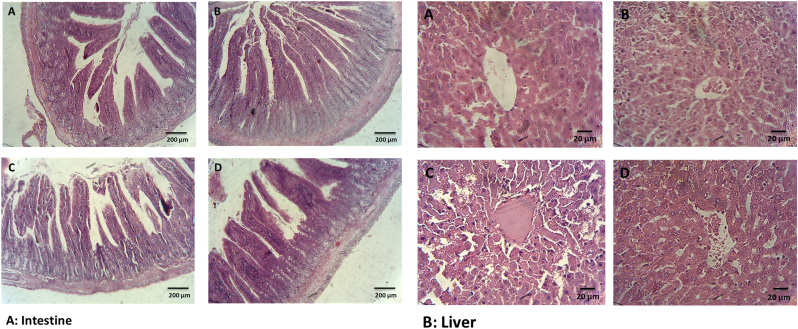
Total antioxidant capacity (TAC) and glutathione (GSH) levels significantly decreased, while malondialdehyde (MDA) and total oxidant status (TOS) were significantly increased in the liver, and intestine of the NAFLD and CCl group compared with control rats. However, the use of nanoparticles significantly normalized these markers. The levels of the TNF-α were significantly reduced in the nanoparticle group as compared with NAFLD model and CCl-treated rats. CeO NPs also normalized the liver and intestinal histological changes.
Our finding revealed that CeO NPs has potential protective effects by increasing antioxidant activity, and reducing inflammation.
纳米颗粒可能是治疗多种疾病的一种方法。据报道,氧化铈纳米颗粒(CeO NPs)具有潜在的有益作用。因此,我们旨在研究CeO NPs在大鼠非酒精性脂肪性肝病(NAFLD)和四氯化碳(CCl)诱导的肝纤维化这两种肝损伤模型中的保护作用。
在本实验研究中,雄性大鼠被随机分为不同的实验组,包括:实验1;第1组:健康大鼠接受生理盐水,第2组:CCl组,第3组:CCl +纳米颗粒组。实验2;第1组:健康大鼠接受普通饮食,第2组:NAFLD组,第3组:NAFLD +纳米颗粒组。测定肝脏和肠道中的氧化应激标志物。通过酶联免疫吸附测定法(ELISA)测量肿瘤坏死因子-α(TNF-α)水平。通过光学显微镜评估肝脏和肠道的组织病理学变化。
与对照大鼠相比,NAFLD组和CCl组大鼠的肝脏和肠道中总抗氧化能力(TAC)和谷胱甘肽(GSH)水平显著降低,而丙二醛(MDA)和总氧化剂状态(TOS)显著升高。然而,使用纳米颗粒可使这些标志物显著恢复正常。与NAFLD模型组和CCl处理组大鼠相比,纳米颗粒组中TNF-α水平显著降低。CeO NPs还使肝脏和肠道的组织学变化恢复正常。
我们的研究结果表明,CeO NPs通过提高抗氧化活性和减轻炎症具有潜在的保护作用。