State Key Laboratory of Bio-organic and Natural Products Chemistry, Center for Excellence in Molecular Synthesis, Shanghai Institute of Organic Chemistry, University of Chinese Academy of Sciences, Chinese Academy of Sciences, 345 Lingling Road, Shanghai, 200032, China.
State Key Laboratory of Microbial Metabolism, Joint International Research Laboratory of Metabolic and Developmental Sciences, School of Life Sciences and Biotechnology, Shanghai Jiao Tong University, Shanghai, 200240, China.
Nat Commun. 2021 Dec 6;12(1):7085. doi: 10.1038/s41467-021-27404-3.
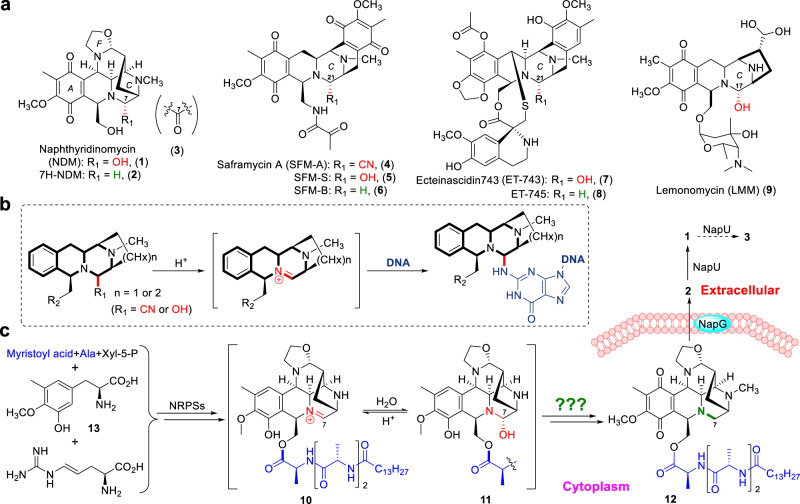
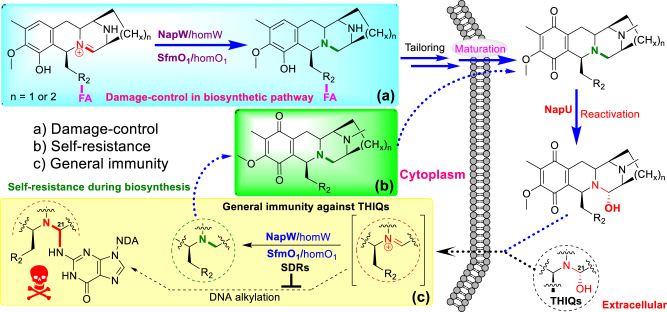
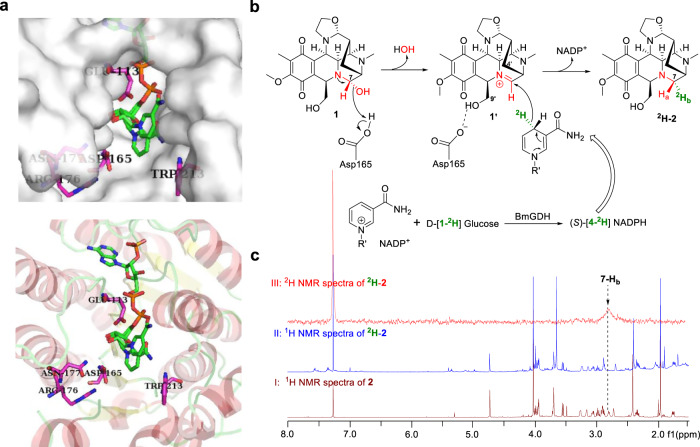
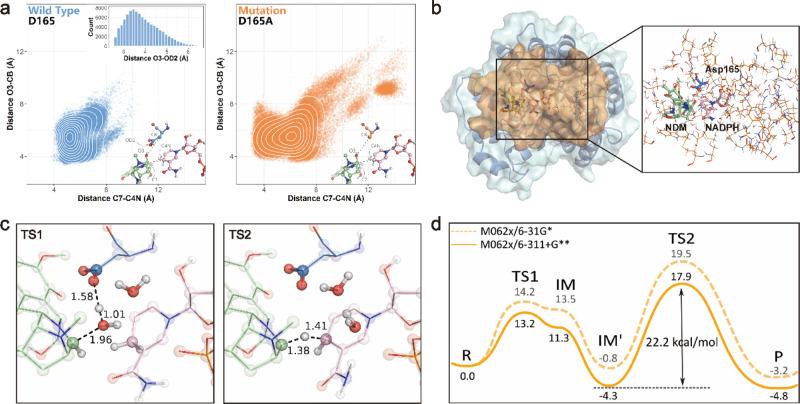
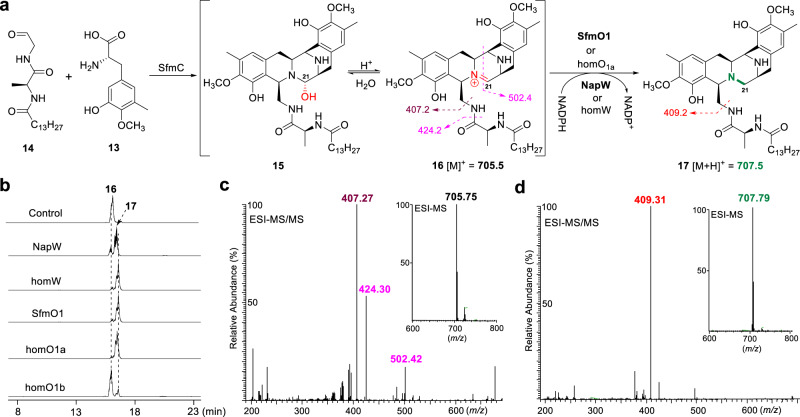
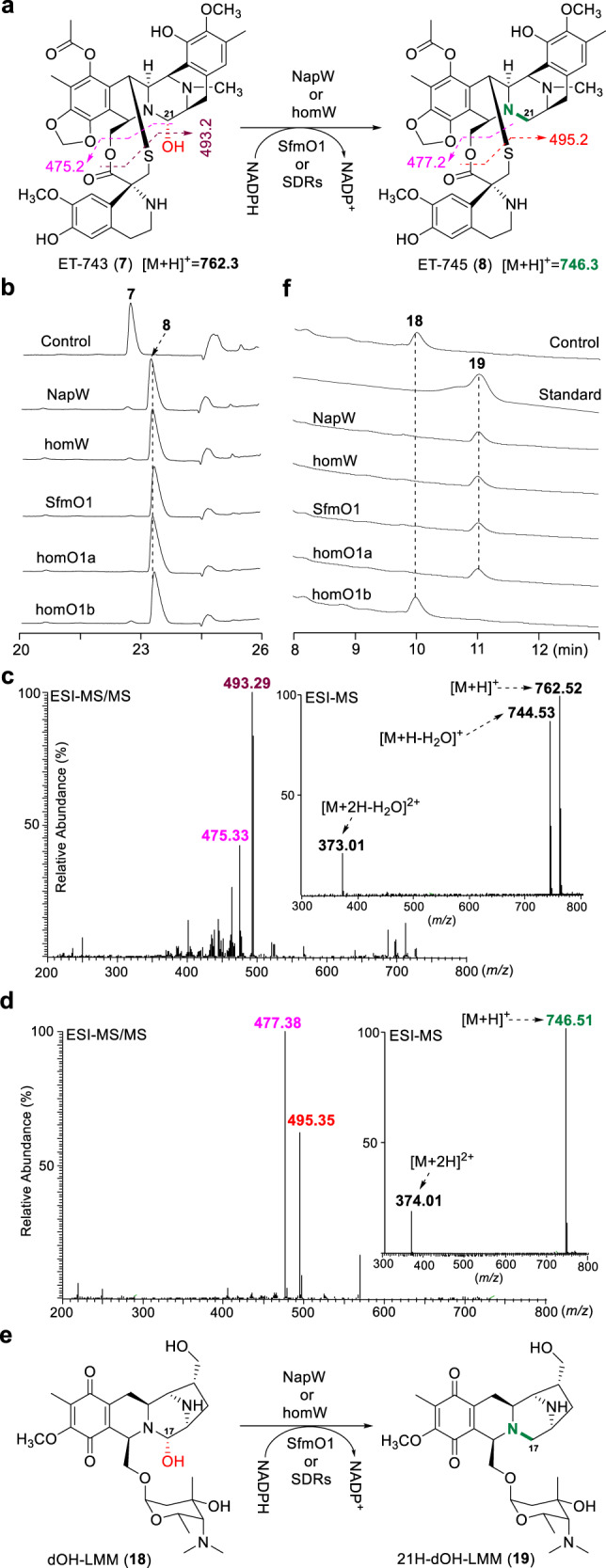
Antibiotic resistance is becoming one of the major crises, among which hydrolysis reaction is widely employed by bacteria to destroy the reactive pharmacophore. Correspondingly, antibiotic producer has canonically co-evolved this approach with the biosynthetic capability for self-resistance. Here we discover a self-defense strategy featuring with reductive inactivation of hemiaminal pharmacophore by short-chain dehydrogenases/reductases (SDRs) NapW and homW, which are integrated with the naphthyridinomycin biosynthetic pathway. We determine the crystal structure of NapW·NADPH complex and propose a catalytic mechanism by molecular dynamics simulation analysis. Additionally, a similar detoxification strategy is identified in the biosynthesis of saframycin A, another member of tetrahydroisoquinoline (THIQ) antibiotics. Remarkably, similar SDRs are widely spread in bacteria and able to inactive other THIQ members including the clinical anticancer drug, ET-743. These findings not only fill in the missing intracellular events of temporal-spatial shielding mode for cryptic self-resistance during THIQs biosynthesis, but also exhibit a sophisticated damage-control in secondary metabolism and general immunity toward this family of antibiotics.
抗生素耐药性正成为主要危机之一,其中水解反应被广泛应用于细菌来破坏反应性药效团。相应地,抗生素生产者与生物合成的自我抵抗能力一起规范地共同进化了这种方法。在这里,我们发现了一种自我防御策略,其特征是通过短链脱氢酶/还原酶 (SDR)NapW 和 homW 将半亚胺药效团还原失活,该策略与萘啶霉素生物合成途径相结合。我们确定了 NapW·NADPH 复合物的晶体结构,并通过分子动力学模拟分析提出了催化机制。此外,在另一种四氢异喹啉 (THIQ) 抗生素萨夫拉霉素 A 的生物合成中也确定了类似的解毒策略。值得注意的是,类似的 SDR 在细菌中广泛存在,能够使其他 THIQ 成员失活,包括临床抗癌药物 ET-743。这些发现不仅填补了 THIQ 生物合成过程中隐性自我抵抗的时空调控模式的缺失细胞内事件,而且还展示了次级代谢物中复杂的损伤控制以及针对该抗生素家族的普遍免疫。