Zhao Sheng-Bing, Wu Jia-Yi, He Zi-Xuan, Song Yi-Hang, Chang Xin, Xia Tian, Fang Xue, Li Zhao-Shen, Xu Can, Wang Shu-Ling, Bai Yu
Department of Gastroenterology, Changhai Hospital, Second Military Medical University/Naval Medical University, Shanghai, China.
Department of Gastroenterology, General Hospital of Central Theater Command, Wuhan, China.
Cell Death Discov. 2021 Dec 7;7(1):377. doi: 10.1038/s41420-021-00767-8.
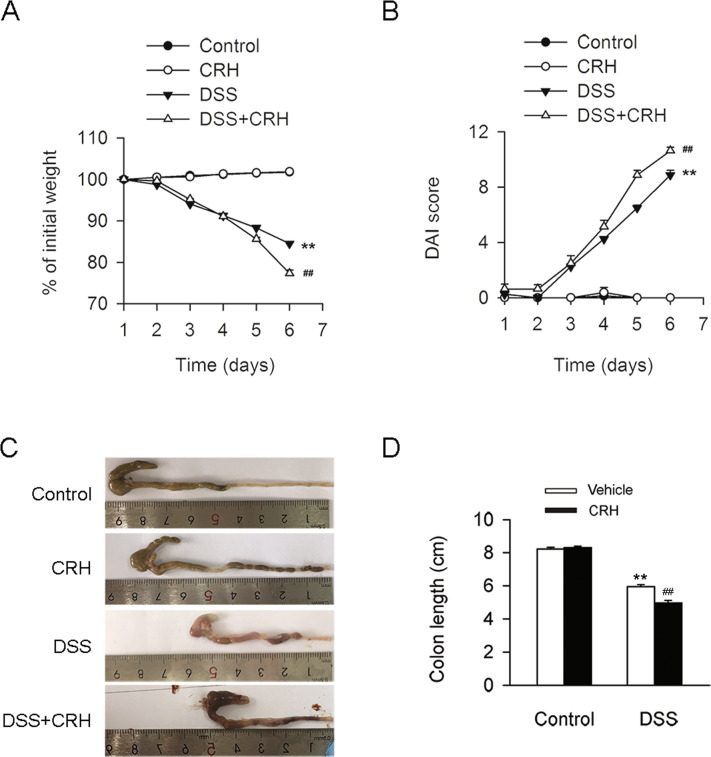
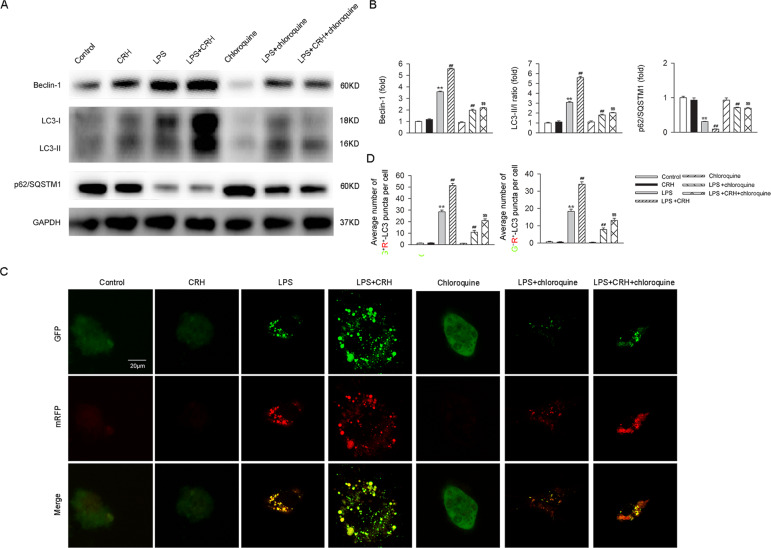
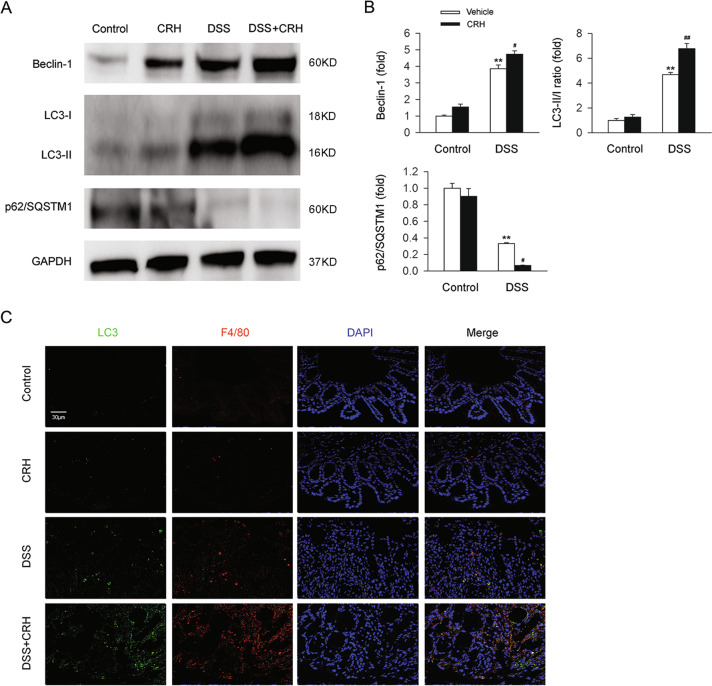
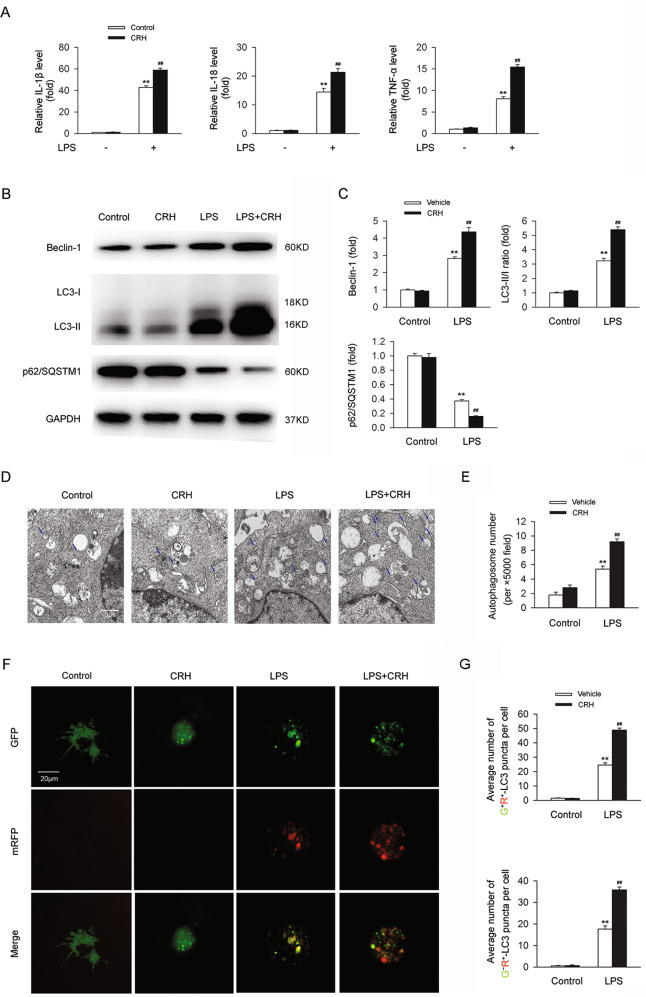
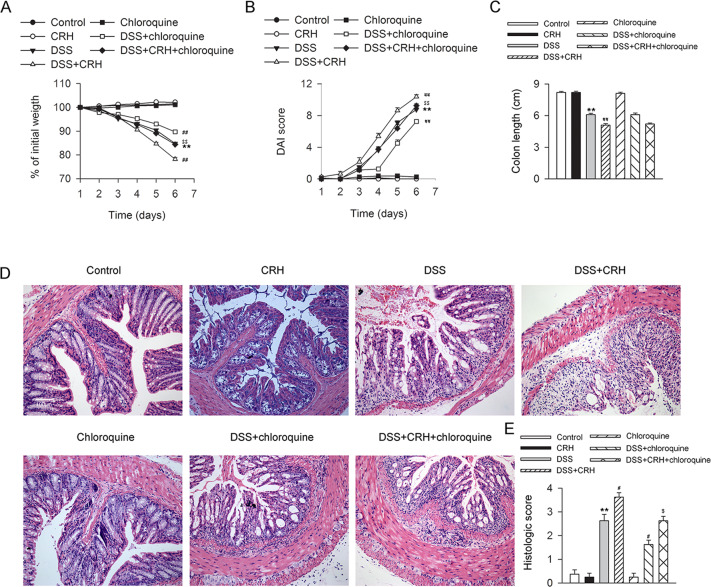
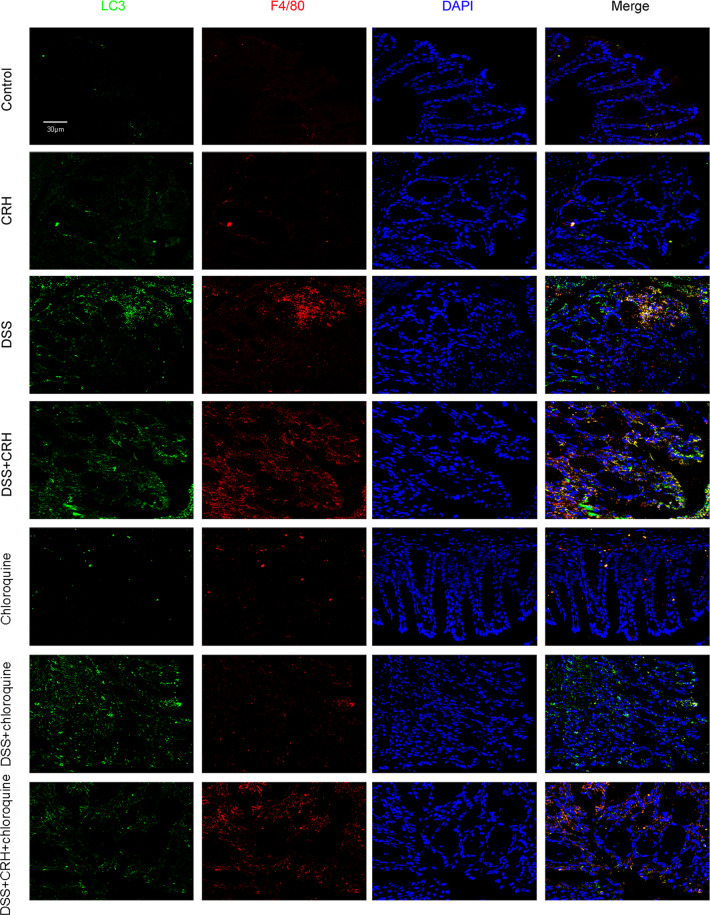
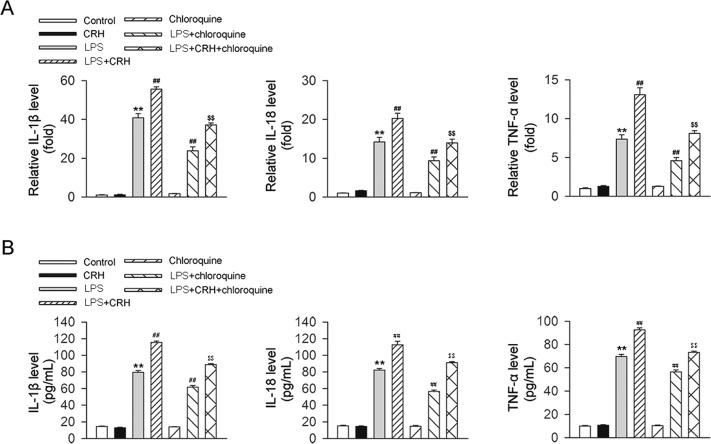
Psychosocial stress is a vital factor contributing to the pathogenesis and progression of inflammatory bowel disease (IBD). The contribution of intestinal macrophage autophagy to the onset and development of IBD has been widely studied. Herein, we investigated the underlying mechanism of psychosocial stress in an IBD mouse model pertaining to macrophage autophagy. Corticotropin releasing hormone (CRH) was peripherally administrated to induce psychosocial stress. For in vivo studies, dextran sulfate sodium (DSS) was used for the creation of our IBD mouse model. For in vitro studies, lipopolysaccharide (LPS) was applied on murine bone marrow-derived macrophages (BMDMs) as a cellular IBD-related challenge. Chloroquine was applied to inhibit autophagy. We found that CRH aggravated the severity of DSS-induced IBD, increasing overall and local inflammatory reactions and infiltration. The levels of autophagy in intestinal macrophages and murine BMDMs were increased under these IBD-related inflammatory challenges and CRH further enhanced these effects. Subsequent administration of chloroquine markedly attenuated the detrimental effects of CRH on IBD severity and inflammatory reactions via inhibition of autophagy. These findings illustrate the effects of peripheral administration of CRH on DSS-induced IBD via the enhancement of intestinal macrophage autophagy, thus providing a novel understanding as well as therapeutic target for the treatment of IBD.
心理社会应激是导致炎症性肠病(IBD)发病和进展的重要因素。肠道巨噬细胞自噬对IBD发病和发展的作用已得到广泛研究。在此,我们研究了心理社会应激在IBD小鼠模型中与巨噬细胞自噬相关的潜在机制。通过外周给予促肾上腺皮质激素释放激素(CRH)来诱导心理社会应激。在体内研究中,使用葡聚糖硫酸钠(DSS)建立我们的IBD小鼠模型。在体外研究中,将脂多糖(LPS)作用于小鼠骨髓来源的巨噬细胞(BMDM),作为与细胞IBD相关的刺激。应用氯喹抑制自噬。我们发现CRH加重了DSS诱导的IBD的严重程度,增加了全身和局部炎症反应及浸润。在这些与IBD相关的炎症刺激下,肠道巨噬细胞和小鼠BMDM中的自噬水平升高,CRH进一步增强了这些作用。随后给予氯喹通过抑制自噬显著减轻了CRH对IBD严重程度和炎症反应的有害影响。这些发现阐明了外周给予CRH通过增强肠道巨噬细胞自噬对DSS诱导的IBD的影响,从而为IBD的治疗提供了新的认识和治疗靶点。