Wikander Lolita, Kirshbaum Marilynne N, Waheed Nasreena, Gahreman Daniel E
College of Health and Human Sciences, Charles Darwin University, Casuarina, NT, Australia.
Research and Innovation, Charles Darwin University, Casuarina, NT, Australia.
Sports Med Open. 2021 Dec 7;7(1):89. doi: 10.1186/s40798-021-00387-7.
Urinary incontinence (UI) can negatively affect a woman's quality of life, participation in sport and athletic performance. The objectives of this study were to determine the prevalence of UI in competitive women powerlifters; identify possible risk factors and activities likely to provoke UI; and establish self-care practices.
This international cross-sectional study was conducted using an online survey completed by 480 competitive women powerlifters aged between 20 and 71 years. The Incontinence Severity Index (ISI) was used to determine the severity of UI.
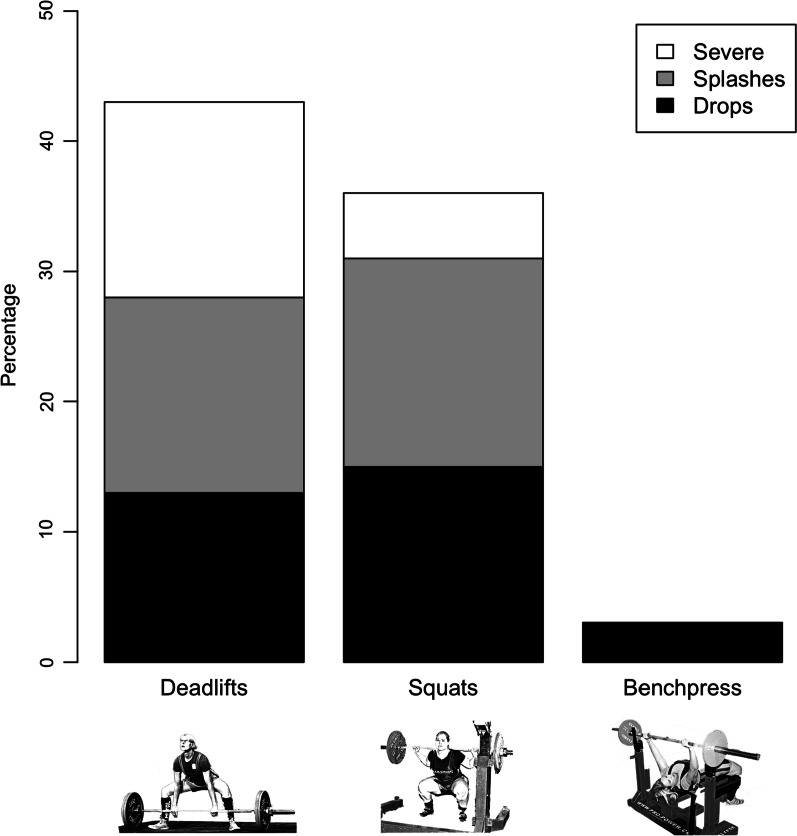
We found that 43.9% of women had experienced UI within the three months prior to this study. The deadlift was the most likely, and the bench-press the least likely exercise to provoke UI. ISI scores were positively correlated with parity (τ = 0.227, p < 0.001), age (τ = 0.179, p < 0.001), competition total (τ = 0.105, p = 0.002) and body mass index score (τ = 0.089, p = 0.009). There was no significant correlation between ISI and years strength training (τ = - 0.052, p = 0.147) or years powerlifting (τ = 0.041, p = 0.275). There was a negative correlation between ISI score with having a pelvic floor assessment (η = 0.197), and the ability to correctly perform pelvic floor exercises (η = 0.172).
The prevalence of UI in this cohort was at the upper limit experienced by women in the general population. Women who had undergone a pelvic floor examination or were confident in correctly performing pelvic floor exercises experienced less severe UI.
尿失禁(UI)会对女性的生活质量、参与运动和竞技表现产生负面影响。本研究的目的是确定竞技女子力量举运动员中尿失禁的患病率;识别可能的风险因素和可能引发尿失禁的活动;并建立自我护理方法。
本项国际横断面研究通过在线调查进行,共有480名年龄在20至71岁之间的竞技女子力量举运动员完成了该调查。采用尿失禁严重程度指数(ISI)来确定尿失禁的严重程度。
我们发现,43.9%的女性在本研究前三个月内经历过尿失禁。硬拉是最有可能引发尿失禁的动作,而卧推是最不可能引发尿失禁的动作。ISI评分与产次(τ = 0.227,p < 0.001)、年龄(τ = 0.179,p < 0.001)、比赛总成绩(τ = 0.105,p = 0.002)和体重指数评分(τ = 0.089,p = 0.009)呈正相关。ISI与力量训练年限(τ = -0.052,p = 0.147)或力量举年限(τ = 0.041,p = 0.275)之间无显著相关性。ISI评分与进行盆底评估的情况(η = 0.197)以及正确进行盆底锻炼的能力(η = 0.172)呈负相关。
该队列中尿失禁的患病率处于普通人群女性所经历的上限。接受过盆底检查或对正确进行盆底锻炼有信心的女性尿失禁症状较轻。