Azrieli Faculty of Medicine, Bar-Ilan University, Safed, Israel.
Neuro-Oncology Center, Rabin Medical Center, Petah Tikva, Israel.
Mol Oncol. 2022 May;16(10):2098-2114. doi: 10.1002/1878-0261.13157. Epub 2022 Feb 11.
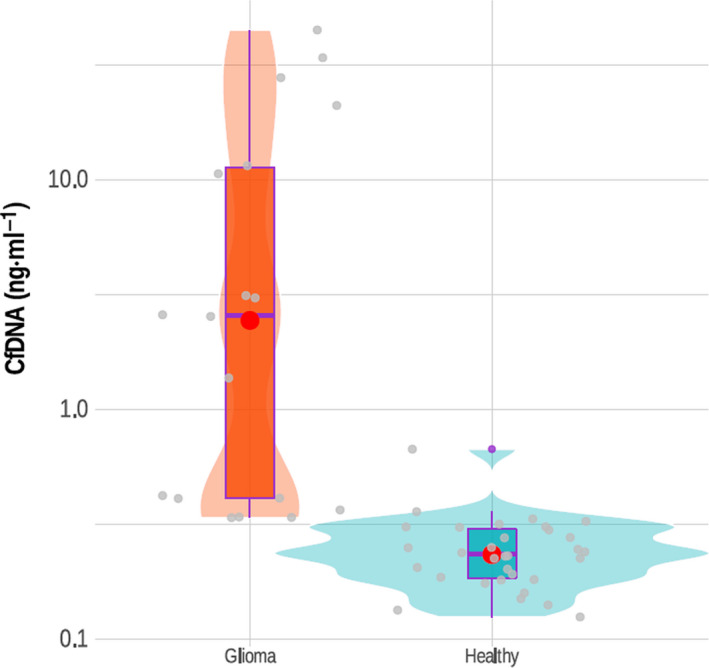
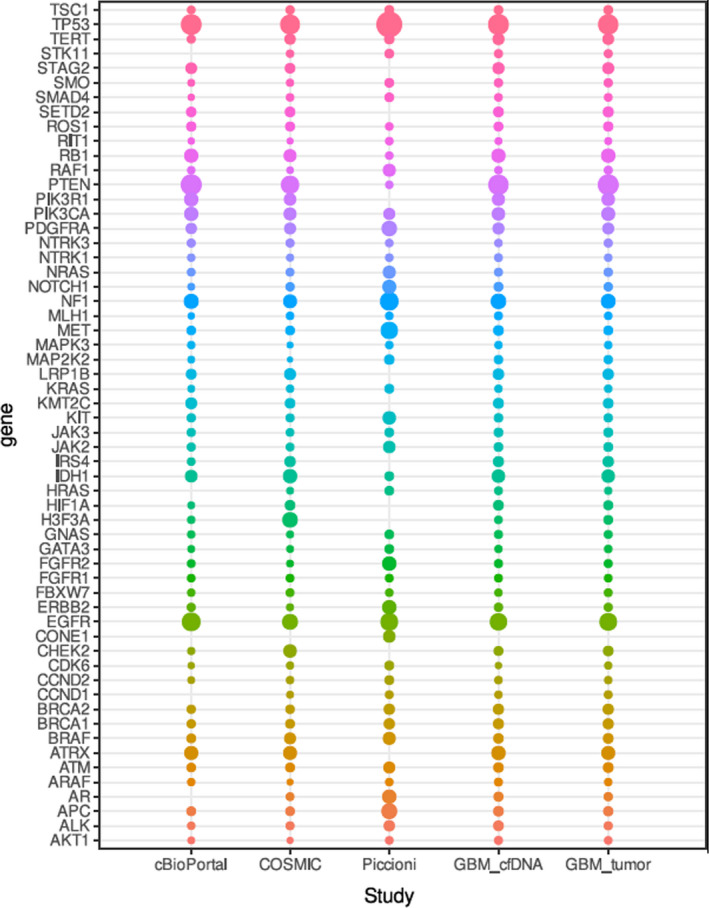
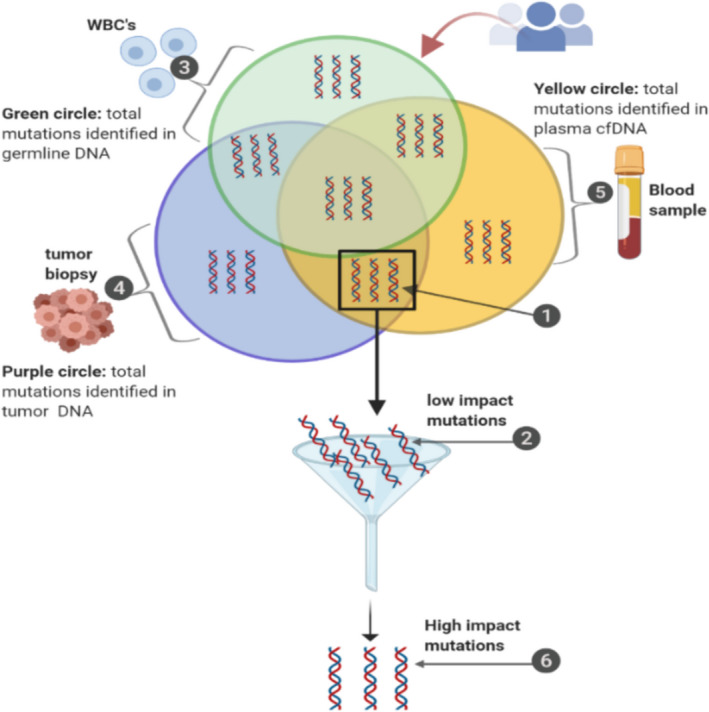
Glioblastoma (GBM) is the most common type of glioma and is uniformly fatal. Currently, tumour heterogeneity and mutation acquisition are major impedances for tailoring personalized therapy. We collected blood and tumour tissue samples from 25 GBM patients and 25 blood samples from healthy controls. Cell-free DNA (cfDNA) was extracted from the plasma of GBM patients and from healthy controls. Tumour DNA was extracted from fresh tumour samples. Extracted DNA was sequenced using a whole-genome sequencing procedure. We also collected 180 tumour DNA datasets from GBM patients publicly available at the TCGA/PANCANCER project. These data were analysed for mutations and gene-gene fusions that could be potential druggable targets. We found that plasma cfDNA concentrations in GBM patients were significantly elevated (22.6 ± 5 ng·mL ), as compared to healthy controls (1.4 ± 0.4 ng·mL ) of the same average age. We identified unique mutations in the cfDNA and tumour DNA of each GBM patient, including some of the most frequently mutated genes in GBM according to the COSMIC database (TP53, 18.75%; EGFR, 37.5%; NF1, 12.5%; LRP1B, 25%; IRS4, 25%). Using our gene-gene fusion database, ChiTaRS 5.0, we identified gene-gene fusions in cfDNA and tumour DNA, such as KDR-PDGFRA and NCDN-PDGFRA, which correspond to previously reported alterations of PDGFRA in GBM (44% of all samples). Interestingly, the PDGFRA protein fusions can be targeted by tyrosine kinase inhibitors such as imatinib, sunitinib, and sorafenib. Moreover, we identified BCR-ABL1 (in 8% of patients), COL1A1-PDGFB (8%), NIN-PDGFRB (8%), and FGFR1-BCR (4%) in cfDNA of patients, which can be targeted by analogues of imatinib. ROS1 fusions (CEP85L-ROS1 and GOPC-ROS1), identified in 8% of patient cfDNA, might be targeted by crizotinib, entrectinib, or larotrectinib. Thus, our study suggests that integrated analysis of cfDNA plasma concentration, gene mutations, and gene-gene fusions can serve as a diagnostic modality for distinguishing GBM patients who may benefit from targeted therapy. These results open new avenues for precision medicine in GBM, using noninvasive liquid biopsy diagnostics to assess personalized patient profiles. Moreover, repeated detection of druggable targets over the course of the disease may provide real-time information on the evolving molecular landscape of the tumour.
胶质母细胞瘤(GBM)是最常见的神经胶质瘤类型,普遍致命。目前,肿瘤异质性和突变获得是制定个体化治疗方案的主要障碍。我们收集了 25 名 GBM 患者的血液和肿瘤组织样本以及 25 名健康对照者的血液样本。从 GBM 患者的血浆和健康对照者中提取无细胞 DNA(cfDNA)。从新鲜肿瘤样本中提取肿瘤 DNA。使用全基因组测序程序对提取的 DNA 进行测序。我们还从 TCGA/PANCANCER 项目中收集了 180 个公开的 GBM 患者肿瘤 DNA 数据集。对这些数据进行分析,以确定可能成为潜在治疗靶点的基因突变和基因融合。我们发现,与同年龄的健康对照组(1.4 ± 0.4 ng·mL )相比,GBM 患者的血浆 cfDNA 浓度明显升高(22.6 ± 5 ng·mL )。我们在每个 GBM 患者的 cfDNA 和肿瘤 DNA 中鉴定出了独特的突变,包括根据 COSMIC 数据库(TP53,18.75%;EGFR,37.5%;NF1,12.5%;LRP1B,25%;IRS4,25%)最常发生突变的基因。使用我们的基因融合数据库 ChiTaRS 5.0,我们在 cfDNA 和肿瘤 DNA 中鉴定出了基因融合,如 KDR-PDGFRA 和 NCDN-PDGFRA,这些融合与 GBM 中 PDGFRA 的先前报道的改变相对应(所有样本的 44%)。有趣的是,PDGFRA 蛋白融合可被伊马替尼、舒尼替尼和索拉非尼等酪氨酸激酶抑制剂靶向。此外,我们在患者的 cfDNA 中鉴定出了 BCR-ABL1(8%的患者)、COL1A1-PDGFB(8%)、NIN-PDGFRB(8%)和 FGFR1-BCR(4%),这些融合可以用伊马替尼类似物靶向。在 8%的患者 cfDNA 中鉴定出的 ROS1 融合(CEP85L-ROS1 和 GOPC-ROS1)可能可以用克唑替尼、恩曲替尼或拉罗替尼靶向。因此,我们的研究表明,cfDNA 血浆浓度、基因突变和基因融合的综合分析可以作为一种诊断方法,用于区分可能受益于靶向治疗的 GBM 患者。这些结果为 GBM 的精准医学开辟了新途径,使用非侵入性的液体活检诊断来评估个体化的患者特征。此外,在疾病过程中重复检测可靶向的靶点,可以实时提供肿瘤不断演变的分子图谱信息。