Rautenstrauss Maximiliane, Martin Layla, Minner Stefan
School of Management, Technical University of Munich, Germany.
School of Industrial Engineering, Eindhoven University of Technology, Netherlands.
Eur J Oper Res. 2023 Jan 1;304(1):239-254. doi: 10.1016/j.ejor.2021.11.051. Epub 2021 Dec 2.
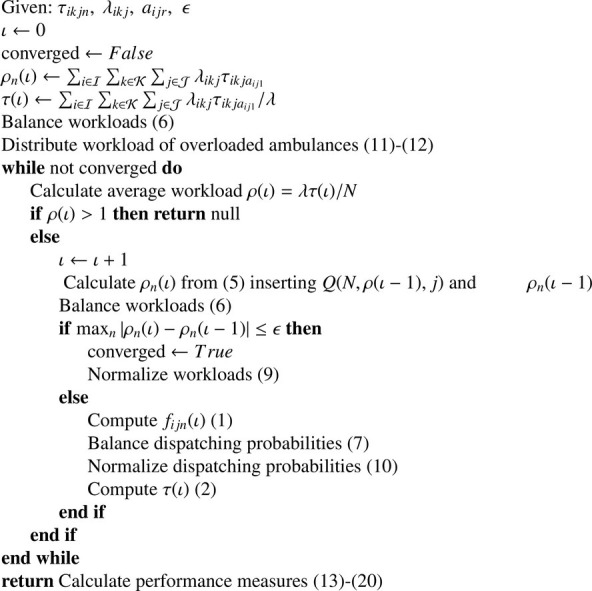
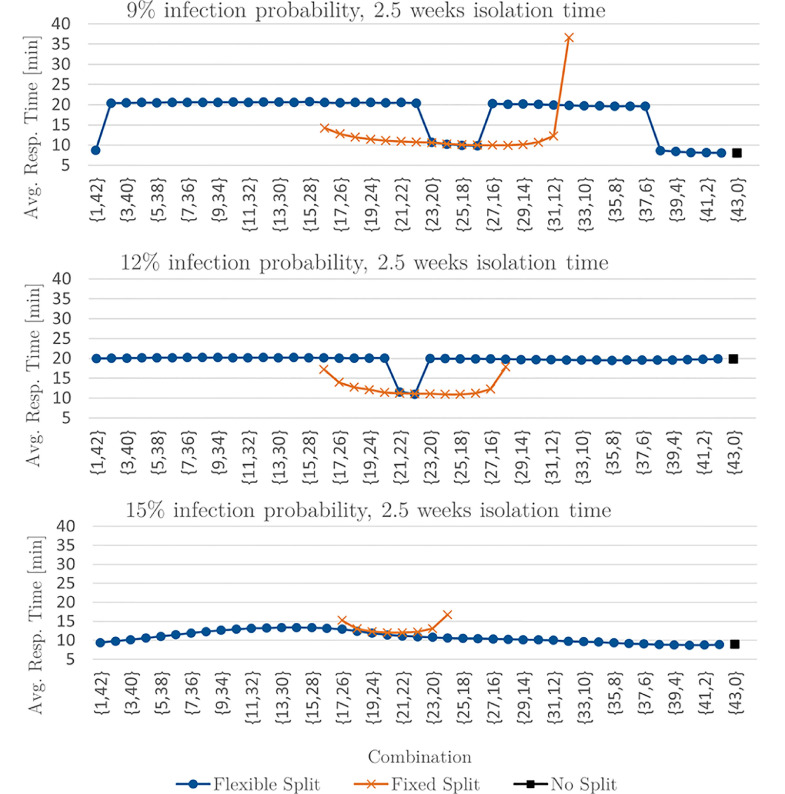
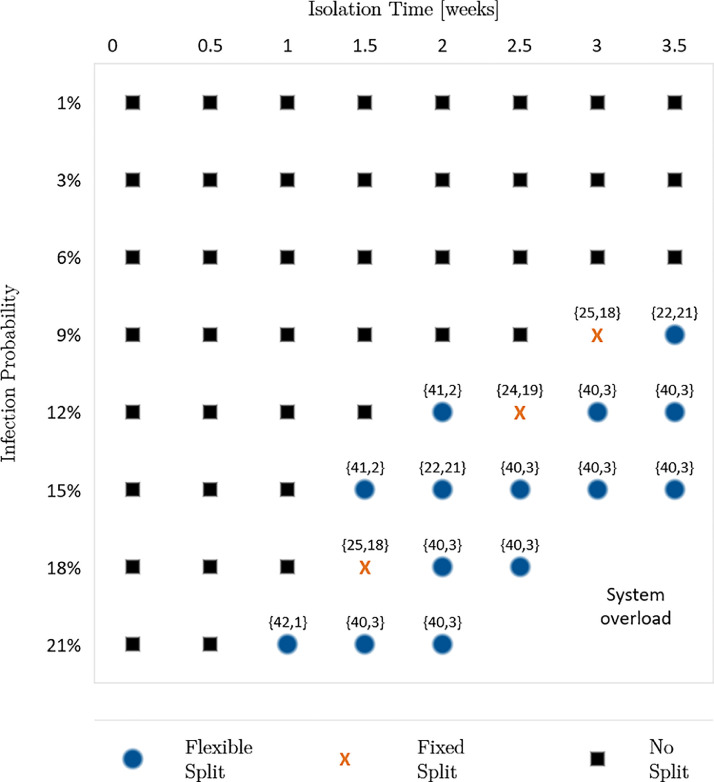
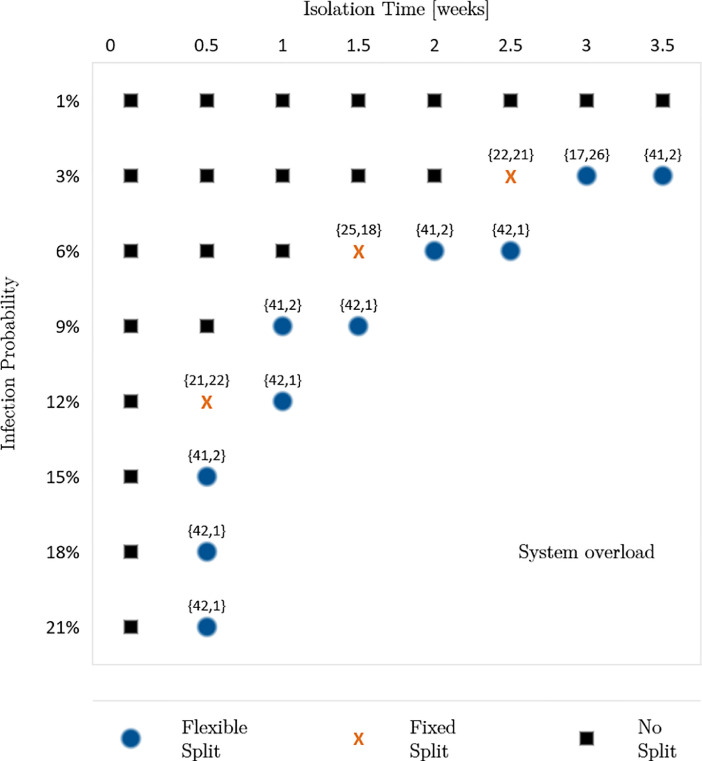
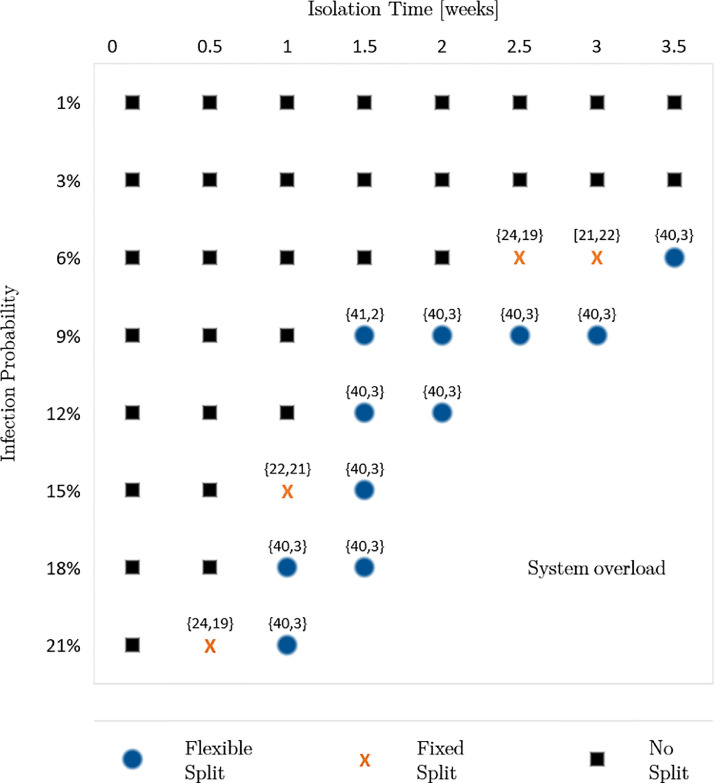
Amidst a pandemic, operators of emergency medical service (EMS) systems aim at upholding service at sufficiently low response times while reducing the infection probability of their personnel. Designating ambulances to serve only infected patients and suspected cases may reduce the outage probabilities of ambulances and consequently the response times of the EMS. We investigate the benefits that EMS personnel and patients can gain from such a split. As a solution method to quantify these benefits, we apply a two-stage approach. First, we run a first-stage optimization model to pre-select ambulance splits with the highest emergency call coverage. Second, we solve the approximate Hypercube Queuing Model (AHQM) to evaluate the performance of the pre-selected ambulance splits at the second stage. We contribute to the existing literature by including multiple incident categories and outages of ambulances in the AHQM and combining it with the first-stage optimization model. Further, we conduct a case study for the Coronavirus Disease 2019 (Covid-19) pandemic to draw conclusions on the benefits of splitting. We observe that an ambulance split would not reduce the average response time for the examined data set since the Covid-related call volume in Munich and the infection probability are too low. However, a sensitivity analysis shows that long isolation times and high infection probabilities make an ambulance split beneficial for patients and EMS personnel, as an ambulance split reduces the average response time without significantly increasing the mean infection probability for EMS personnel.
在大流行期间,紧急医疗服务(EMS)系统的运营商旨在以足够低的响应时间维持服务,同时降低其工作人员的感染概率。指定救护车仅服务于感染患者和疑似病例可能会降低救护车的停机概率,从而降低EMS的响应时间。我们研究了EMS工作人员和患者可以从这种划分中获得的益处。作为量化这些益处的解决方法,我们应用了两阶段方法。首先,我们运行一个第一阶段优化模型,以预先选择具有最高紧急呼叫覆盖率的救护车划分。其次,我们求解近似超立方体排队模型(AHQM),以评估第二阶段预先选择的救护车划分的性能。我们通过在AHQM中纳入多个事件类别和救护车停机情况,并将其与第一阶段优化模型相结合,为现有文献做出了贡献。此外,我们针对2019年冠状病毒病(Covid-19)大流行进行了案例研究,以得出关于划分益处的结论。我们观察到,由于慕尼黑与新冠相关的呼叫量和感染概率过低,救护车划分不会降低所检查数据集的平均响应时间。然而,敏感性分析表明,较长的隔离时间和较高的感染概率使救护车划分对患者和EMS工作人员有益,因为救护车划分可降低平均响应时间,而不会显著增加EMS工作人员的平均感染概率。