Schmid Verena
Department of Business Administration, University of Vienna, Bruenner Strasse 72, 1210 Vienna, Austria.
Eur J Oper Res. 2012 Jun 16;219(3):611-621. doi: 10.1016/j.ejor.2011.10.043.
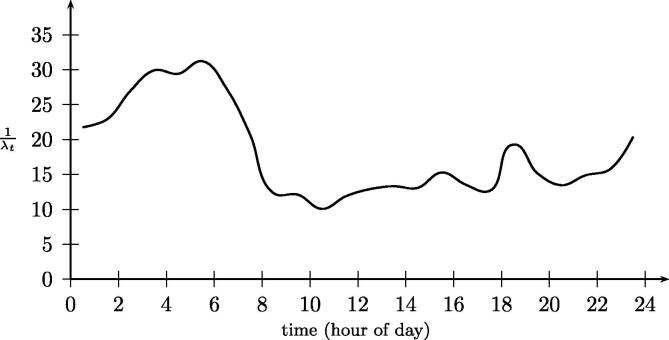
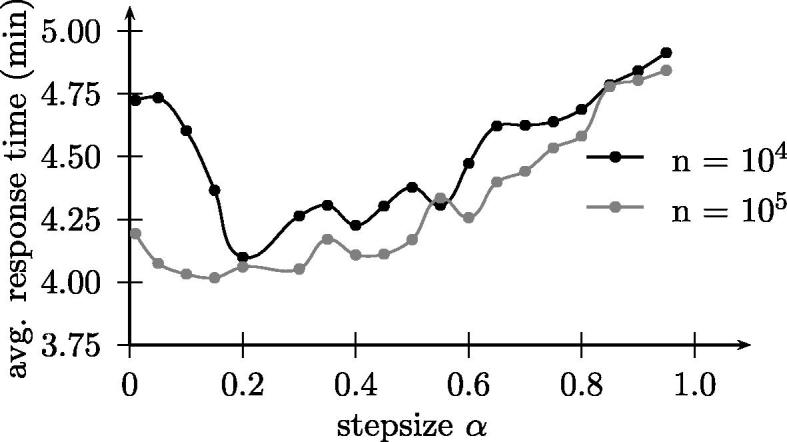
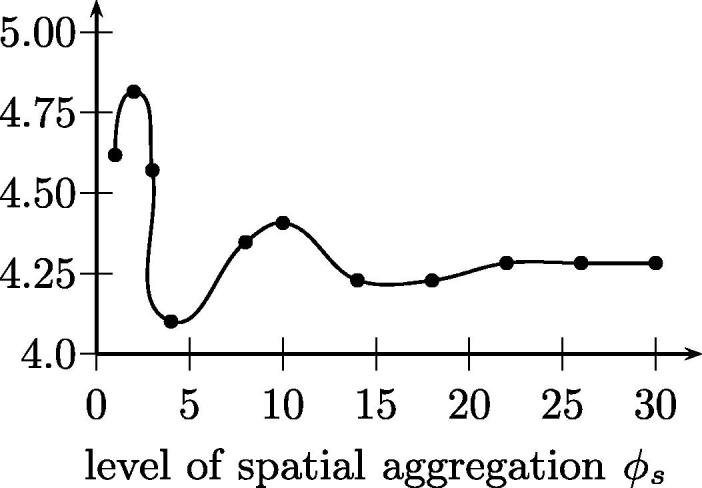
Emergency service providers are supposed to locate ambulances such that in case of emergency patients can be reached in a time-efficient manner. Two fundamental decisions and choices need to be made real-time. First of all immediately after a request emerges an appropriate vehicle needs to be dispatched and send to the requests' site. After having served a request the vehicle needs to be relocated to its next waiting location. We are going to propose a model and solve the underlying optimization problem using approximate dynamic programming (ADP), an emerging and powerful tool for solving stochastic and dynamic problems typically arising in the field of operations research. Empirical tests based on real data from the city of Vienna indicate that by deviating from the classical dispatching rules the average response time can be decreased from 4.60 to 4.01 minutes, which corresponds to an improvement of 12.89%. Furthermore we are going to show that it is essential to consider time-dependent information such as travel times and changes with respect to the request volume explicitly. Ignoring the current time and its consequences thereafter during the stage of modeling and optimization leads to suboptimal decisions.
应急服务提供商应合理部署救护车,以便在紧急情况下能高效及时地抵达患者所在地。需要实时做出两项基本决策和选择。首先,在接到请求后,必须立即派遣合适的车辆前往请求地点。在完成一次任务后,车辆需要重新部署到下一个待命地点。我们将提出一个模型,并使用近似动态规划(ADP)来解决潜在的优化问题。近似动态规划是一种新兴且强大的工具,用于解决运筹学领域中常见的随机和动态问题。基于维也纳市真实数据的实证测试表明,通过偏离传统的调度规则,平均响应时间可从4.60分钟降至4.01分钟,相当于提高了12.89%。此外,我们将证明明确考虑诸如出行时间和请求量变化等与时间相关的信息至关重要。在建模和优化阶段忽略当前时间及其后续影响会导致决策次优。