Center for Gene Therapy, the Abigail Wexner Research Institute at Nationwide Children's Hospital, Columbus, OH, USA.
Department of Neurology, University of New Mexico Health Sciences Center, Albuquerque, NM, USA.
Nat Commun. 2021 Dec 8;12(1):7128. doi: 10.1038/s41467-021-27430-1.
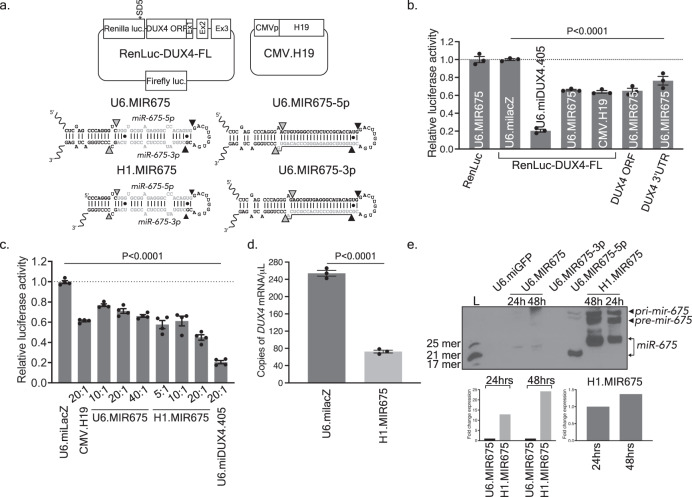
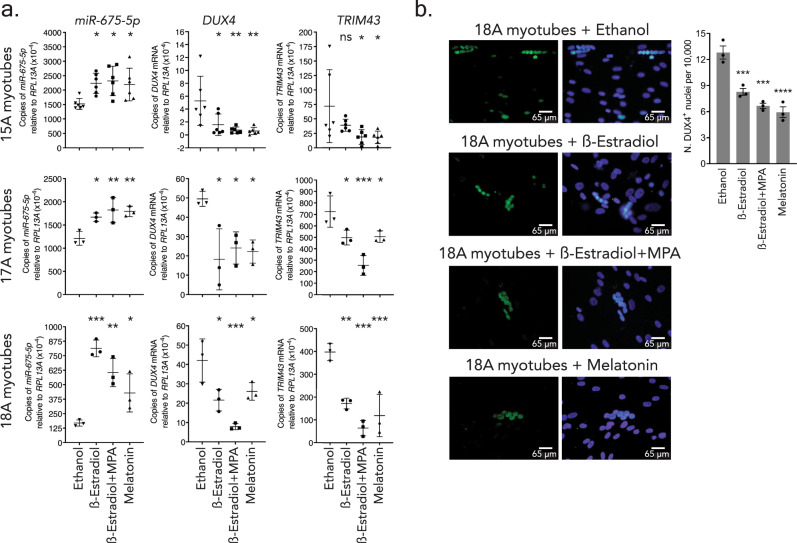
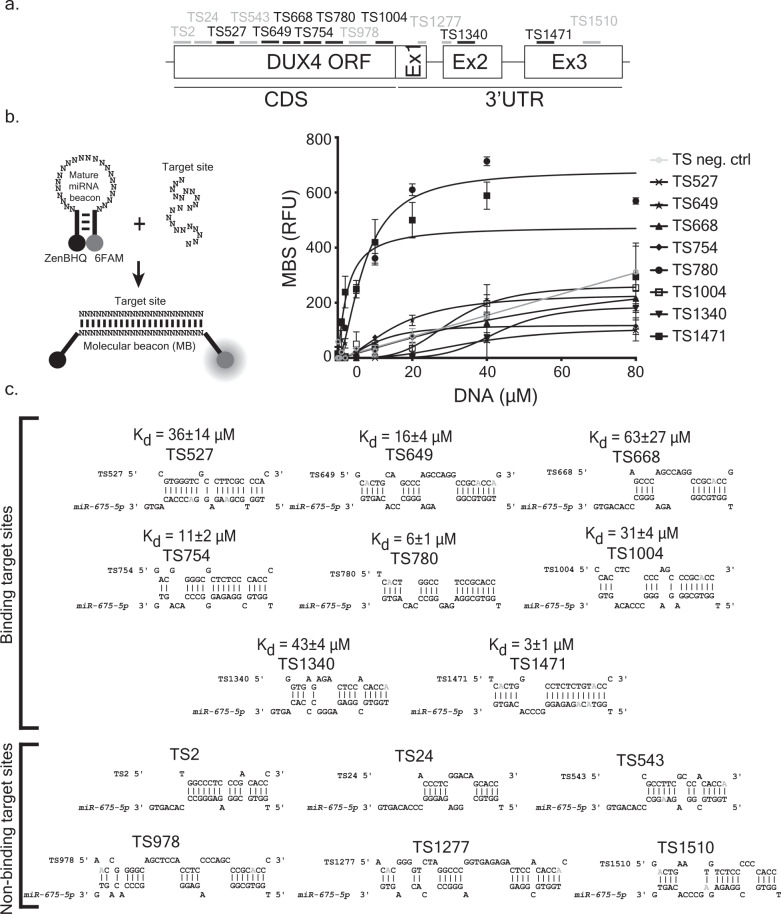
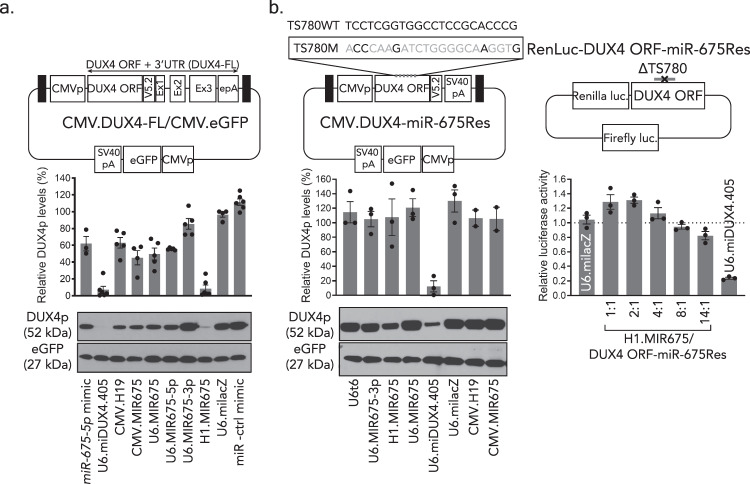
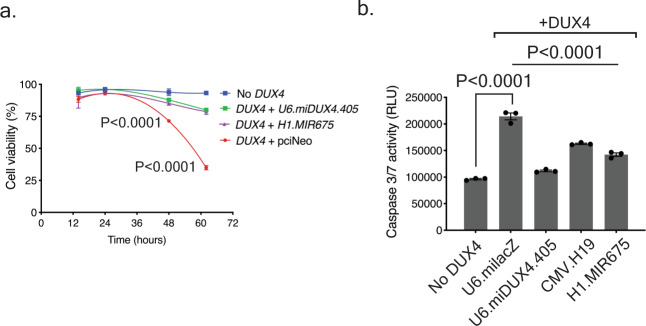
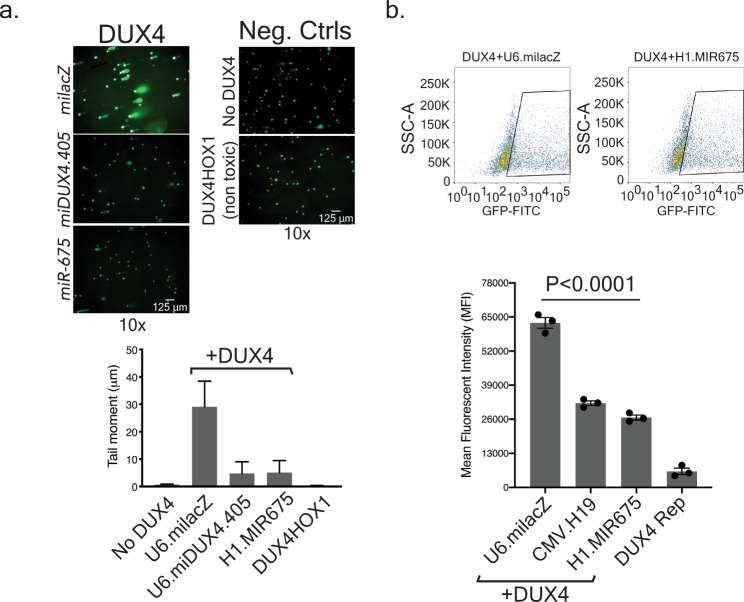
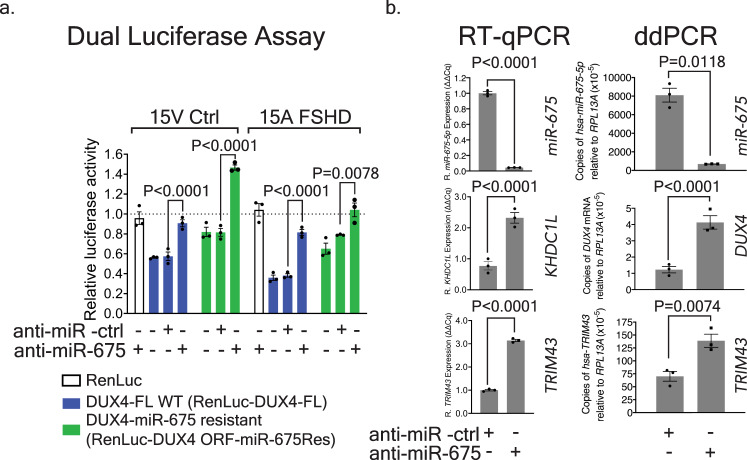
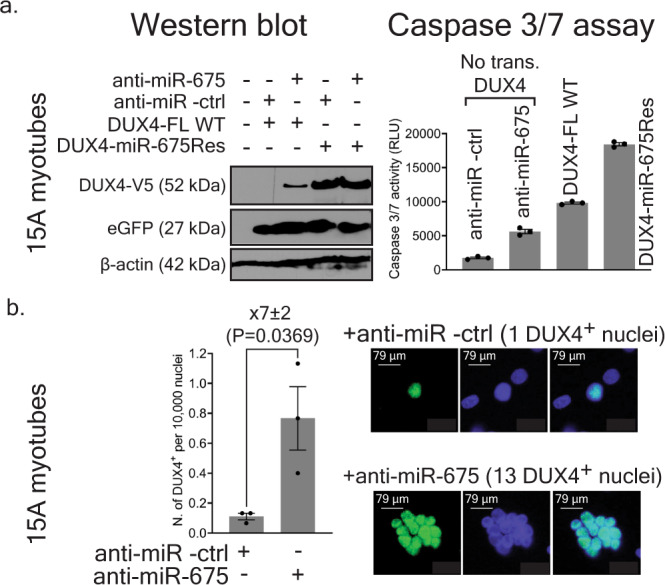
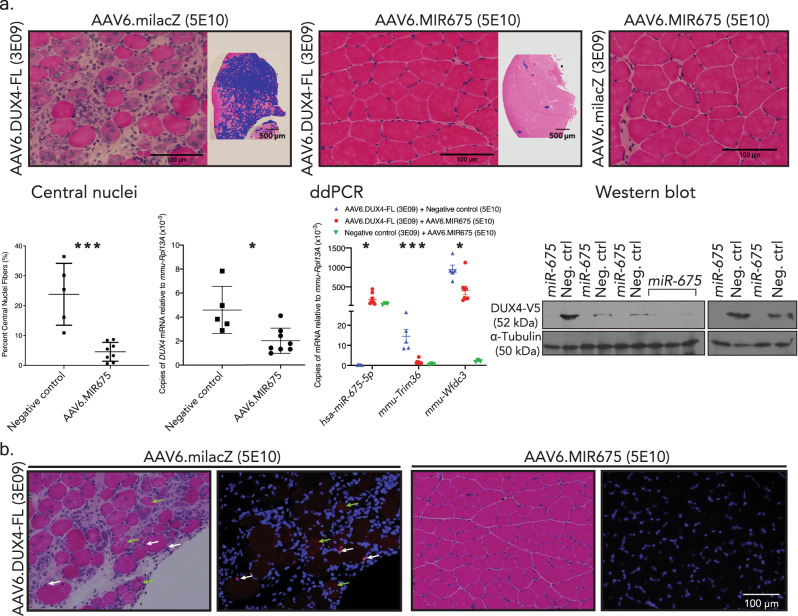
Facioscapulohumeral muscular dystrophy (FSHD) is a potentially devastating myopathy caused by de-repression of the DUX4 gene in skeletal muscles. Effective therapies will likely involve DUX4 inhibition. RNA interference (RNAi) is one powerful approach to inhibit DUX4, and we previously described a RNAi gene therapy to achieve DUX4 silencing in FSHD cells and mice using engineered microRNAs. Here we report a strategy to direct RNAi against DUX4 using the natural microRNA miR-675, which is derived from the lncRNA H19. Human miR-675 inhibits DUX4 expression and associated outcomes in FSHD cell models. In addition, miR-675 delivery using gene therapy protects muscles from DUX4-associated death in mice. Finally, we show that three known miR-675-upregulating small molecules inhibit DUX4 and DUX4-activated FSHD biomarkers in FSHD patient-derived myotubes. To our knowledge, this is the first study demonstrating the use of small molecules to suppress a dominant disease gene using an RNAi mechanism.
面肩肱型肌营养不良症(FSHD)是一种潜在的破坏性肌病,由骨骼肌中 DUX4 基因的去抑制引起。有效的治疗方法可能涉及 DUX4 抑制。RNA 干扰(RNAi)是抑制 DUX4 的一种强大方法,我们之前描述了一种 RNAi 基因治疗方法,使用工程化的 microRNA 在 FSHD 细胞和小鼠中实现 DUX4 沉默。在这里,我们报告了一种使用天然 microRNA miR-675 靶向 DUX4 的策略,miR-675 来自 lncRNA H19。人 miR-675 抑制 FSHD 细胞模型中的 DUX4 表达和相关结果。此外,使用基因治疗递送 miR-675 可保护小鼠肌肉免受 DUX4 相关死亡的影响。最后,我们表明三种已知的 miR-675 上调小分子可抑制 FSHD 患者来源的肌管中的 DUX4 和 DUX4 激活的 FSHD 生物标志物。据我们所知,这是第一项使用小分子通过 RNAi 机制抑制显性疾病基因的研究。