Affiliated Cancer Hospital and Institute of Guangzhou Medical University, Guangzhou, 510095, China.
Guangzhou Municipal and Guangdong Provincial Key Laboratory of Protein Modification and Degradation, School of Basic Medical Science, Guangzhou Medical University, Guangzhou, 511436, China.
Nat Commun. 2021 Dec 8;12(1):7142. doi: 10.1038/s41467-021-27525-9.
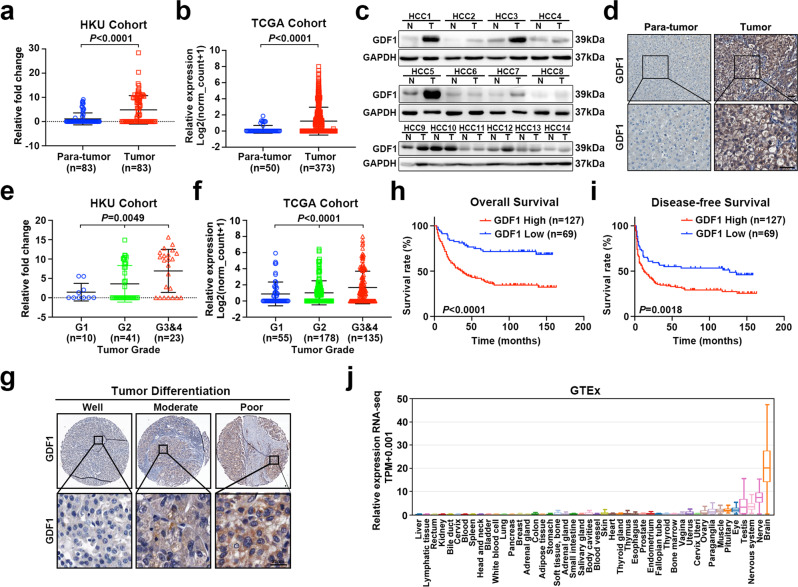
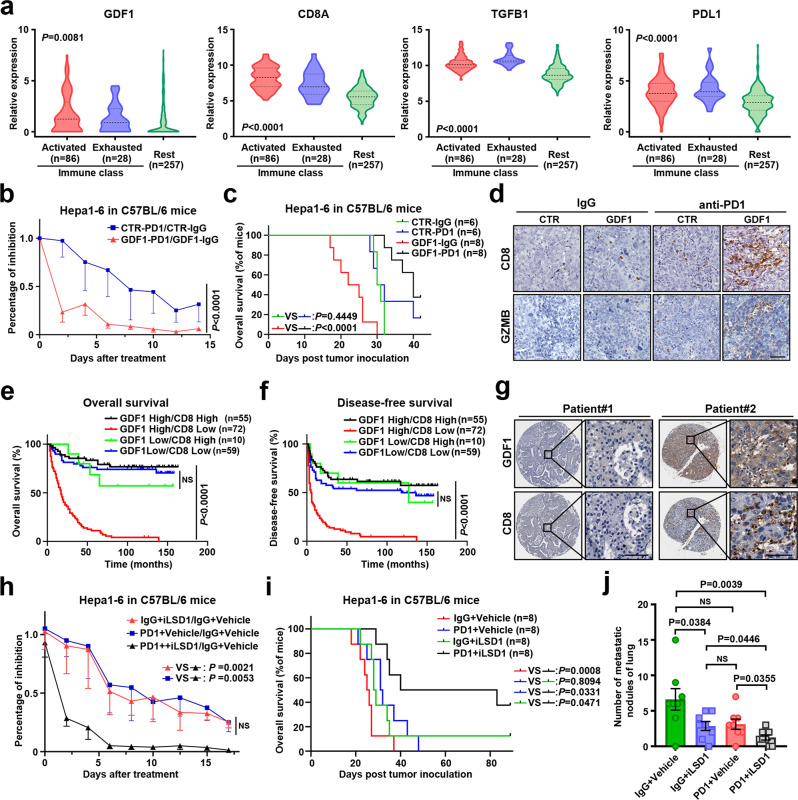
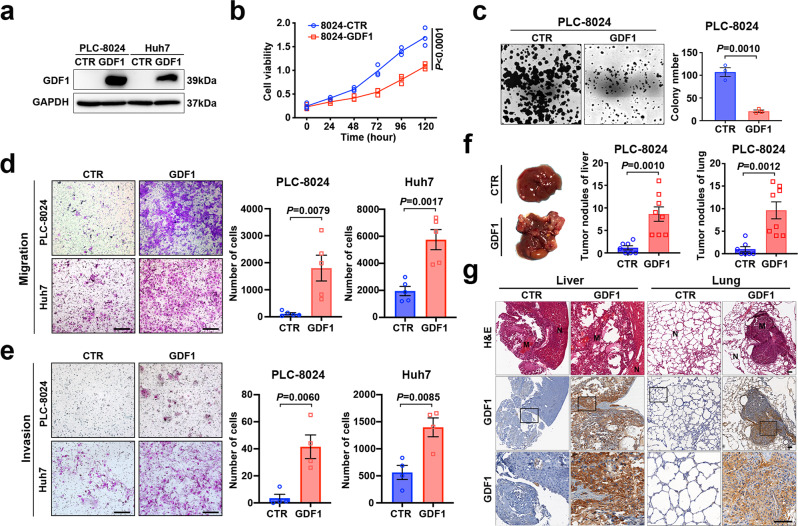
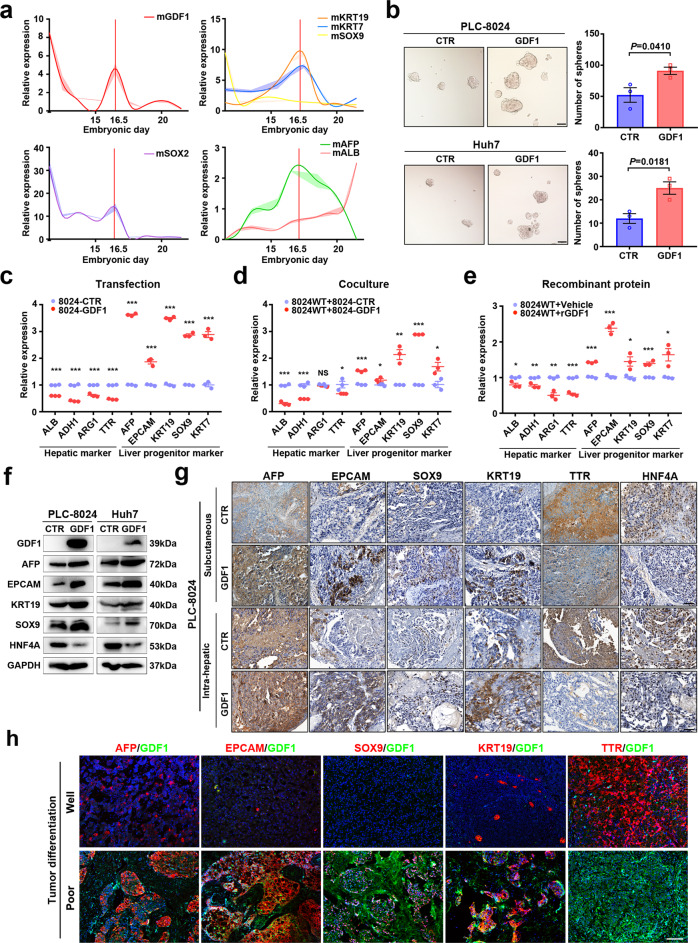
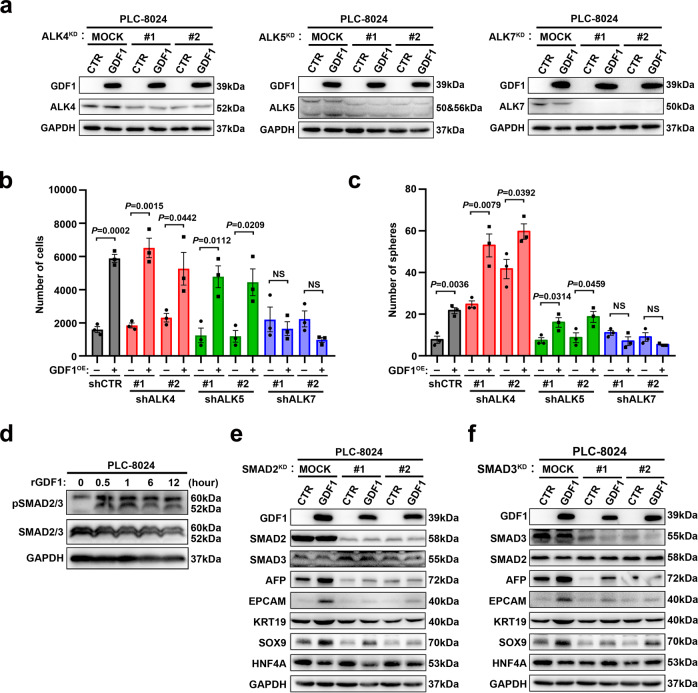
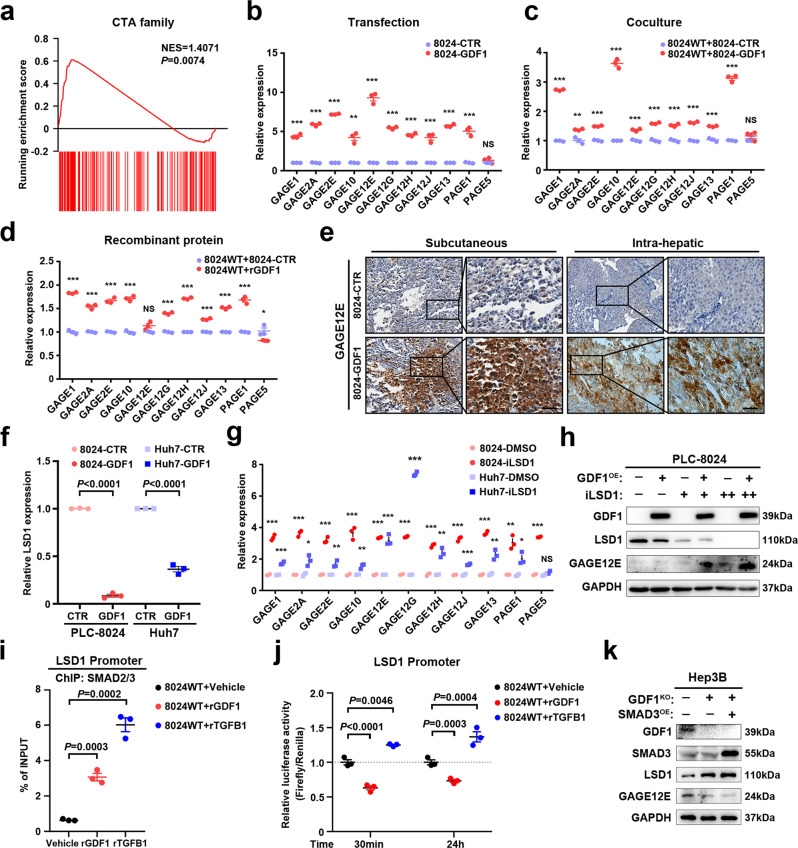
Tumour lineage plasticity is an emerging hallmark of aggressive tumours. Tumour cells usually hijack developmental signalling pathways to gain cellular plasticity and evade therapeutic targeting. In the present study, the secreted protein growth and differentiation factor 1 (GDF1) is found to be closely associated with poor tumour differentiation. Overexpression of GDF1 suppresses cell proliferation but strongly enhances tumour dissemination and metastasis. Ectopic expression of GDF1 can induce the dedifferentiation of hepatocellular carcinoma (HCC) cells into their ancestral lineages and reactivate a broad panel of cancer testis antigens (CTAs), which further stimulate the immunogenicity of HCC cells to immune-based therapies. Mechanistic studies reveal that GDF1 functions through the Activin receptor-like kinase 7 (ALK7)-Mothers against decapentaplegic homolog 2/3 (SMAD2/3) signalling cascade and suppresses the epigenetic regulator Lysine specific demethylase 1 (LSD1) to boost CTA expression. GDF1-induced tumour lineage plasticity might be an Achilles heel for HCC immunotherapy. Inhibition of LSD1 based on GDF1 biomarker prescreening might widen the therapeutic window for immune checkpoint inhibitors in the clinic.
肿瘤谱系可塑性是侵袭性肿瘤的一个新兴标志。肿瘤细胞通常会劫持发育信号通路以获得细胞可塑性并逃避治疗靶向。在本研究中,发现分泌蛋白生长分化因子 1(GDF1)与肿瘤分化不良密切相关。GDF1 的过表达抑制细胞增殖,但强烈增强肿瘤的扩散和转移。GDF1 的异位表达可诱导肝癌(HCC)细胞向其祖系分化,并重新激活广泛的癌症睾丸抗原(CTA),进一步刺激 HCC 细胞对免疫为基础的治疗的免疫原性。机制研究表明,GDF1 通过激活素受体样激酶 7(ALK7)-母亲抗颅面发育蛋白 2/3(SMAD2/3)信号级联发挥作用,并抑制表观遗传调节剂赖氨酸特异性去甲基酶 1(LSD1)以提高 CTA 表达。GDF1 诱导的肿瘤谱系可塑性可能是 HCC 免疫治疗的阿喀琉斯之踵。基于 GDF1 生物标志物的 LSD1 抑制可能会扩大免疫检查点抑制剂在临床上的治疗窗口。