Centro de Investigación Tibaitatá, Corporación Colombiana de Investigación Agropecuaria-Agrosavia, Mosquera, Cundinamarca, Colombia.
Faculty of Science and Technology, Department of Life Sciences, The University of the West Indies, St. Augustine, Republic of Trinidad and Tobago.
PLoS One. 2021 Dec 10;16(12):e0261364. doi: 10.1371/journal.pone.0261364. eCollection 2021.
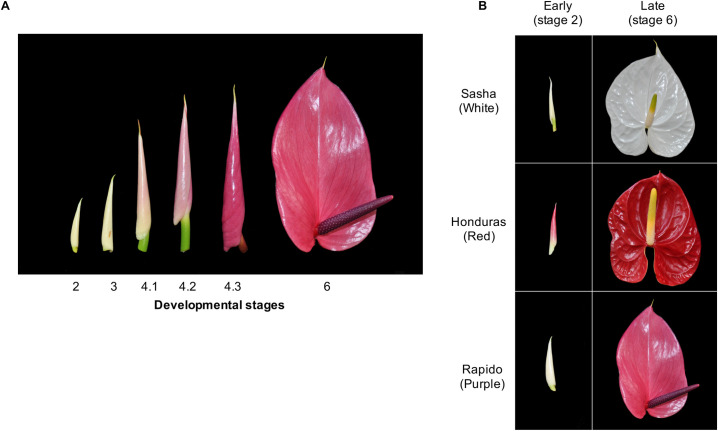
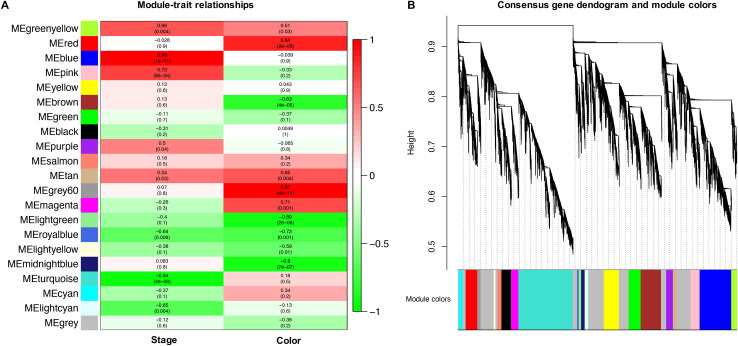
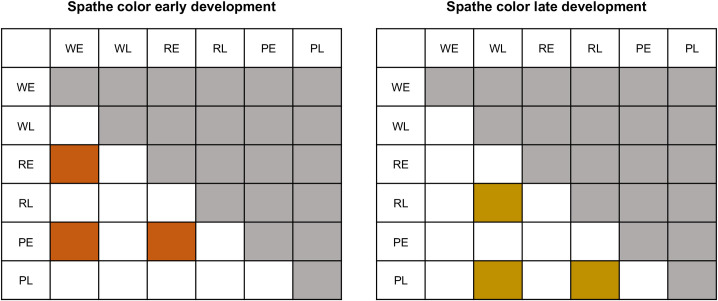
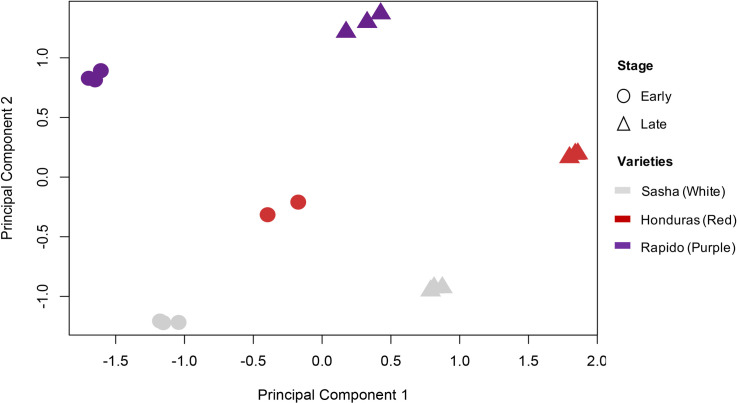
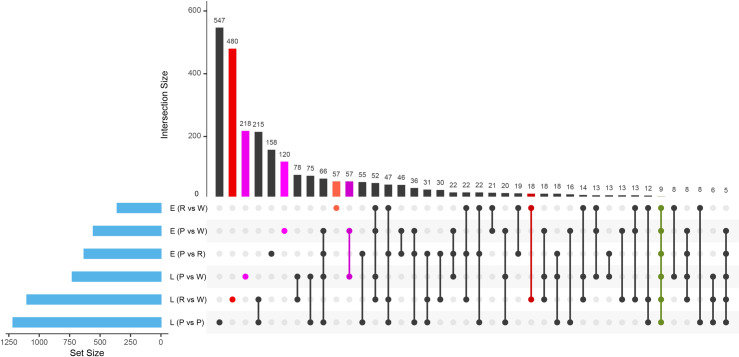
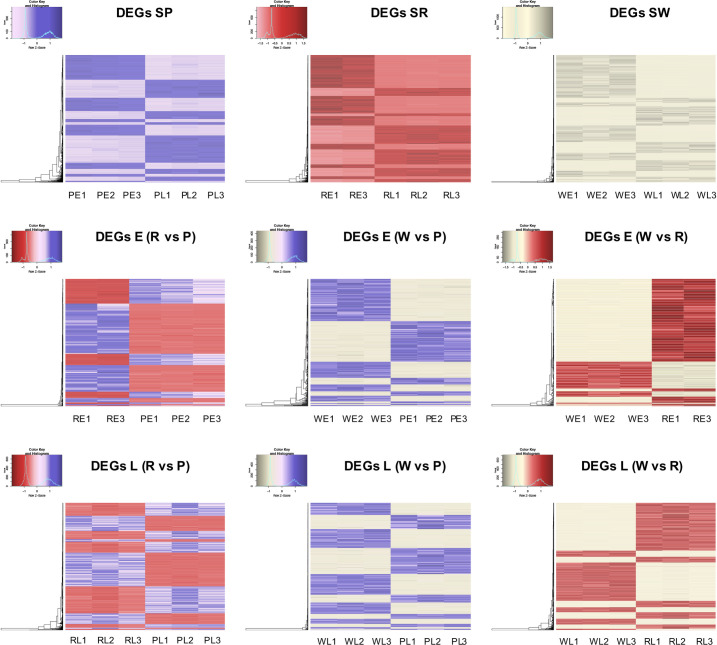
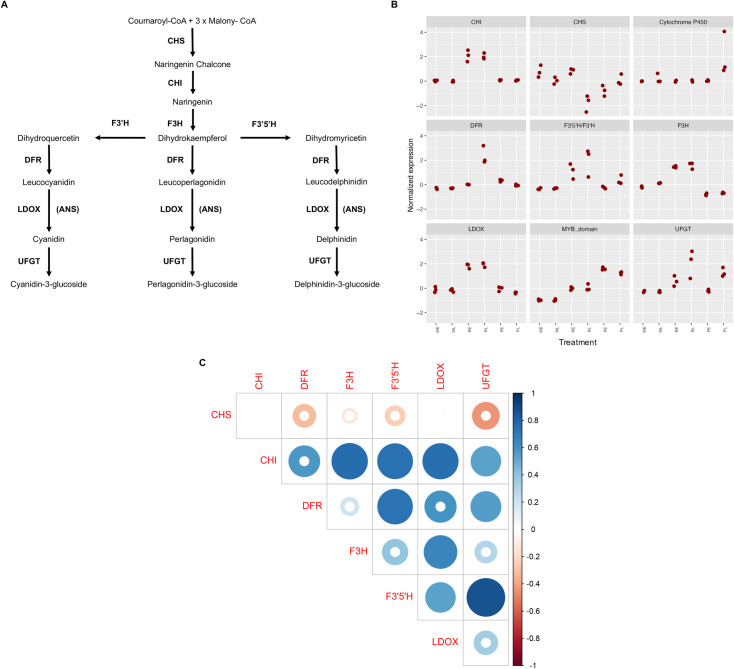
Anthurium andraeanum (Hort.) is an important ornamental in the tropical cut-flower industry. However, there is currently insufficient information to establish a clear connection between the genetic model(s) proposed and the putative genes involved in the differentiation between colors. In this study, 18 cDNA libraries related to the spathe color and developmental stages of A. andraeanum were characterized by transcriptome sequencing (RNA-seq). For the de novo transcriptome, a total of 114,334,082 primary sequence reads were obtained from the Illumina sequencer and were assembled into 151,652 unigenes. Approximately 58,476 transcripts were generated and used for comparative transcriptome analysis between three cultivars that differ in spathe color ('Sasha' (white), 'Honduras' (red), and 'Rapido' (purple)). A large number of differentially expressed genes (8,324), potentially involved in multiple biological and metabolic pathways, were identified, including genes in the flavonoid and anthocyanin biosynthetic pathways. Our results showed that the chalcone isomerase (CHI) gene presented the strongest evidence for an association with differences in color and the highest correlation with other key genes (flavanone 3-hydroxylase (F3H), flavonoid 3'5' hydroxylase (F3'5'H)/ flavonoid 3'-hydroxylase (F3'H), and leucoanthocyanidin dioxygenase (LDOX)) in the anthocyanin pathway. We also identified a differentially expressed cytochrome P450 gene in the late developmental stage of the purple spathe that appeared to determine the difference between the red- and purple-colored spathes. Furthermore, transcription factors related to putative MYB-domain protein that may control anthocyanin pathway were identified through a weighted gene co-expression network analysis (WGCNA). The results provided basic sequence information for future research on spathe color, which have important implications for this ornamental breeding strategies.
安祖花(Hort.)是热带切花产业中的一种重要观赏植物。然而,目前尚无足够的信息来明确建立所提出的遗传模型与颜色分化中涉及的假定基因之间的联系。在这项研究中,通过转录组测序(RNA-seq)对与安祖花佛焰苞颜色和发育阶段相关的 18 个 cDNA 文库进行了表征。对于从头转录组,从 Illumina 测序仪中获得了总共 114,334,082 条初级序列读数,并组装成 151,652 条非冗余基因。大约生成了 58,476 个转录本,并用于三种不同佛焰苞颜色('Sasha'(白色)、'Honduras'(红色)和 'Rapido'(紫色))的比较转录组分析。鉴定出大量差异表达基因(8,324 个),这些基因可能参与多个生物和代谢途径,包括类黄酮和花青素生物合成途径中的基因。我们的结果表明,查尔酮异构酶(CHI)基因与颜色差异的关联最强,与花青素途径中的其他关键基因(黄酮醇 3-羟化酶(F3H)、类黄酮 3'5'羟化酶(F3'5'H)/类黄酮 3'-羟化酶(F3'H)和黄烷酮双加氧酶(LDOX))的相关性最高。我们还在紫色佛焰苞的后期发育阶段鉴定出一个差异表达的细胞色素 P450 基因,该基因似乎决定了红色和紫色佛焰苞之间的差异。此外,通过加权基因共表达网络分析(WGCNA)鉴定出与假定的 MYB 结构域蛋白相关的转录因子,这些蛋白可能控制花青素途径。这些结果为未来佛焰苞颜色的研究提供了基础的序列信息,这对该观赏植物的育种策略具有重要意义。