• 文献检索
  • 文档翻译
  • 深度研究
  • 学术资讯
  • Suppr Zotero 插件Zotero 插件
  • 邀请有礼
  • 套餐&价格
  • 历史记录
应用&插件
Suppr Zotero 插件Zotero 插件浏览器插件Mac 客户端Windows 客户端微信小程序
定价
高级版会员购买积分包购买API积分包
服务
文献检索文档翻译深度研究API 文档MCP 服务
关于我们
关于 Suppr公司介绍联系我们用户协议隐私条款
关注我们

Suppr 超能文献

核心技术专利:CN118964589B侵权必究
粤ICP备2023148730 号-1Suppr @ 2026

文献检索

告别复杂PubMed语法,用中文像聊天一样搜索,搜遍4000万医学文献。AI智能推荐,让科研检索更轻松。

立即免费搜索

文件翻译

保留排版,准确专业,支持PDF/Word/PPT等文件格式,支持 12+语言互译。

免费翻译文档

深度研究

AI帮你快速写综述,25分钟生成高质量综述,智能提取关键信息,辅助科研写作。

立即免费体验

下颌支和髁突的自动分割。

Automatic Segmentation of Mandibular Ramus and Condyles.

出版信息

Annu Int Conf IEEE Eng Med Biol Soc. 2021 Nov;2021:2952-2955. doi: 10.1109/EMBC46164.2021.9630727.

DOI:10.1109/EMBC46164.2021.9630727
PMID:34891864
原文链接:https://pmc.ncbi.nlm.nih.gov/articles/PMC8994041/
Abstract

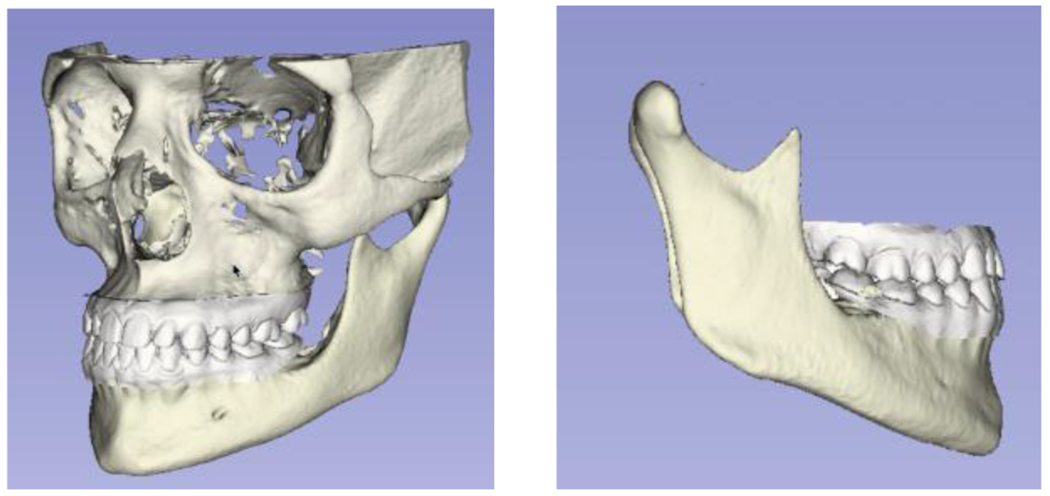
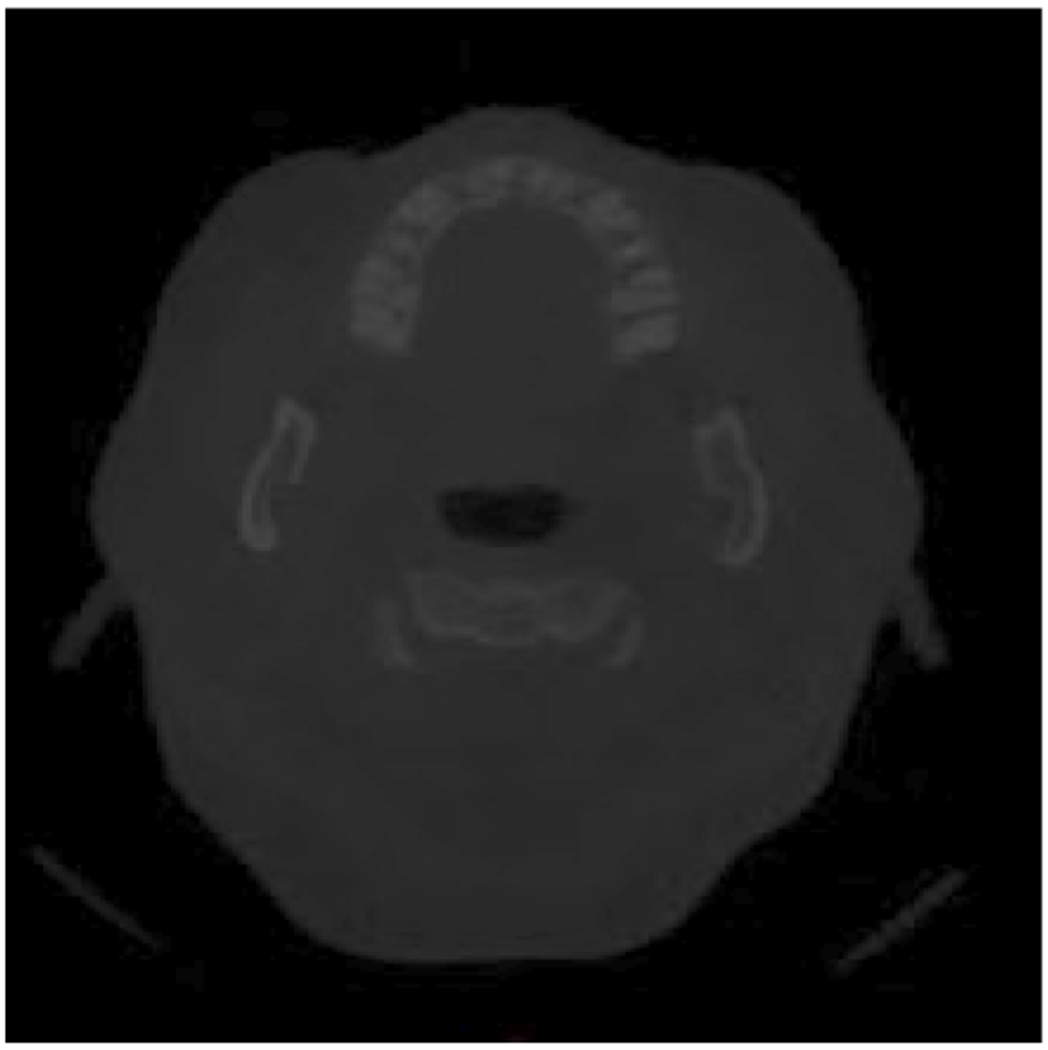
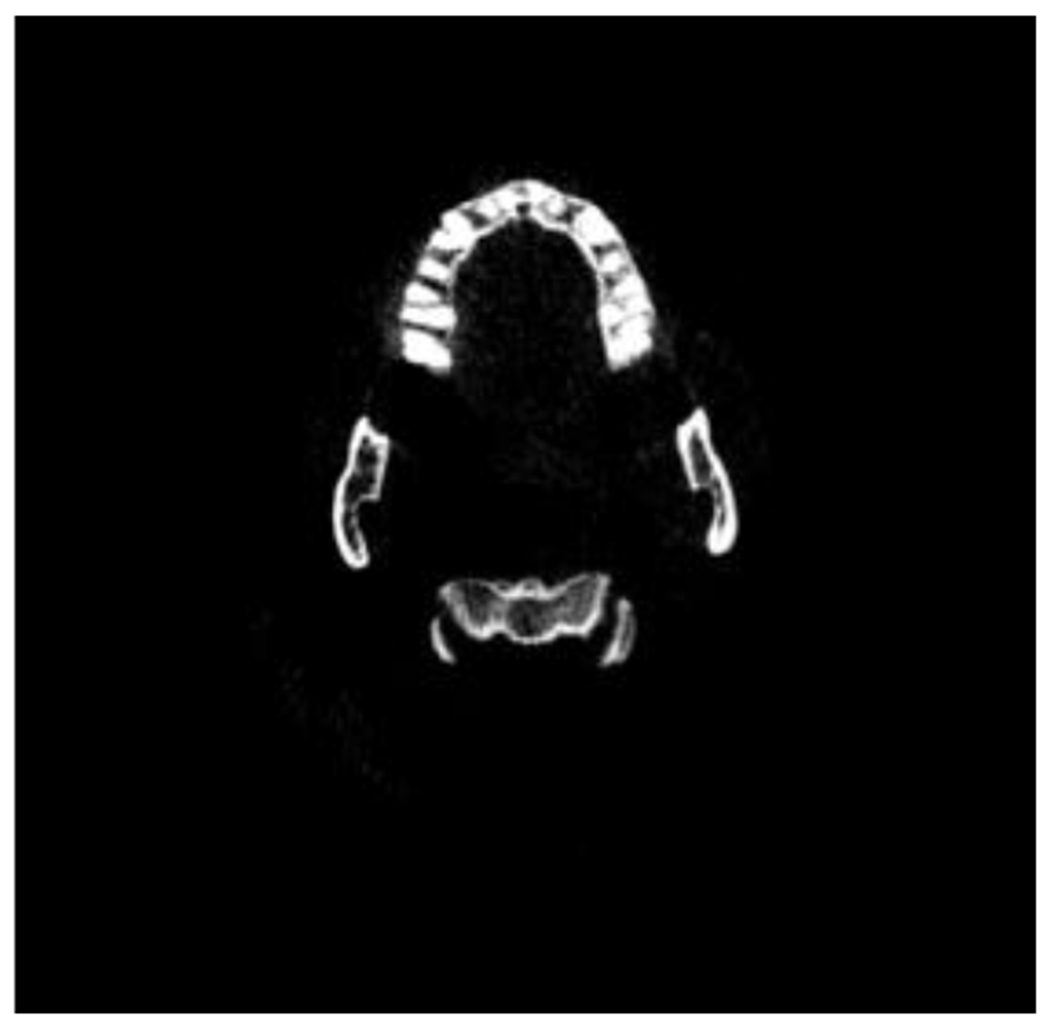
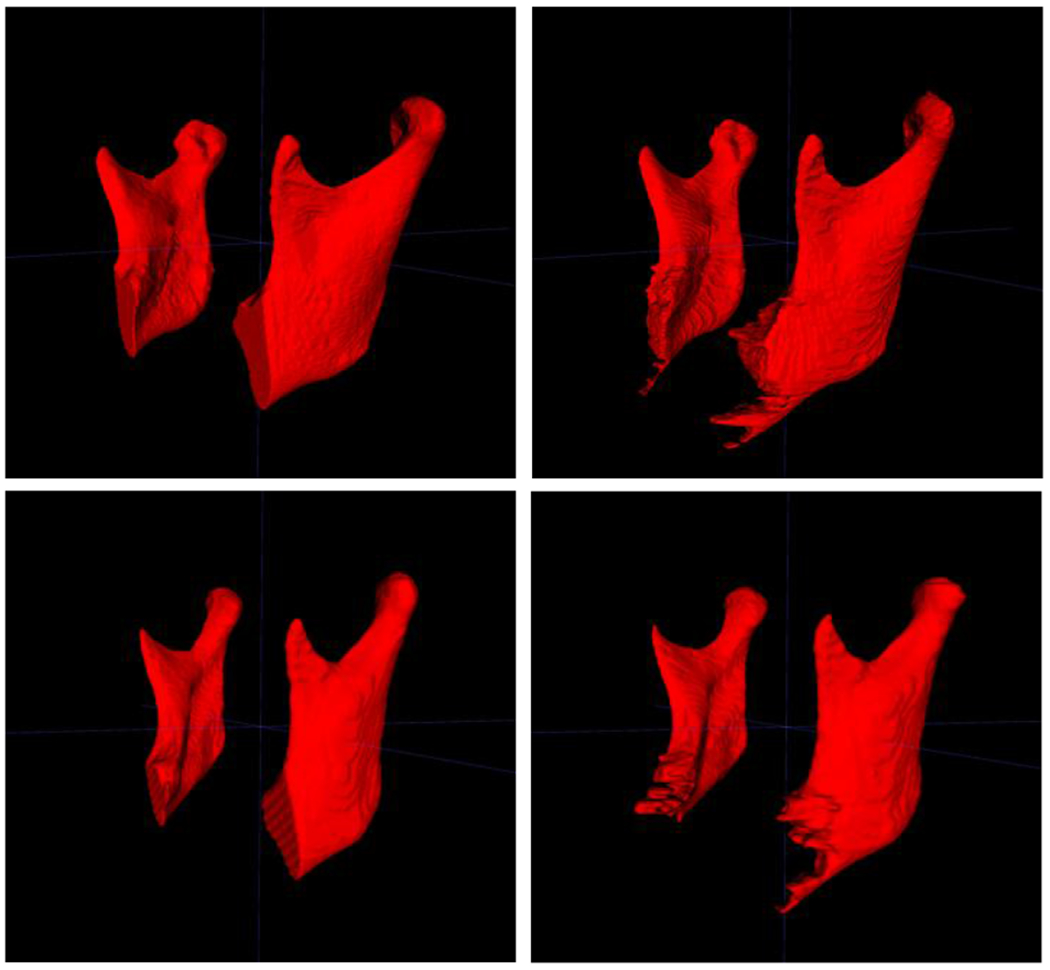
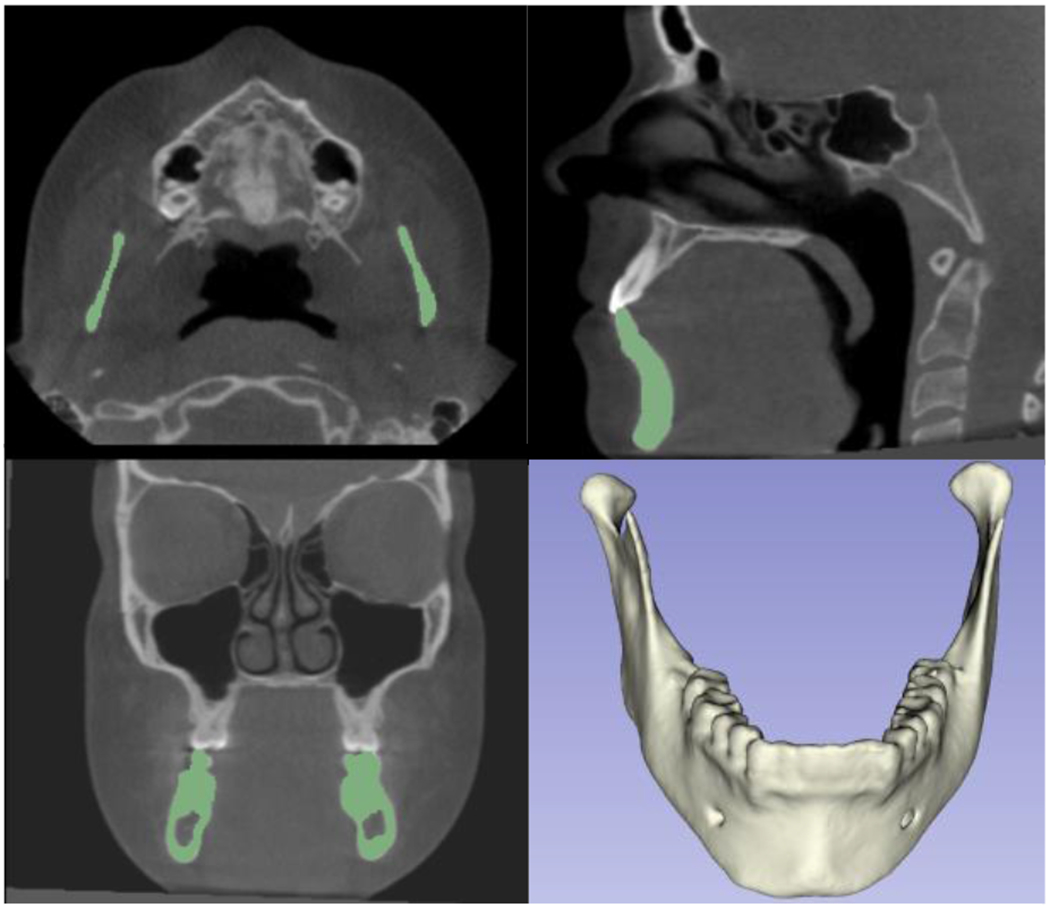
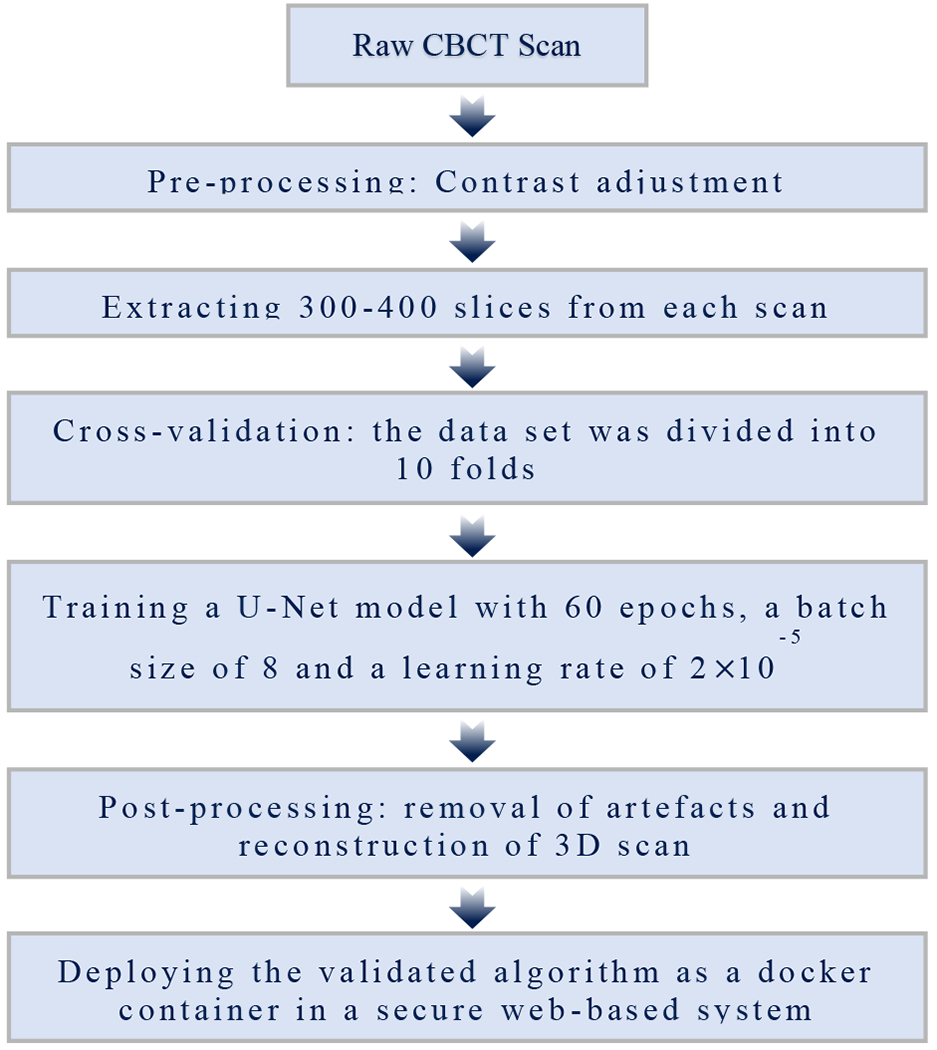
In order to diagnose TMJ pathologies, we developed and tested a novel algorithm, MandSeg, that combines image processing and machine learning approaches for automatically segmenting the mandibular condyles and ramus. A deep neural network based on the U-Net architecture was trained for this task, using 109 cone-beam computed tomography (CBCT) scans. The ground truth label maps were manually segmented by clinicians. The U-Net takes 2D slices extracted from the 3D volumetric images. All the 3D scans were cropped depending on their size in order to keep only the mandibular region of interest. The same anatomic cropping region was used for every scan in the dataset. The scans were acquired at different centers with different resolutions. Therefore, we resized all scans to 512×512 in the pre-processing step where we also performed contrast adjustment as the original scans had low contrast. After the pre-processing, around 350 slices were extracted from each scan, and used to train the U-Net model. For the cross-validation, the dataset was divided into 10 folds. The training was performed with 60 epochs, a batch size of 8 and a learning rate of 2×10. The average performance of the models on the test set presented 0.95 ± 0.05 AUC, 0.93 ± 0.06 sensitivity, 0.9998 ± 0.0001 specificity, 0.9996 ± 0.0003 accuracy, and 0.91 ± 0.03 F1 score. This study findings suggest that fast and efficient CBCT image segmentation of the mandibular condyles and ramus from different clinical data sets and centers can be analyzed effectively. Future studies can now extract radiomic and imaging features as potentially relevant objective diagnostic criteria for TMJ pathologies, such as osteoarthritis (OA). The proposed segmentation will allow large datasets to be analyzed more efficiently for disease classification.

摘要

为了诊断 TMJ 病变,我们开发并测试了一种新的算法 MandSeg,该算法结合了图像处理和机器学习方法,用于自动分割下颌骨髁突和升支。为此任务,使用 109 个锥形束 CT(CBCT)扫描对基于 U-Net 架构的深度神经网络进行了训练。通过临床医生手动分割得到地面真实标签图。U-Net 从 3D 容积图像中提取 2D 切片。所有 3D 扫描都根据其大小进行裁剪,以仅保留感兴趣的下颌区域。在数据集的每个扫描中都使用相同的解剖裁剪区域。扫描是在不同的中心以不同的分辨率采集的。因此,我们在预处理步骤中将所有扫描调整为 512×512,在该步骤中还进行了对比度调整,因为原始扫描对比度较低。预处理后,从每个扫描中提取约 350 个切片,并用于训练 U-Net 模型。对于交叉验证,将数据集分为 10 折。训练使用 60 个 epoch、批量大小为 8 和学习率为 2×10 进行。模型在测试集上的平均性能为 0.95±0.05 AUC、0.93±0.06 灵敏度、0.9998±0.0001 特异性、0.9996±0.0003 准确性和 0.91±0.03 F1 分数。本研究结果表明,可以有效地分析来自不同临床数据集和中心的快速高效的 CBCT 下颌骨髁突和升支图像分割。未来的研究现在可以提取放射组学和成像特征作为 TMJ 病变的潜在相关客观诊断标准,例如骨关节炎(OA)。拟议的分割将允许更有效地分析大型数据集以进行疾病分类。
https://cdn.ncbi.nlm.nih.gov/pmc/blobs/6cd1/8994041/484ec8fef77b/nihms-1795155-f0006.jpg
https://cdn.ncbi.nlm.nih.gov/pmc/blobs/6cd1/8994041/4bcb88cdbde9/nihms-1795155-f0001.jpg
https://cdn.ncbi.nlm.nih.gov/pmc/blobs/6cd1/8994041/762fbc522d8e/nihms-1795155-f0002.jpg
https://cdn.ncbi.nlm.nih.gov/pmc/blobs/6cd1/8994041/99ae056a2585/nihms-1795155-f0003.jpg
https://cdn.ncbi.nlm.nih.gov/pmc/blobs/6cd1/8994041/fc5833c4e16b/nihms-1795155-f0004.jpg
https://cdn.ncbi.nlm.nih.gov/pmc/blobs/6cd1/8994041/d53a31a2cb91/nihms-1795155-f0005.jpg
https://cdn.ncbi.nlm.nih.gov/pmc/blobs/6cd1/8994041/484ec8fef77b/nihms-1795155-f0006.jpg
https://cdn.ncbi.nlm.nih.gov/pmc/blobs/6cd1/8994041/4bcb88cdbde9/nihms-1795155-f0001.jpg
https://cdn.ncbi.nlm.nih.gov/pmc/blobs/6cd1/8994041/762fbc522d8e/nihms-1795155-f0002.jpg
https://cdn.ncbi.nlm.nih.gov/pmc/blobs/6cd1/8994041/99ae056a2585/nihms-1795155-f0003.jpg
https://cdn.ncbi.nlm.nih.gov/pmc/blobs/6cd1/8994041/fc5833c4e16b/nihms-1795155-f0004.jpg
https://cdn.ncbi.nlm.nih.gov/pmc/blobs/6cd1/8994041/d53a31a2cb91/nihms-1795155-f0005.jpg
https://cdn.ncbi.nlm.nih.gov/pmc/blobs/6cd1/8994041/484ec8fef77b/nihms-1795155-f0006.jpg

相似文献

1
Automatic Segmentation of Mandibular Ramus and Condyles.下颌支和髁突的自动分割。
Annu Int Conf IEEE Eng Med Biol Soc. 2021 Nov;2021:2952-2955. doi: 10.1109/EMBC46164.2021.9630727.
2
Layered deep learning for automatic mandibular segmentation in cone-beam computed tomography.基于分层深度学习的锥形束计算机断层扫描下颌骨自动分割。
J Dent. 2021 Nov;114:103786. doi: 10.1016/j.jdent.2021.103786. Epub 2021 Aug 20.
3
Deep learning for automated segmentation of the temporomandibular joint.用于颞下颌关节自动分割的深度学习
J Dent. 2023 May;132:104475. doi: 10.1016/j.jdent.2023.104475. Epub 2023 Mar 2.
4
A novel deep learning system for multi-class tooth segmentation and classification on cone beam computed tomography. A validation study.一种基于锥形束 CT 的新型深度学习多类牙分割与分类系统:验证研究。
J Dent. 2021 Dec;115:103865. doi: 10.1016/j.jdent.2021.103865. Epub 2021 Oct 26.
5
Automatic segmentation of the pharyngeal airway space with convolutional neural network.基于卷积神经网络的咽腔气道自动分割。
J Dent. 2021 Aug;111:103705. doi: 10.1016/j.jdent.2021.103705. Epub 2021 May 30.
6
Deep learning-based segmentation of dental implants on cone-beam computed tomography images: A validation study.基于深度学习的锥形束计算机断层扫描图像中牙种植体的分割:一项验证研究。
J Dent. 2023 Oct;137:104639. doi: 10.1016/j.jdent.2023.104639. Epub 2023 Jul 28.
7
Towards clinically applicable automated mandibular canal segmentation on CBCT.实现 CBCT 下颌管临床应用的自动分割
J Dent. 2024 May;144:104931. doi: 10.1016/j.jdent.2024.104931. Epub 2024 Mar 6.
8
Comparison of convolutional neural network training strategies for cone-beam CT image segmentation.基于卷积神经网络的锥形束 CT 图像分割训练策略比较。
Comput Methods Programs Biomed. 2021 Aug;207:106192. doi: 10.1016/j.cmpb.2021.106192. Epub 2021 May 20.
9
Automatic tooth roots segmentation of cone beam computed tomography image sequences using U-net and RNN.基于 U-net 和 RNN 的锥形束 CT 图像序列中自动牙齿根部分割。
J Xray Sci Technol. 2020;28(5):905-922. doi: 10.3233/XST-200678.
10
Efficient high cone-angle artifact reduction in circular cone-beam CT using deep learning with geometry-aware dimension reduction.使用具有几何感知降维的深度学习在环锥形束 CT 中高效减少高角锥束伪影。
Phys Med Biol. 2021 Jul 1;66(13). doi: 10.1088/1361-6560/ac09a1.

引用本文的文献

1
Automated condylar seating assessment using a deep learning-based three-step approach.基于深度学习的三步法自动髁突定位评估。
Clin Oral Investig. 2024 Sep 4;28(9):512. doi: 10.1007/s00784-024-05895-w.
2
Automated localization of mandibular landmarks in the construction of mandibular median sagittal plane.在构建下颌正中矢状面中下颌标志点的自动定位。
Eur J Med Res. 2024 Jan 29;29(1):84. doi: 10.1186/s40001-024-01681-2.
3
Dental Caries Detection and Classification in CBCT Images Using Deep Learning.基于深度学习的 CBCT 图像中龋齿的检测与分类。

本文引用的文献

1
3D Auto-Segmentation of Mandibular Condyles.下颌髁突的三维自动分割
Annu Int Conf IEEE Eng Med Biol Soc. 2020 Jul;2020:1270-1273. doi: 10.1109/EMBC44109.2020.9175692.
2
Quantitative bone imaging biomarkers to diagnose temporomandibular joint osteoarthritis.定量骨成像生物标志物用于诊断颞下颌关节骨关节炎。
Int J Oral Maxillofac Surg. 2021 Feb;50(2):227-235. doi: 10.1016/j.ijom.2020.04.018. Epub 2020 Jun 27.
3
Osteoarthritis of the Temporomandibular Joint can be diagnosed earlier using biomarkers and machine learning.
Int Dent J. 2024 Apr;74(2):328-334. doi: 10.1016/j.identj.2023.10.003. Epub 2023 Nov 7.
4
The Application of Deep Learning on CBCT in Dentistry.深度学习在牙科锥形束计算机断层扫描(CBCT)中的应用。
Diagnostics (Basel). 2023 Jun 14;13(12):2056. doi: 10.3390/diagnostics13122056.
5
A Semi-Automatic Approach for Holistic 3D Assessment of Temporomandibular Joint Changes.一种用于颞下颌关节变化整体三维评估的半自动方法。
J Pers Med. 2023 Feb 16;13(2):343. doi: 10.3390/jpm13020343.
6
Deep Learning-Based Medical Images Segmentation of Musculoskeletal Anatomical Structures: A Survey of Bottlenecks and Strategies.基于深度学习的肌肉骨骼解剖结构医学图像分割:瓶颈与策略综述
Bioengineering (Basel). 2023 Jan 19;10(2):137. doi: 10.3390/bioengineering10020137.
7
Current Applications of Deep Learning and Radiomics on CT and CBCT for Maxillofacial Diseases.深度学习和放射组学在颌面疾病CT和CBCT上的当前应用
Diagnostics (Basel). 2022 Dec 29;13(1):110. doi: 10.3390/diagnostics13010110.
使用生物标志物和机器学习可以更早地诊断颞下颌关节骨关节炎。
Sci Rep. 2020 May 15;10(1):8012. doi: 10.1038/s41598-020-64942-0.
4
Comparing different planimetric methods on volumetric estimations by using cone beam computed tomography.比较使用锥形束计算机断层扫描进行容积估计的不同平面测量方法。
Radiol Med. 2020 Apr;125(4):398-405. doi: 10.1007/s11547-019-01131-8. Epub 2020 Jan 8.
5
Quantitative assessment of condyle positional changes before and after orthognathic surgery based on fused 3D images from cone beam computed tomography.基于锥形束 CT 融合三维图像的颌骨畸形术前术后髁突位置变化的定量评估。
Clin Oral Investig. 2020 Aug;24(8):2663-2672. doi: 10.1007/s00784-019-03128-z. Epub 2019 Nov 15.
6
Semi-Automated Three-Dimensional Condylar Reconstruction.半自动三维髁突重建
J Craniofac Surg. 2019 Nov-Dec;30(8):2555-2559. doi: 10.1097/SCS.0000000000005781.
7
Three-dimensional cone beam computed tomography analysis protocols for condylar remodelling following orthognathic surgery: a systematic review.三维锥形束 CT 分析在正颌手术后髁突改建中的应用:系统评价。
Int J Oral Maxillofac Surg. 2020 Feb;49(2):207-217. doi: 10.1016/j.ijom.2019.05.009. Epub 2019 Jun 17.
8
Marker-based watershed transform method for fully automatic mandibular segmentation from CBCT images.基于标记的分水岭变换方法,用于从 CBCT 图像中全自动分割下颌骨。
Dentomaxillofac Radiol. 2019 Feb;48(2):20180261. doi: 10.1259/dmfr.20180261. Epub 2018 Nov 9.
9
Imaging modalities for temporomandibular joint disorders: an update.颞下颌关节紊乱病的影像学检查方法:最新进展
Clujul Med. 2018 Jul;91(3):280-287. doi: 10.15386/cjmed-970. Epub 2018 Jul 31.
10
ITK-SNAP: An interactive tool for semi-automatic segmentation of multi-modality biomedical images.ITK-SNAP:一种用于多模态生物医学图像半自动分割的交互式工具。
Annu Int Conf IEEE Eng Med Biol Soc. 2016 Aug;2016:3342-3345. doi: 10.1109/EMBC.2016.7591443.