Department of Pulmonary and Critical Care Medicine, Peking University Third Hospital, Beijing, 100191, People's Republic of China.
Department of Internal Medicine, University of Michigan Medical School, Ann Arbor, MI, 48109, USA.
Respir Res. 2021 Dec 10;22(1):310. doi: 10.1186/s12931-021-01909-3.
Aetiology detection is crucial in the diagnosis and treatment of ventilator-associated pneumonia (VAP). However, the detection method needs improvement. In this study, we used Nanopore sequencing to build a quick detection protocol and compared the efficiency of different methods for detecting 7 VAP pathogens.
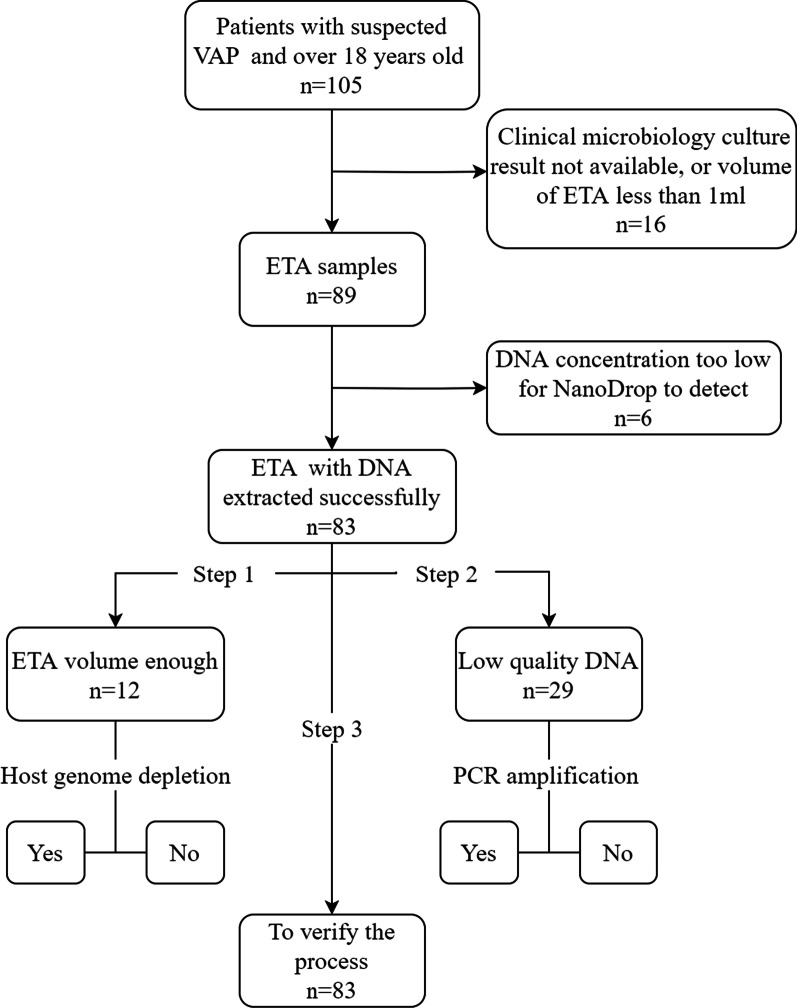
The endotracheal aspirate (ETA) of 83 patients with suspected VAP from Peking University Third Hospital (PUTH) was collected, saponins were used to deplete host genomes, and PCR- or non-PCR-amplified library construction methods were used and compared. Sequence was performed with MinION equipment and local data analysis methods were used for sequencing and data analysis.
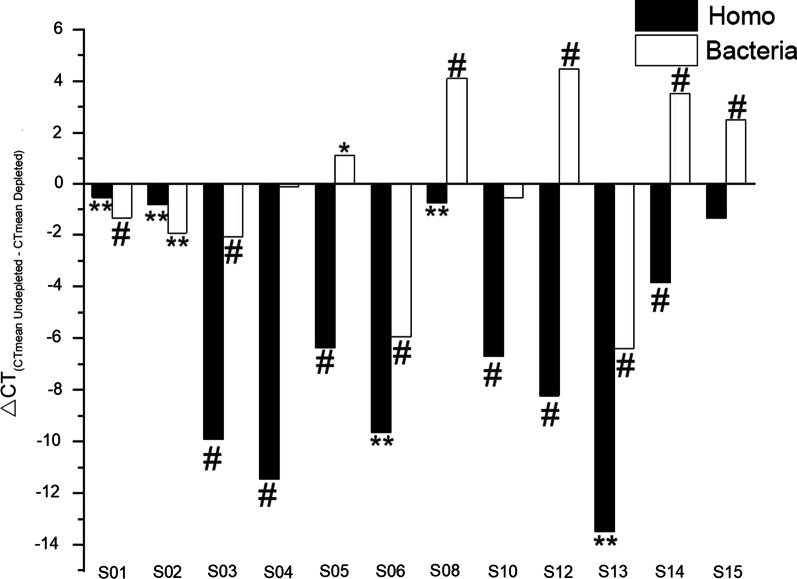
Saponin depletion effectively removed 11 of 12 human genomes, while most pathogenic bacterial genome results showed no significant difference except for S. pneumoniae. Moreover, the average sequence time decreased from 19.6 h to 3.62 h. The non-PCR amplification method and PCR amplification method for library build has a similar average sensitivity (85.8% vs. 86.35%), but the non-PCR amplification method has a better average specificity (100% VS 91.15%), and required less time. The whole method takes 5-6 h from ETA extraction to pathogen classification. After analysing the 7 pathogens enrolled in our study, the average sensitivity of metagenomic sequencing was approximately 2.4 times higher than that of clinical culture (89.15% vs. 37.77%), and the average specificity was 98.8%.
Using saponins to remove the human genome and a non-PCR amplification method to build libraries can be used for the identification of pathogens in the ETA of VAP patients within 6 h by MinION, which provides a new approach for the rapid identification of pathogens in clinical departments.
病因学检测在呼吸机相关性肺炎(VAP)的诊断和治疗中至关重要。然而,检测方法仍需改进。在本研究中,我们使用纳米孔测序建立了一种快速检测方案,并比较了不同方法检测 7 种 VAP 病原体的效率。
收集来自北京大学第三医院(PUTH)的 83 例疑似 VAP 患者的气管内吸出物(ETA),使用皂素去除宿主基因组,比较了 PCR 或非 PCR 扩增文库构建方法。使用 MinION 设备进行测序,并使用本地数据分析方法进行测序和数据分析。
皂素去除有效地去除了 12 个人类基因组中的 11 个,而除肺炎链球菌外,大多数病原菌基因组结果无显著差异。此外,平均测序时间从 19.6 小时缩短至 3.62 小时。非 PCR 扩增方法和 PCR 扩增方法构建文库的平均灵敏度相似(85.8%比 86.35%),但非 PCR 扩增方法的平均特异性更好(100%比 91.15%),所需时间更少。从 ETA 提取到病原体分类,整个方法耗时 5-6 小时。在分析我们研究中纳入的 7 种病原体后,宏基因组测序的平均灵敏度比临床培养高约 2.4 倍(89.15%比 37.77%),平均特异性为 98.8%。
使用皂素去除人类基因组和非 PCR 扩增方法构建文库,可通过 MinION 在 6 小时内鉴定 VAP 患者 ETA 中的病原体,为临床科室快速鉴定病原体提供了新方法。