Institute of Transplant Immunology, MHH, D, Hanover, Germany.
Department of Pneumology, MHH, D, Hanover, Germany.
Signal Transduct Target Ther. 2021 Dec 10;6(1):418. doi: 10.1038/s41392-021-00819-6.
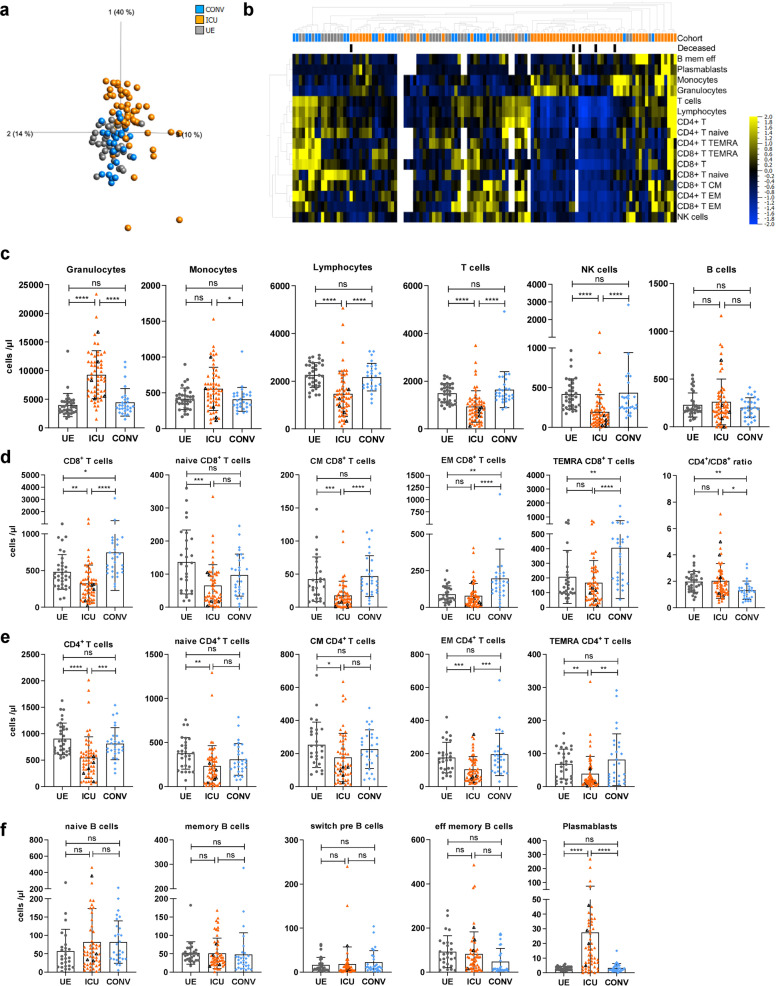
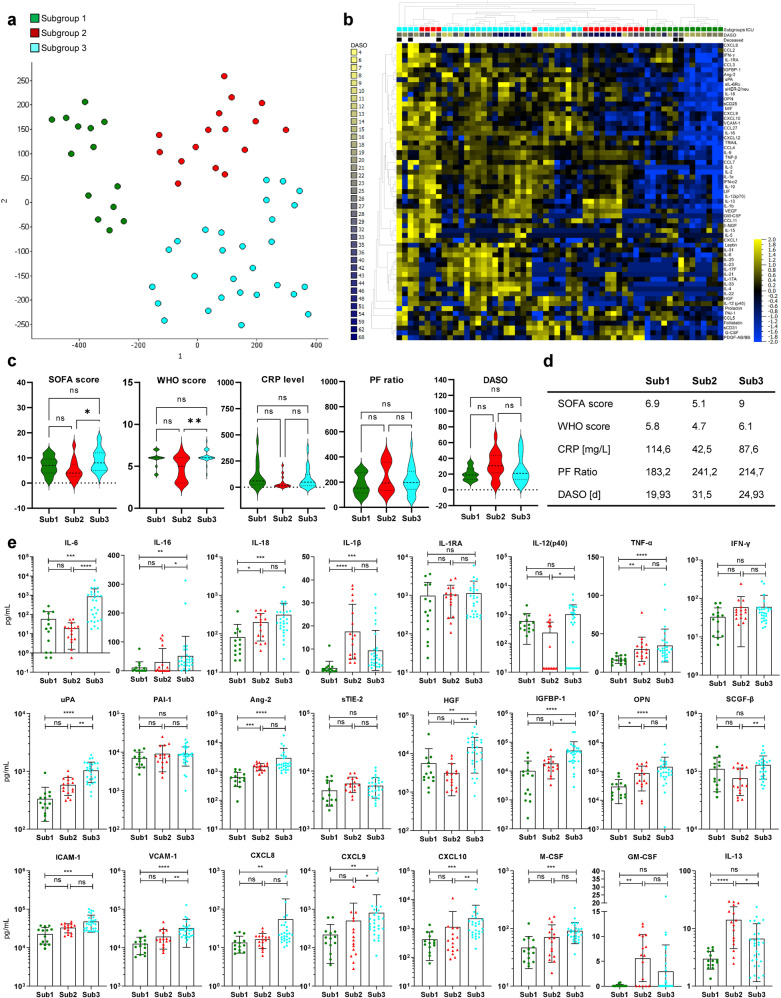
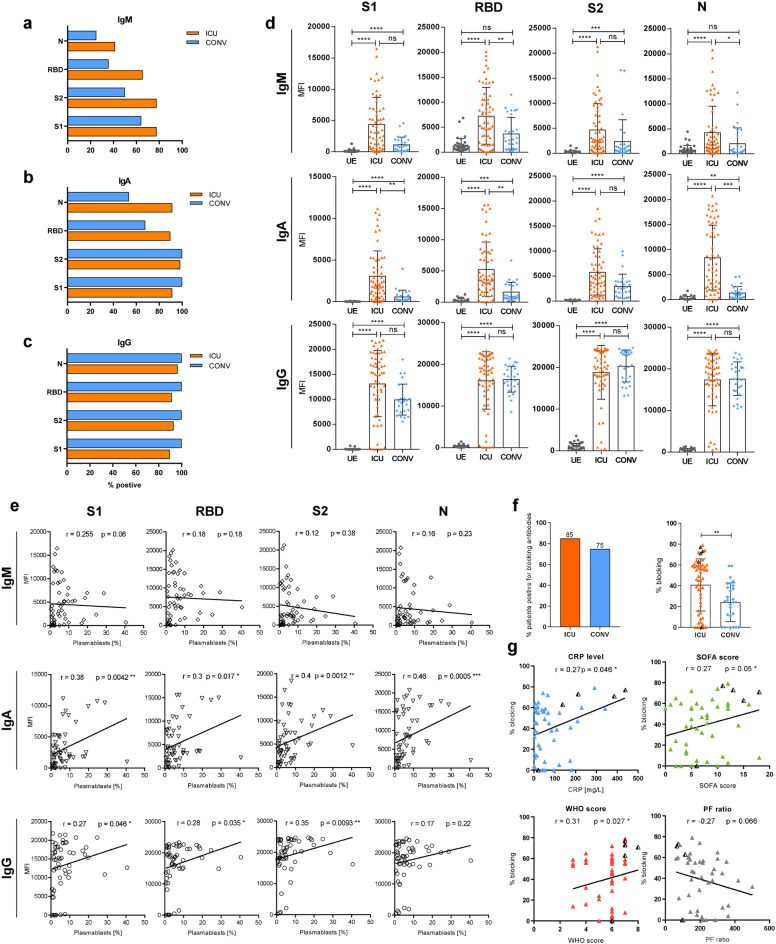
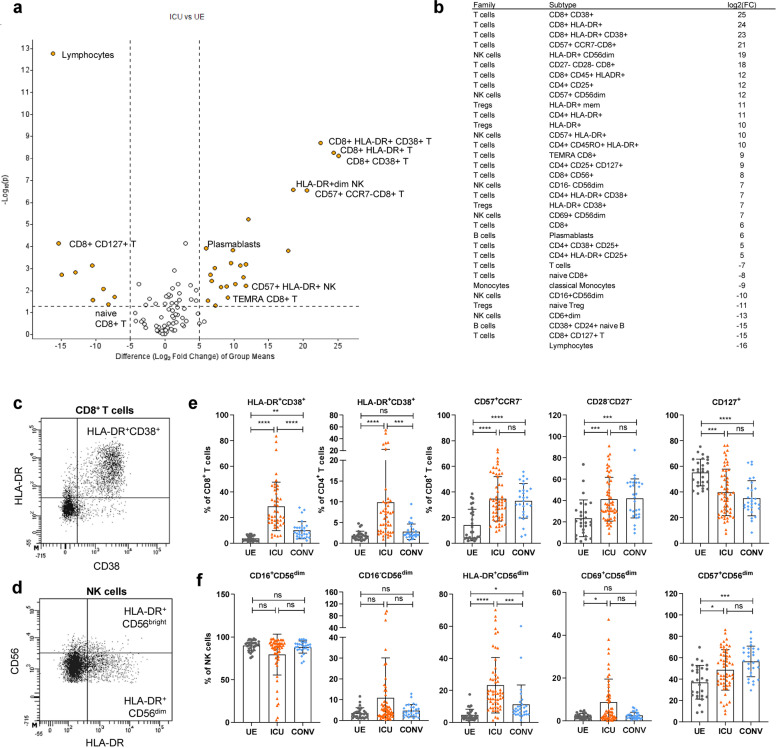
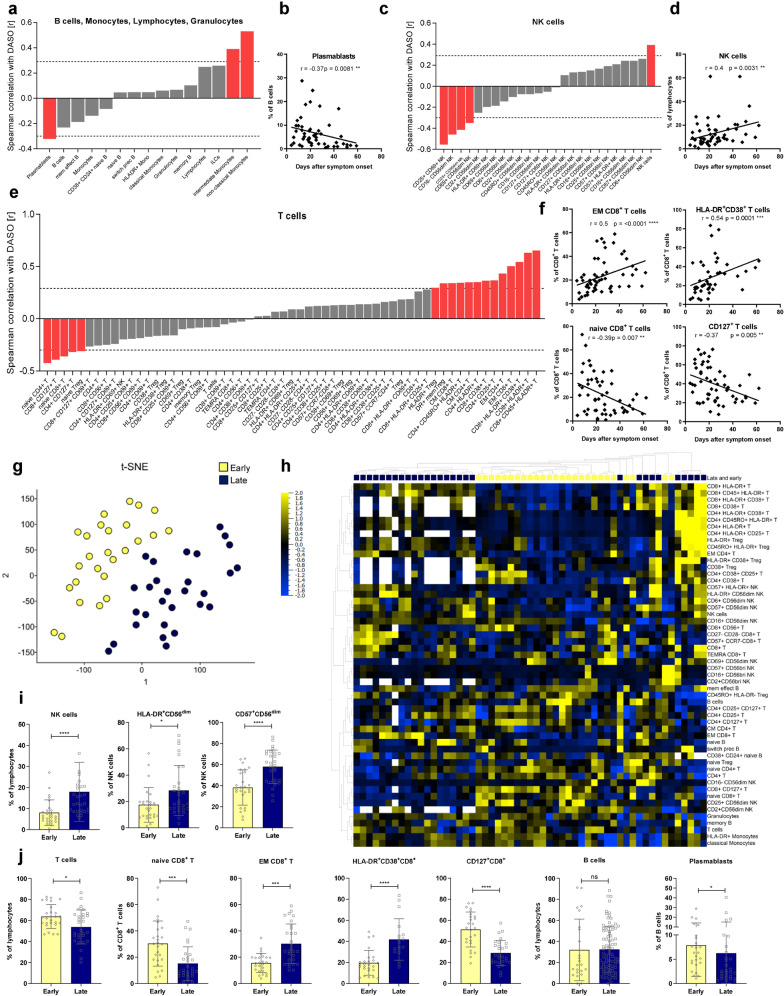
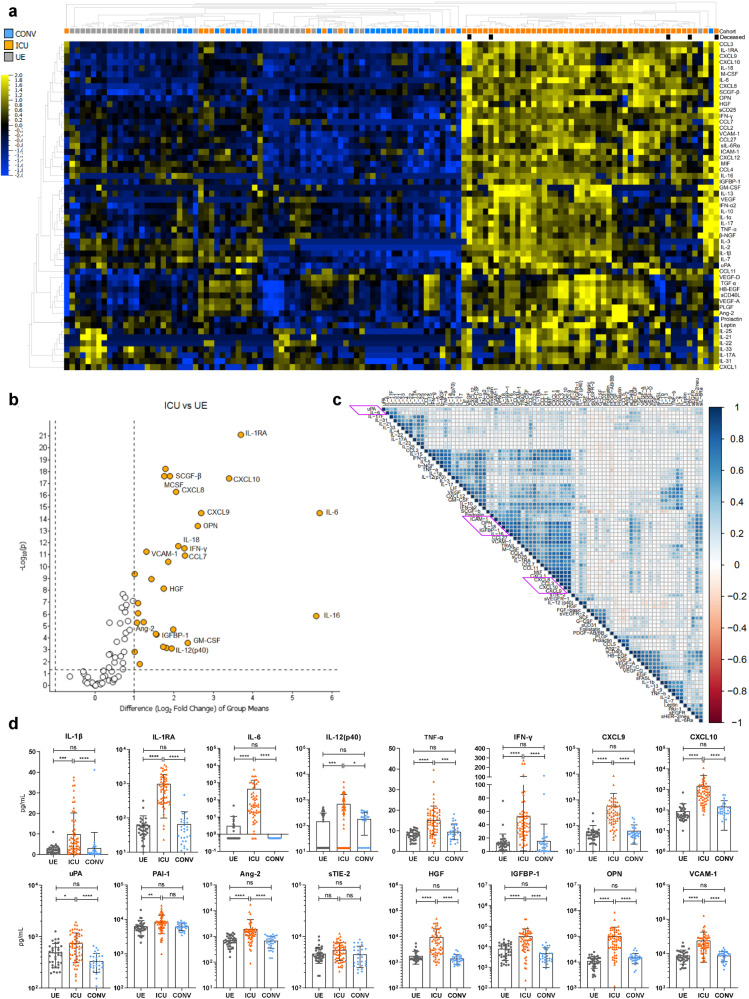
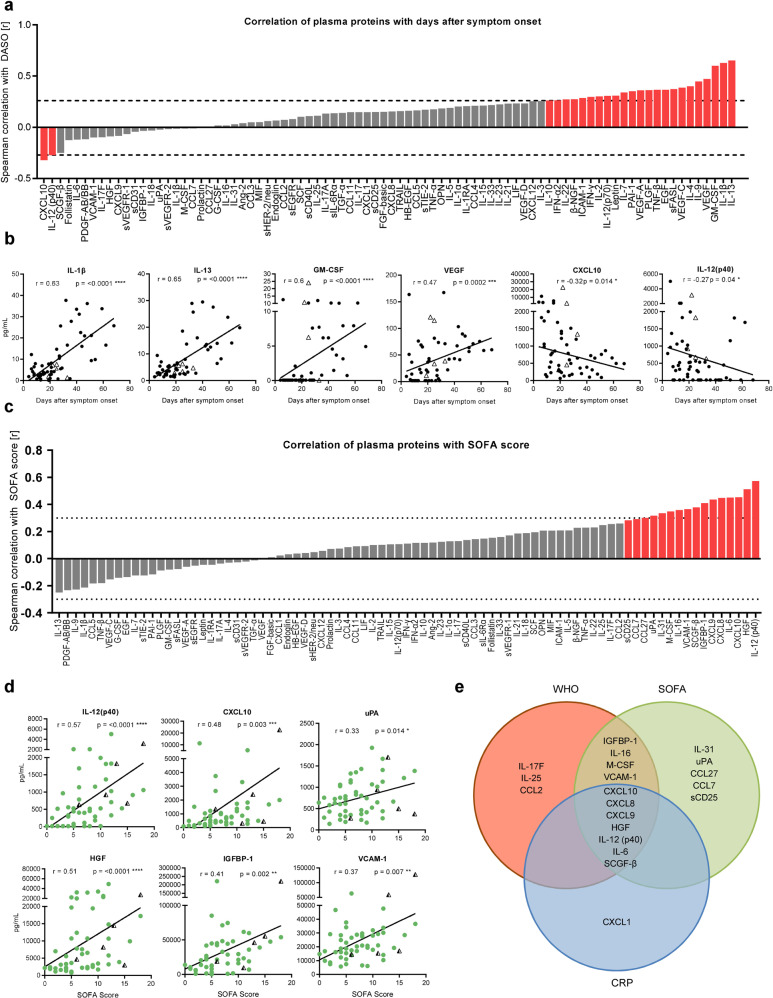
The systemic processes involved in the manifestation of life-threatening COVID-19 and in disease recovery are still incompletely understood, despite investigations focusing on the dysregulation of immune responses after SARS-CoV-2 infection. To define hallmarks of severe COVID-19 in acute disease (n = 58) and in disease recovery in convalescent patients (n = 28) from Hannover Medical School, we used flow cytometry and proteomics data with unsupervised clustering analyses. In our observational study, we combined analyses of immune cells and cytokine/chemokine networks with endothelial activation and injury. ICU patients displayed an altered immune signature with prolonged lymphopenia but the expansion of granulocytes and plasmablasts along with activated and terminally differentiated T and NK cells and high levels of SARS-CoV-2-specific antibodies. The core signature of seven plasma proteins revealed a highly inflammatory microenvironment in addition to endothelial injury in severe COVID-19. Changes within this signature were associated with either disease progression or recovery. In summary, our data suggest that besides a strong inflammatory response, severe COVID-19 is driven by endothelial activation and barrier disruption, whereby recovery depends on the regeneration of the endothelial integrity.
尽管针对 SARS-CoV-2 感染后免疫反应失调的研究已经开展,但危及生命的 COVID-19 表现和疾病康复过程中的系统机制仍未被完全理解。为了定义汉诺威医学院急性疾病(n=58)和恢复期患者(n=28)中严重 COVID-19 的特征,我们使用流式细胞术和蛋白质组学数据进行无监督聚类分析。在我们的观察性研究中,我们将免疫细胞和细胞因子/趋化因子网络分析与内皮细胞激活和损伤相结合。ICU 患者表现出改变的免疫特征,表现为持续的淋巴细胞减少,但粒细胞和浆母细胞的扩增,以及激活和终末分化的 T 和 NK 细胞以及高水平的 SARS-CoV-2 特异性抗体。七种血浆蛋白的核心特征除了严重 COVID-19 中的内皮损伤外,还揭示了一个高度炎症的微环境。该特征内的变化与疾病进展或恢复有关。总之,我们的数据表明,除了强烈的炎症反应外,严重的 COVID-19 还受到内皮激活和屏障破坏的驱动,而恢复则取决于内皮完整性的再生。