Wuhu Institute of Technology, Wuhu, 241003, China.
Jiamusi Branch of Heilongjiang Academy of Agricultural Sciences, Ministry of Agriculture Harmful Biology of Crop Scientific Monitoring Station Jiamusi Experiment Station, China Agriculture Research System of MOF and MARA, Jiamusi, 154007, China.
BMC Plant Biol. 2021 Dec 11;21(1):588. doi: 10.1186/s12870-021-03366-y.
Frogeye leaf spot (FLS) is a destructive fungal disease that affects soybean production. The most economical and effective strategy to control FLS is the use of resistant cultivars. However, the use of a limited number of resistant loci in FLS management will be countered by the emergence of new high-virulence Cercospora sojina races. Therefore, we identified quantitative trait loci (QTL) that control resistance to FLS and identified novel resistant genes using a genome-wide association study (GWAS) on 234 Chinese soybean cultivars.
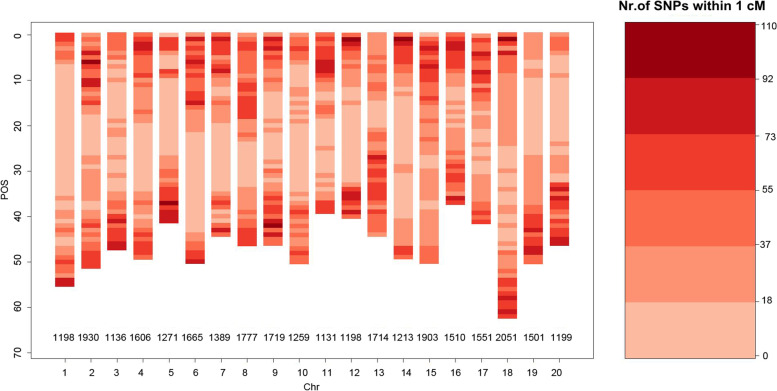
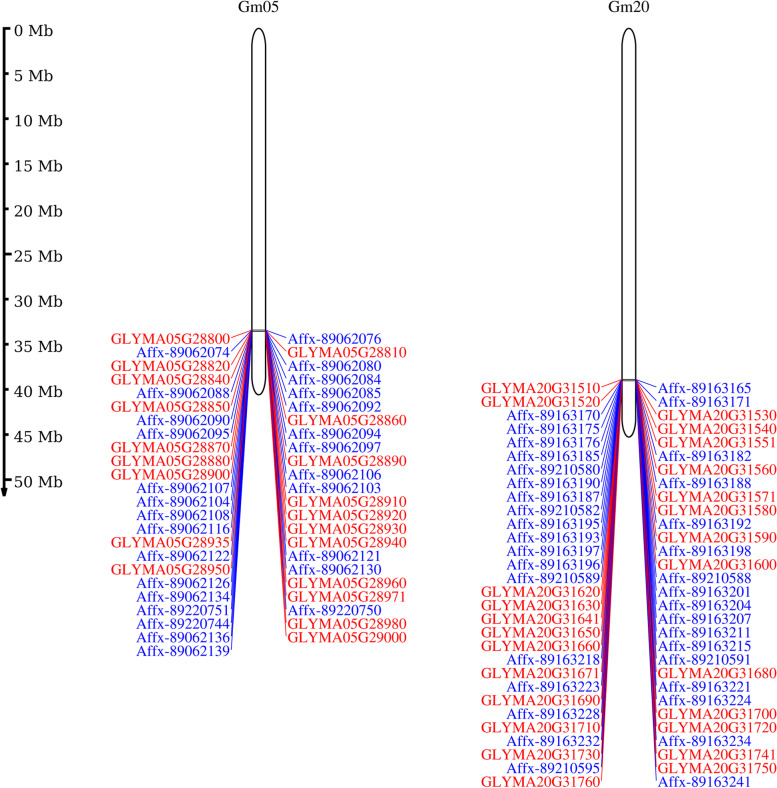
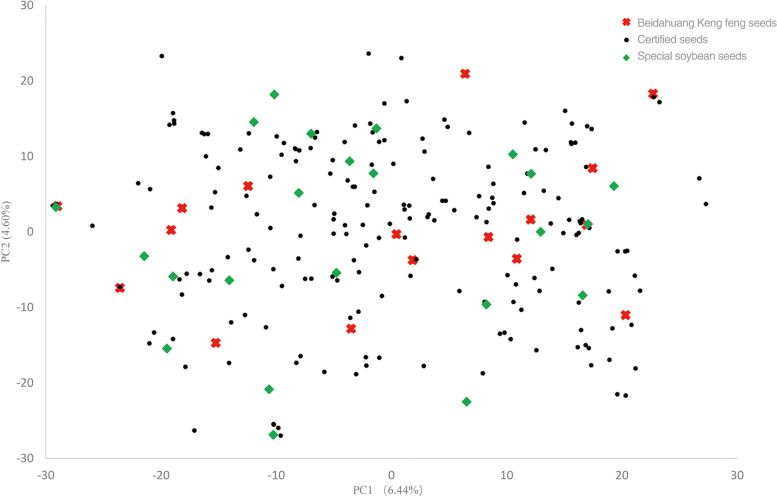
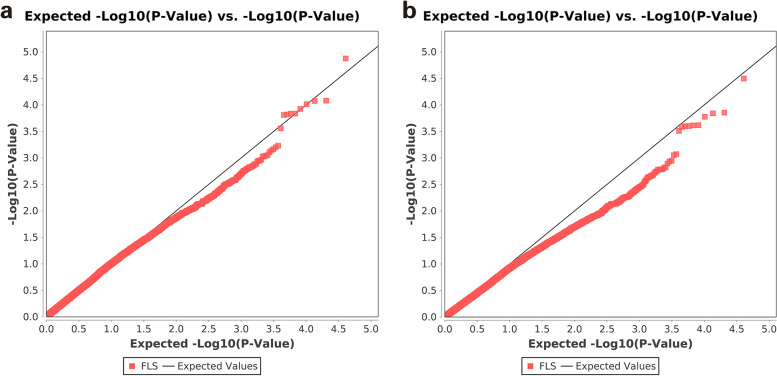
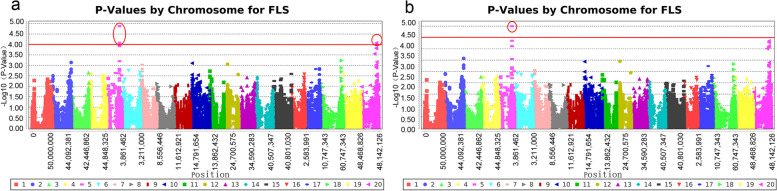
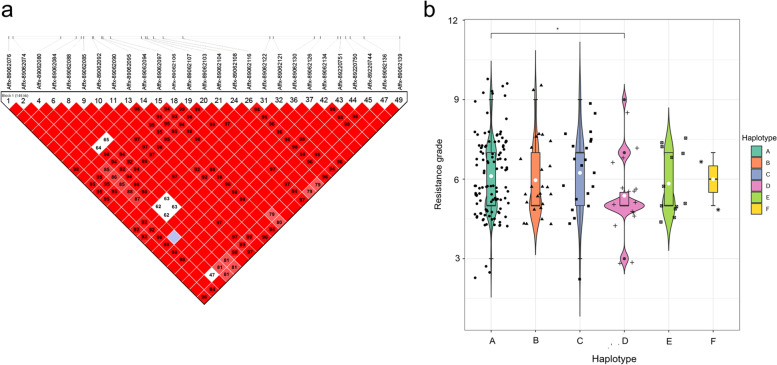
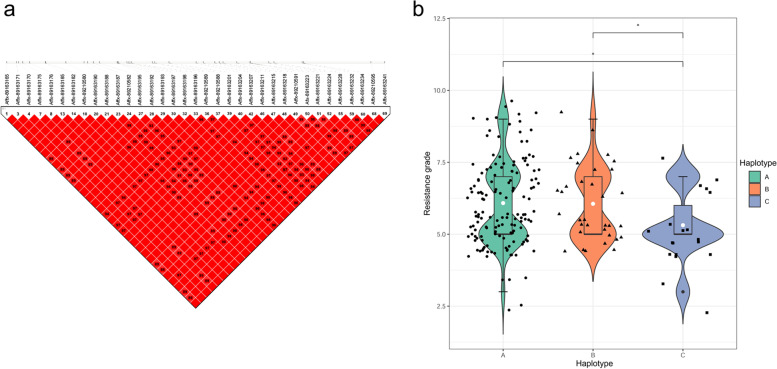
A total of 30,890 single nucleotide polymorphism (SNP) markers were used to estimate linkage disequilibrium (LD) and population structure. The GWAS results showed four loci (p < 0.0001) distributed over chromosomes (Chr.) 5 and 20, that are significantly associated with FLS resistance. No previous studies have reported resistance loci in these regions. Subsequently, 45 genes in the two resistance-related haplotype blocks were annotated. Among them, Glyma20g31630 encoding pyruvate dehydrogenase (PDH), Glyma05g28980, which encodes mitogen-activated protein kinase 7 (MPK7), and Glyma20g31510, Glyma20g31520 encoding calcium-dependent protein kinase 4 (CDPK4) in the haplotype blocks deserves special attention.
This study showed that GWAS can be employed as an effective strategy for identifying disease resistance traits in soybean and narrowing SNPs and candidate genes. The prediction of candidate genes in the haplotype blocks identified by disease resistance loci can provide a useful reference to study systemic disease resistance.
蛙眼病斑(FLS)是一种破坏性真菌病,影响大豆生产。控制 FLS 的最经济有效的策略是使用抗性品种。然而,在 FLS 管理中使用有限数量的抗性基因座,将被新出现的高毒力 Cercospora sojina 菌系所克服。因此,我们利用 234 个中国大豆品种进行全基因组关联研究(GWAS),鉴定了控制 FLS 抗性的数量性状基因座(QTL),并鉴定了新的抗性基因。
共使用 30890 个单核苷酸多态性(SNP)标记来估计连锁不平衡(LD)和群体结构。GWAS 结果显示,在第 5 和 20 号染色体上分布着四个与 FLS 抗性显著相关的位点(p<0.0001)。在这些区域,以前的研究没有报道过抗性基因座。随后,对两个抗性相关单倍型块中的 45 个基因进行了注释。其中,编码丙酮酸脱氢酶(PDH)的 Glyma20g31630、编码丝裂原激活蛋白激酶 7(MPK7)的 Glyma05g28980 和 Glyma20g31510、Glyma20g31520 编码钙依赖性蛋白激酶 4(CDPK4)的基因在单倍型块中值得特别关注。
本研究表明,GWAS 可作为鉴定大豆抗病性性状的有效策略,并缩小 SNP 和候选基因的范围。在抗病基因座鉴定的单倍型块中预测候选基因,可以为系统性抗病性研究提供有用的参考。